Greener pet aftercare in Austin, Texas
Austin has an estimated 370,000 dog- or cat-owning households. When a planting or water memorial feels right for yours, here's what works in the local climate and what to ask before you buy.
- Planting, garden and water urns compared
- Honest notes on local rules
- Help choosing a native species
Austin, Texas
What an eco memorial looks like in Austin
Austin households choose all kinds of memorials: a ceramic urn from a local potter, a pendant holding a trace of ashes, a limestone marker for the garden, or a framed paw or nose print taken before collection. Many people pick something that reflects the city's handmade, creative streak rather than a catalog piece. Whatever you choose, ask for prints or fur clippings at the first call, since these must be taken before your pet leaves home.
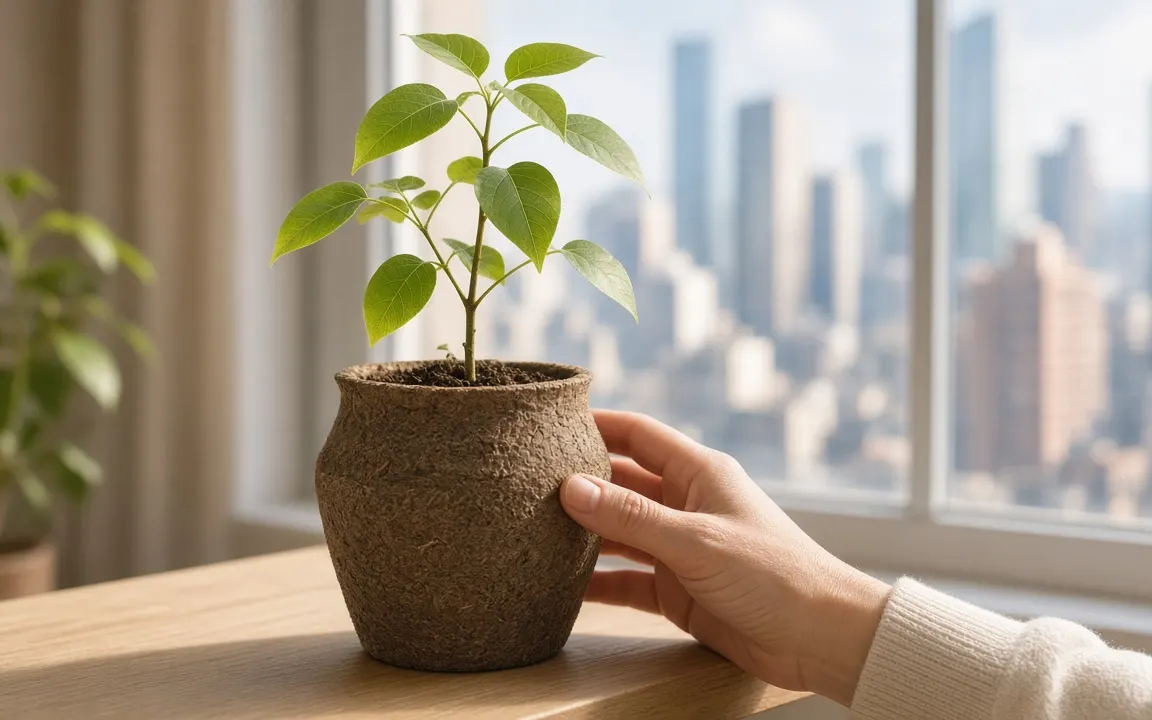
Central Texas limestone is part of the landscape here, and some families like a memorial stone cut from it, set among native plants that survive the summer without much water. A tree or bio urn planted with a native species, such as a Texas redbud or a cedar elm, is another choice that suits the Hill Country. Plant in autumn or winter, when young trees have the strongest chance before the heat returns.
A big city like Austin has one advantage for a living memorial: choice. Several nurseries, extension offices or master gardener programs are usually within reach, and staff can tell you which trees handle local heat, cold and soil without being babied. Take that advice seriously. A native species bought as a two-year-old sapling will almost always outlive the seed that came with an online planting kit, and it will look like a tree far sooner.
With roughly 1,002,632 residents, Austin is the 5th-largest of the 325 Texas communities we cover.
If you want to compare providers, look at Manor (13 miles), Buda (14 miles) and Pflugerville (14 miles). Distance matters because pickup fees and the time until the ashes come back both grow with the drive.
Our estimate
370,000
How many dog- or cat-owning households Austin has (estimate)
How we calculated this
1,002,632 ÷ 2.5 = 401,053 households; × 53% (dog) + 39% (cat) = 370,000. A household with several pets counts once.
Our estimate
30,500
Austin families who lose a dog or cat each year (estimate)
How we calculated this
370,000 dog/cat-owning homes ÷ average lifespan (dog: 12.69 yrs + cat: 11.18 yrs) ≈ 30,500 a year. Treat it as a minimum.
53%[1]
53% of US households own a dog, which is about 71 million households.
12.69 years[2]
US dogs have an average life expectancy at birth of 12.69 years.
39%[3]
39% of US households own a cat, which is about 53 million households.
11.18 years[4]
US cats seen at Banfield hospitals have an average life expectancy at birth of 11.18 years.
Where these figures come from: Montoya et al. 2023, Frontiers in Veterinary Science and American Pet Products Association (APPA) 2025 State of the Industry.
What local attitudes to cremation mean in Texas
The share of people cremated in Texas, now about 55.7%[5], keeps inching up. For pet owners, that shift has brought more questions about what to do once the ashes come home. There's no need to decide on the day. Many families keep the ashes for a season, talk about what their pet loved, and only then settle on a tree, a pot or a lake.
Source for the Texas number: NFDA 2024 Cremation & Burial Report state projections (via Occasional Sage) (2024). Nobody publishes a pet cremation rate for Austin, so the human figure is the best local signal available.
When to plant in Austin's climate
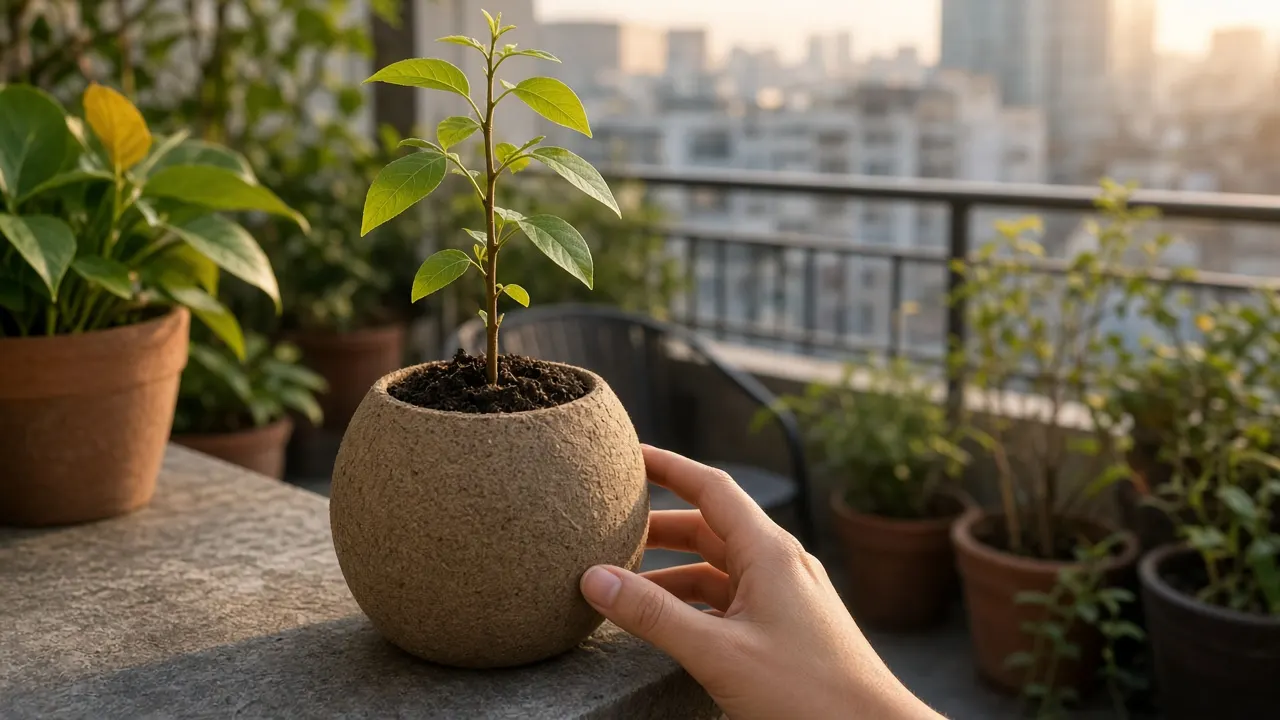
In Austin's heat, containers dry out fast. If you're planting a memorial in a pot on a patio or balcony, choose a large, light-colored container, which heats up less than a small dark one, and place it where it gets afternoon shade in May, June, July, August and September. Use only a small share of the ashes in the pot, water until it drains freely so salts flush out, and check the soil every day in the hottest weeks.
Austin summers are hard on young trees: August averages highs around 98°F. Don't plant a memorial tree in the hottest months. Aim for the cooler part of the year, when roots can grow before the next summer arrives. Ashes don't need to go into the ground quickly, so keeping them safely at home for a few months is completely fine.
What bio urns and aquamation cost in Austin
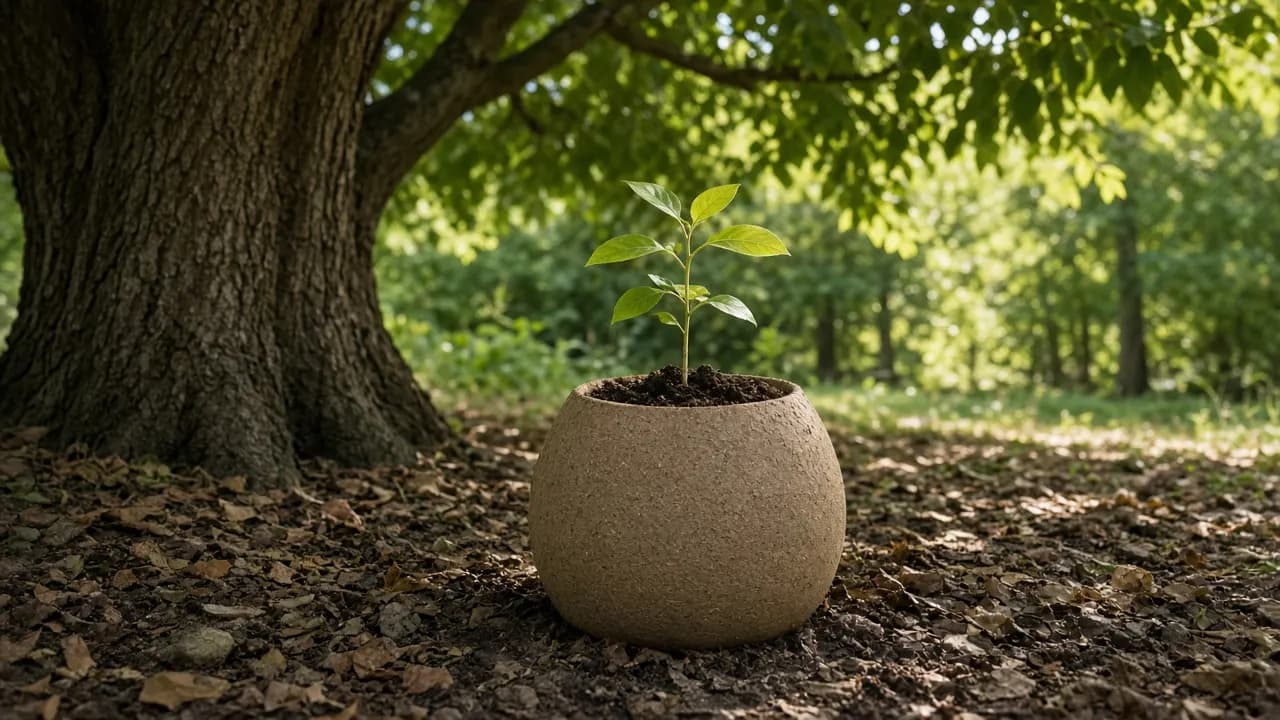
Bio urns vary more in price than you might expect. A national guide puts biodegradable urns at $70–$260[6], depending on material, size and whether a seed or tree system is included. For a lake or sea release, one water urn designed to float briefly and dissolve sells for $149[7]. In Austin, the tree and the soil amendments are usually the cheapest part of the whole memorial.
Prices for Austin track the wider Texas market, so use the Texas price table as your baseline and the services page to see what is included.

Free tool
Memorial budget planner
Add up cremation, urn, keepsakes and a farewell so the total holds no surprises.
Where you can plant or release ashes in Texas
Burying ashes, scattering them loose and releasing them on water are often treated as three different things. In Texas, a place that welcomes a scattering may forbid digging, and a lake that allows a release may not allow a gathering on the shore. When you ask permission, say exactly which one you have in mind.
For what Austin itself says, see Austin Resource Recovery. Its pages cover municipal collection; a private cremation is arranged separately. Texas keeps an official directory of local governments; use it to reach the county or city office that covers Austin.
The rules that apply across Texas (home burial, scattering and who oversees pet cremation) are summarized on our Texas page. Austin may add its own conditions, so check with the city or county before digging.
From ashes to a growing tree: the steps
- Take your time. There's no clock running on a bio urn. Sort out the cremation, bring the ashes home once they're released, and plant whenever you're ready, even months later.
- Ask for individual cremation, by flame or by water, so you know the ashes going into the ground are your pet's alone. A plain box is enough when a display urn isn't part of the plan.
- Check how much ash you have. Most kits hold a fixed amount, so the remains of a big dog can overflow what the urn was designed for.
- Choose the place and the tree together. Weigh up light, room to spread, buried pipes or cables, and whether you're likely to be at that address a decade from now.
- Mix, don't layer. Work the ashes evenly into plenty of soil and compost, give it a few weeks to settle where possible, and check the pH.
- Plant in the right season, whatever that is in Austin, soak the roots and mulch a wide circle.
- Mark the spot with a small stone or plant label, and note the date somewhere you'll find it.
Ways to mark the spot and the date
If you are thinking of scattering ashes, many Austin owners think of Lady Bird Lake, the Barton Creek Greenbelt or a ranch west of town. Public parks and waterways are shared spaces, so choose a quiet early morning, and ask the landowner first on private property. Keeping a small portion back in a keepsake, a pendant or a small urn before any scattering means you will not regret it later.
Compare every option on our services page, or see what other families chose in the poll results, use the free tools before you ring anyone, the guides answer the longer questions and the blog the newer ones. More local pages: Dallas, Houston, Arlington and Fort Worth, the Texas overview and every city in the United States.

Reader polls
What would you choose?
Vote anonymously and see how other readers answered. The results are live counts from people who visit this site, so they show real opinions, not a scientific sample.
If you rent or might move, how would you handle a memorial planting?
Tap an answer to vote and see how others answered. Anonymous.
Would you consider releasing your pet's ashes in water?
Tap an answer to vote and see how others answered. Anonymous.
If you had to decide today, which aftercare would you choose for your pet?
Tap an answer to vote and see how others answered. Anonymous.

Free tools to help you plan
Memorial budget planner
Add up cremation, urn, keepsakes and a farewell so the total holds no surprises.

Memorial tree finder
Pick a tree for a planting urn that suits your climate, space and pet.

Aftercare options compared
Compare private, communal and water cremation with burial on cost, timing and what comes home.
Questions people ask
How does Austin's weather affect pet aftercare?
August is the hottest month in Austin, with average highs around 98°F, so prompt collection matters most then. Winters are mild, with average lows staying above freezing, so outdoor burial or scattering is usually possible year round.
Which nearby towns can I compare with Austin?
The closest communities we cover are Manor (about 13 miles), Buda (about 14 miles) and Pflugerville (about 14 miles). Providers based in those places often serve Austin too. Ask each one for a written total that includes collection, so the distance is priced in.
Roughly how many pets die in Austin each year?
Our estimate is around 30,500. It comes from Austin's population (about 1,002,632), the average household size, the share of homes with a dog or cat (about 370,000 households here) and the average lifespan. It is arithmetic, not a count, so read it as a rough floor.
Why does the Austin page quote a human cremation rate?
Because it is the best local signal we have. NFDA 2024 Cremation & Burial Report state projections (via Occasional Sage) (2024) reports about 55.7%[5] of Texas residents are cremated. There is no official pet equivalent, and inventing one would be worse than quoting a real, clearly labelled number.
I rent in Austin. Can I still have a living memorial?
Yes. Plant in a large container, such as a half-barrel or a big pot with a dwarf tree or flowering shrub, and it moves with you. Use only a small share of the ashes in the pot, well mixed with compost. If you'd like to plant in a rented yard, get the landlord's permission in writing, and remember the tree stays when you leave.
How much does a bio urn cost in Austin?
Biodegradable pet urns are listed at about $15–$80[9] in one US price guide, and a wider guide puts them at $70–$260[6] depending on size and features. A seed-capsule urn for pets sells for about $99[10]. The cremation is a separate, larger cost, so ask Austin providers for the ashes in a plain container if you plan to plant.


Sources and our estimates
- [1] 53% of US households own a dog, which is about 71 million households. American Pet Products Association (APPA) 2025 State of the Industry, 2025.
- [2] US dogs have an average life expectancy at birth of 12.69 years. Montoya et al. 2023, Frontiers in Veterinary Science - Banfield Pet Hospital life expectancy tables (13.3 million dogs, 2.4 million cats, 2013-2019), 2023.
- [3] 39% of US households own a cat, which is about 53 million households. American Pet Products Association (APPA) 2025 State of the Industry, 2025.
- [4] US cats seen at Banfield hospitals have an average life expectancy at birth of 11.18 years. Montoya et al. 2023, Frontiers in Veterinary Science - Banfield Pet Hospital life expectancy tables (13.3 million dogs, 2.4 million cats, 2013-2019), 2023.
- [5] The NFDA projected Texas's cremation rate at 55.7% for 2024. NFDA 2024 Cremation & Burial Report state projections (via Occasional Sage), 2024.
- [6] Funeral.com cites U.S. Funerals Online that biodegradable urns typically cost about $70–$260. Funeral.com – How Much Do Cremation Urns Cost in 2025, 2025.
- [7] The Living Urn's Eco Water Urn for water burial costs $149 and holds up to 225 cubic inches; it floats for several minutes before dissolving. The Living Urn – Eco Water Urn, 2026.
- [8] Switching one human-scale cremation to alkaline hydrolysis saves about 112 kg CO2e under TNO's accounting. Our estimate: 79.9 - (-31.8) kg CO2e. How we calculate.
- [9] Memorials.com's pet urn cost guide puts biodegradable pet urns at $15–$80. Memorials.com – Pet Urn Cost Guide, 2025.
- [10] The Bios Urn for pets, a biodegradable urn with a seed capsule, costs $99. Bios Urn – Pets, 2026.
Tell us about your pet and your garden
Tell us what you need and where you are. We'll reply by email with clear options and prices so you can decide in your own time.