Planting your pet's ashes in Diboll
By our estimate, around 1,900 households in Diboll share their home with a dog or cat, and roughly 160 of those pets die each year. More of those families now ask about planting or water memorials. Here's how to do it well.
- When to plant in your season
- How much ash your urn must hold
- Aquamation providers in your area

Diboll, Texas
Your living memorial options around Diboll
Some Diboll families divide a pet's ashes so that grandparents, parents and grown children can each hold on to a share. Miniature urns, lockets and small glass keepsakes make this simple, and they fit easily in a purse, a truck console or a dresser drawer. Ask the crematory about dividing the remains beforehand, so the remains return in several labelled containers instead of one.
Humid summers, heavy rain and dropping pine straw wear down anything left outside in Diboll. Stone and bronze keep their looks longest, while unsealed wood and cheap plastic fade and crack. For a wooden piece, a covered porch is kinder than an open yard, and a coat of outdoor sealant every couple of years keeps it looking cared for and stops the grain from splitting.
Space is often generous around Diboll, so think about where you'll see the memorial every day. A tree framed in the kitchen window, beside the path to the barn or at the end of the drive becomes part of the daily routine. Planting it somewhere far from the house can mean it's only visited on anniversaries, which suits some families and not others.
About 5,125 people live in Diboll, which makes it the 246th-largest of the 325 Texas communities we cover.
Families in Diboll often end up using a provider from Hudson (9 miles), Lufkin (11 miles, a larger centre) and Corrigan (13 miles). That is normal: crematories serve a radius, not a single town, and the drive is priced into collection.
Our estimate
1,900
How many dog- or cat-owning households Diboll has (estimate)
How we calculated this
5,125 ÷ 2.5 = 2,050 households; × 53% (dog) + 39% (cat) = 1,900. Homes are counted once however many pets they keep.
Our estimate
160
dog and cat deaths per year in Diboll, our estimate
How we calculated this
1,900 dog/cat-owning homes ÷ average lifespan (dog: 12.69 yrs + cat: 11.18 yrs) ≈ 160 a year. The real figure is unlikely to be lower.
53%[1]
53% of US households own a dog, which is about 71 million households.
12.69 years[2]
US dogs have an average life expectancy at birth of 12.69 years.
39%[3]
39% of US households own a cat, which is about 53 million households.
11.18 years[4]
US cats seen at Banfield hospitals have an average life expectancy at birth of 11.18 years.
None of the figures on this this page are ours alone: they rest on Montoya et al. 2023, Frontiers in Veterinary Science and American Pet Products Association (APPA) 2025 State of the Industry.

What local attitudes to cremation mean in Texas
Cremation and burial are both familiar in Texas, where about 55.7%[5] of people are cremated. For many families that means a pet's aftercare starts with a question of tradition: bury in the yard as earlier generations did, or cremate and keep the ashes. A bio urn sits happily between the two. It returns the ashes to the earth like a burial, but without a large grave, and it can be planted in a spot you choose later.
NFDA 2024 Cremation & Burial Report state projections (via Occasional Sage) (2024) is where the Texas figure comes from. It counts people; we use it because attitudes to cremating a pet in Diboll tend to follow attitudes to cremation generally.
Weather, soil and planting windows in Diboll
Diboll summers are hard on young trees: August averages highs around 94°F. Don't plant a memorial tree in the hottest months. Aim for the cooler part of the year, when roots can grow before the next summer arrives. Ashes don't need to go into the ground quickly, so keeping them safely at home for a few months is completely fine.
Hot weather in Diboll changes the plan for a planting ceremony too. With August highs near 94°F, an outdoor gathering at midday is uncomfortable and stressful for the new plant. Choose an early morning or evening in a cooler month, set out shade and water for guests, and water the tree in well straight after planting. A light, pale mulch helps keep the root zone cool.
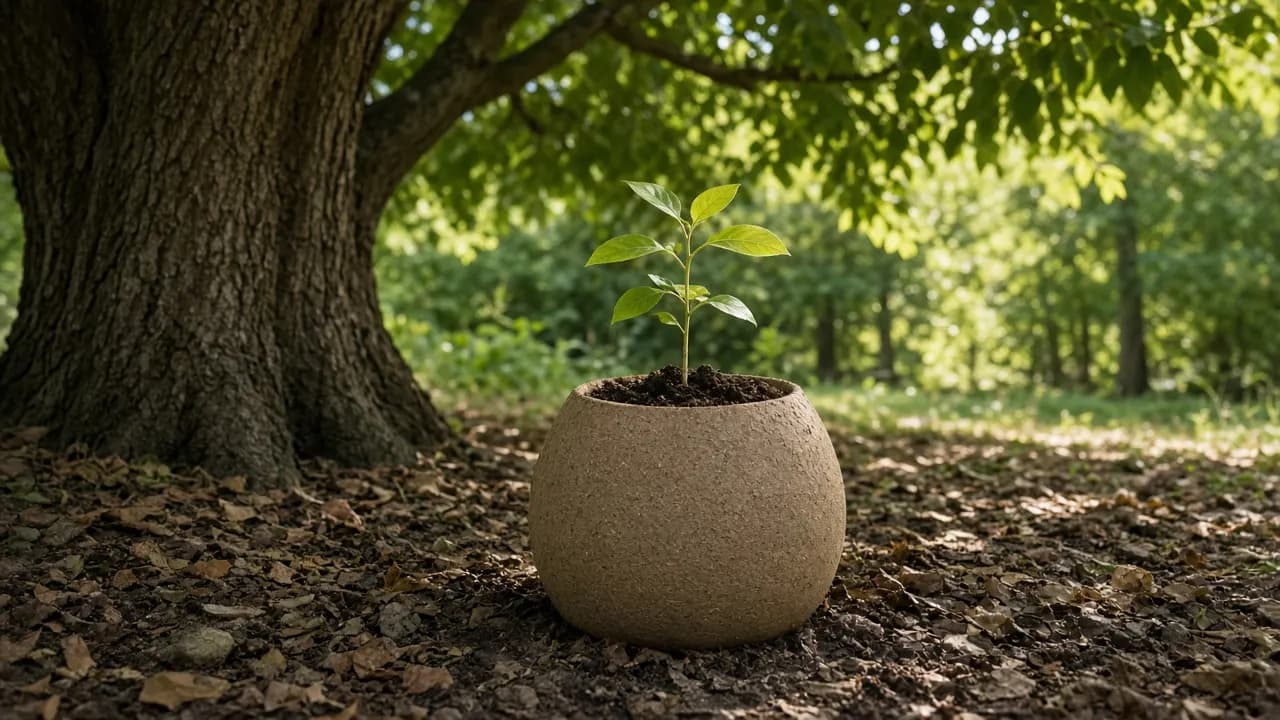
Price ranges for planting and water urns
For a medium-size dog, published private aquamation prices at two US providers sit around $200–$259[6], and one Arizona provider's individual aquamation price of $75–$349[7] includes an urn, nameplate and ink paw print. Whether a Diboll provider bundles extras like that makes a real difference when you compare. Add the bio urn or tree separately, and use the planner below to see the total.
The full price table by product is on our Texas page, and the services page explains what each option includes.

Free tool
Memorial budget planner
Add up cremation, urn, keepsakes and a farewell so the total holds no surprises.
Land, water and permission in Texas
Cremated remains aren't a health hazard in the way a body is, which is why planting ashes in your own garden is rarely restricted. Public places are different. Parks, nature reserves, beaches and waterways in Texas each have a manager with their own policy, and some don't allow scattering or planting at all. A short email before the day saves an awkward conversation.
Not sure which office covers Diboll? The Texas local government directory is the official list.
The rules that apply across Texas (home burial, scattering and who oversees pet cremation) are summarized on our Texas page. Diboll may add its own conditions, so check with the city or county before digging.
From ashes to a growing tree: the steps
- If the pet belonged to a child, be straightforward about the death and explain cremation simply, pitched at a level they can understand.
- Let them choose the plant, but from a handful of options you've vetted first for hardiness and for being harmless to the other animals in the house.
- Use a pot for a small pet like a guinea pig, rabbit or hamster: the ashes amount to very little, and a container keeps the memorial within reach.
- Give them real jobs on the day: blending the compost, scooping it into the pot, watering, picking a stone to paint.
- Explain the ashes honestly as what's left of their pet, now helping the plant to grow, and keep answering whatever they ask, however long afterwards it comes up.
- Take a photo of the child with the plant each year on the same date. It becomes a record of both of them growing.
Keeping the memorial alive in Diboll
Diboll's long history with lumber gives wood a special meaning in many local homes. A box made from pine or cedar, a plaque cut from a board salvaged from an old building, or a small urn resting on a handmade shelf can tie an animal's memory to the town's own story. A relative handy in a woodshop may want to build it themselves, which can be healing.
use the free tools before you ring anyone, the guides answer the longer questions and the blog the newer ones, or look at how readers voted in our polls, Compare every option on our services page. Close to Diboll we also cover Houston, Austin, El Paso and Fort Worth; the full list for Texas and for the United States is a click away.

Reader polls
What would you choose?
Vote anonymously and see how other readers answered. The results are live counts from people who visit this site, so they show real opinions, not a scientific sample.
If water cremation (aquamation) were offered near you, would you choose it?
Tap an answer to vote and see how others answered. Anonymous.
What kind of tree or plant would you choose?
Tap an answer to vote and see how others answered. Anonymous.
If you had to decide today, which aftercare would you choose for your pet?
Tap an answer to vote and see how others answered. Anonymous.

Free tools to help you plan
Memorial budget planner
Add up cremation, urn, keepsakes and a farewell so the total holds no surprises.

Memorial tree finder
Pick a tree for a planting urn that suits your climate, space and pet.

Aftercare options compared
Compare private, communal and water cremation with burial on cost, timing and what comes home.
Questions people ask
Does the Diboll climate change what I should do first?
Only the timing. In August, with highs near 94°F, cool the body and book collection the same day. Winters here are mild enough that burial or scattering is possible in any month.
Can a provider from a neighbouring town collect from Diboll?
Usually yes. Hudson is about 9 miles away, Lufkin is about 11 miles away and Corrigan is about 13 miles away, all inside a normal collection radius. Get the mileage written into the quote so there is no surprise on the day.
Roughly how many pets die in Diboll each year?
Our estimate is around 160. It comes from Diboll's population (about 5,125), the average household size, the share of homes with a dog or cat (about 1,900 households here) and the average lifespan. It is arithmetic, not a count, so read it as a rough floor.
Why does the Diboll page quote a human cremation rate?
Because it is the best local signal we have. NFDA 2024 Cremation & Burial Report state projections (via Occasional Sage) (2024) reports about 55.7%[5] of Texas residents are cremated. There is no official pet equivalent, and inventing one would be worse than quoting a real, clearly labelled number.
Is water cremation better for the environment?
It uses much less energy: pet aquamation is claimed to use about 90%[9] less energy than flame cremation, and it uses about as much water as 1–3 pet baths[10] per pet. The strongest carbon figures come from studies of human funerals, not pets, so treat them as a direction rather than a promise. You still get ashes back for a bio urn.
When is the best time to plant a memorial tree in Diboll?
Avoid the hottest months. In a hot climate, the cooler part of the year gives roots time to grow before the next summer. Keep the ashes safely at home until then, use the time to prepare the soil mix, and plant a sturdy nursery sapling rather than a seed, which is a gamble in serious heat.


Sources and our estimates
- [1] 53% of US households own a dog, which is about 71 million households. American Pet Products Association (APPA) 2025 State of the Industry, 2025.
- [2] US dogs have an average life expectancy at birth of 12.69 years. Montoya et al. 2023, Frontiers in Veterinary Science - Banfield Pet Hospital life expectancy tables (13.3 million dogs, 2.4 million cats, 2013-2019), 2023.
- [3] 39% of US households own a cat, which is about 53 million households. American Pet Products Association (APPA) 2025 State of the Industry, 2025.
- [4] US cats seen at Banfield hospitals have an average life expectancy at birth of 11.18 years. Montoya et al. 2023, Frontiers in Veterinary Science - Banfield Pet Hospital life expectancy tables (13.3 million dogs, 2.4 million cats, 2013-2019), 2023.
- [5] The NFDA projected Texas's cremation rate at 55.7% for 2024. NFDA 2024 Cremation & Burial Report state projections (via Occasional Sage), 2024.
- [6] Private aquamation for a 21–50 lb dog costs about $200–$259 at two posted US price lists. Our estimate: Delaware 10–49 lb $200; A Greener Place 21–50 lb $259. How we calculate.
- [7] A Greener Place in Mesa, Arizona, charges $75–$349 for individual pet aquamation by weight, including an urn, nameplate and ink paw print. A Greener Place Pet Aquamation – Pricing, 2026.
- [8] About 59 million U.S. pet-owning households may be open to eco-friendly aftercare options. Our estimate: 86.9M pet households x 68% interested in green funeral options. How we calculate.
- [9] Pet aquamation is described as available across all 50 US states, and is claimed to use about 90% less energy than flame cremation. Be a Tree Cremation pet aquamation guide, 2025.
- [10] Aquamation uses about the same water per pet as 1–3 pet baths. Veterinary Sustainability Alliance — Aquamation, 2024.
Ask about aquamation near Diboll
Tell us what you need and where you are. We'll reply by email with clear options and prices so you can decide in your own time.