Greener pet aftercare in Lake Worth, Texas
Roughly 150 Lake Worth families say goodbye to a dog or cat each year, by our count. A living memorial is one way to mark it. This guide explains how to make one that actually grows.
- Planting, garden and water urns compared
- Honest notes on local rules
- Help choosing a native species
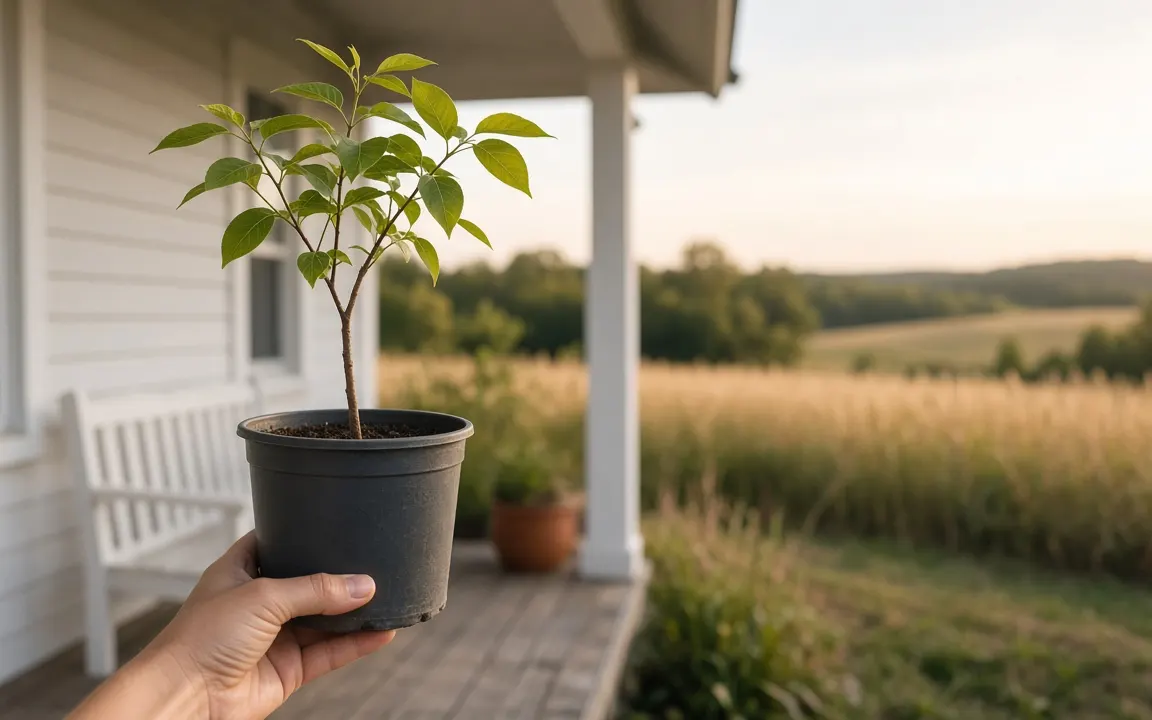
Lake Worth, Texas
Living memorials in Lake Worth: the local picture
Many Lake Worth homes are compact, so memorials here usually have to fit a shelf or a sunny corner rather than a big garden. A slim vessel, a framed paw or feather impression, or a locket with a pinch of ash takes little space. Some families add a small wind chime or bird feeder in the yard, a living reminder that costs little and needs no permission.
North Texas weather swings from blistering sun to hail and ice, which tests any outdoor memorial. Granite and bronze take it in stride; plastic, painted resin and thin metal crack or dent. For the yard, a flat stone sunk level with the lawn survives mowers, hail and summer baking far better than a raised figurine or a painted concrete statue.
Small towns tend to have long memories, and a memorial tree in Lake Worth is often planted with a lot of history around it: the same yard for decades, a family farm, a favorite fishing spot. If the land is likely to stay in the family, a long-lived native tree is a lovely choice. If it might be sold, consider a shrub bed, a portion of ashes kept back, or a water release that doesn't depend on who owns the ground in twenty years.
About 4,766 people live in Lake Worth, which makes it the 250th-largest of the 325 Texas communities we cover. Fort Worth, roughly 7 miles off, is the closest larger centre, and a share of the providers who cover Lake Worth run from there.
Nearby, we also have local pages for River Oaks (3 miles), Saginaw (4 miles, a larger centre) and White Settlement (5 miles, a larger centre), which can help if your vet or the provider you prefer is based there.
Our estimate
1,750
Lake Worth: dog- or cat-owning households, our estimate
How we calculated this
4,766 ÷ 2.5 = 1,906 households; × 53% (dog) + 39% (cat) = 1,750. Homes are counted once however many pets they keep.
Our estimate
150
Lake Worth families who lose a dog or cat each year (estimate)
How we calculated this
1,750 dog/cat-owning homes ÷ average lifespan (dog: 12.69 yrs + cat: 11.18 yrs) ≈ 150 a year. Treat it as a minimum.
53%[1]
53% of US households own a dog, which is about 71 million households.
12.69 years[2]
US dogs have an average life expectancy at birth of 12.69 years.
39%[3]
39% of US households own a cat, which is about 53 million households.
11.18 years[4]
US cats seen at Banfield hospitals have an average life expectancy at birth of 11.18 years.
Sources for the statistics above: Montoya et al. 2023, Frontiers in Veterinary Science and American Pet Products Association (APPA) 2025 State of the Industry.
What local attitudes to cremation mean in Texas
The human cremation rate in Texas sits around 55.7%[5], so many families have a foot in both camps, and generations can disagree. Grandparents may expect a grave in the yard; younger relatives may want ashes they can take with them. Talking it through before the vet asks you to choose saves a hard conversation on a hard day. A tree over buried ashes often satisfies both sides.
The Texas percentage above is from NFDA 2024 Cremation & Burial Report state projections (via Occasional Sage) (2024) and refers to human funerals. Treat it as context for Lake Worth, not as a count of pets.
When to plant in Lake Worth's climate
In a hot climate like Lake Worth's, with highs of about 96°F in August, salt is a bigger problem than in wetter places. Rain is what washes sodium from ashes down past the roots, and dry heat lets it build up near the surface. Mix the ashes through a much larger volume of soil and compost than you'd think necessary, and water deeply and slowly after planting so salts move down, not up.
Hot weather in Lake Worth changes the plan for a planting ceremony too. With August highs near 96°F, an outdoor gathering at midday is uncomfortable and stressful for the new plant. Choose an early morning or evening in a cooler month, set out shade and water for guests, and water the tree in well straight after planting. A light, pale mulch helps keep the root zone cool.
Eco memorial prices, from urn to tree
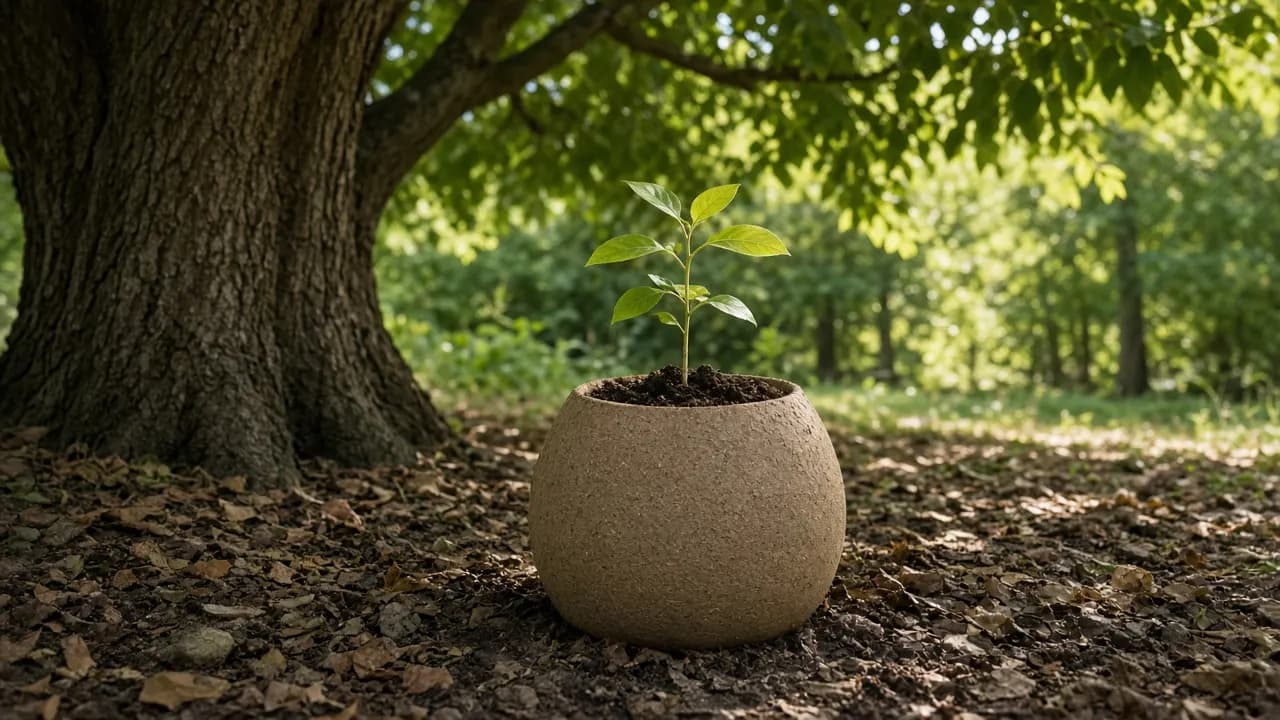
Add up every part before you commit. Beyond the cremation, a living memorial in Lake Worth can include the bio urn, compost and bark, a pH kit, the tree or shrub, a guard against deer or rabbits, and perhaps a marker. Our memorial budget planner lists each line so nothing surprises you. Most families find the tree is the cheapest part and the cremation the most expensive.
The full price table by product is on our Texas page, and the services page explains what each option includes.

Free tool
Memorial budget planner
Add up cremation, urn, keepsakes and a farewell so the total holds no surprises.
What Texas allows for ashes, in general terms
Two questions cover most situations in Texas: who owns or manages this land or water, and have they said yes? For your own garden, the answer is you. For a rented home, it's your landlord, in writing. For parks and public water, it's the relevant agency. For a relative's garden, it's them, and it's worth agreeing that the tree stays even if the house is sold.
The official Texas local government directory lists every county and city office, which is the quickest way to find who to ask in Lake Worth.
The rules that apply across Texas (home burial, scattering and who oversees pet cremation) are summarized on our Texas page. Lake Worth may add its own conditions, so check with the city or county before digging.
What to do first, and what can wait for the right season
- If you're remembering more than one animal, settle at the start on one shared planting or separate ones. Either works, but once the ashes are combined there's no undoing it.
- Label each container clearly the moment it arrives, name and date on the lid, which matters most when the sets come home a long way apart.
- Choose a bigger planting area for several sets of ashes: a hedge, a group of shrubs or a small orchard spreads the mineral load across more soil.
- Keep a spoonful of each in separate keepsakes if anyone in the family wants to remember one animal on its own.
- Plan for the pets still living with you. A new planting that smells of bone attracts diggers, so protect it for the first few months.
- Add a marker for each name, or a single stone carrying all of them, so anyone visiting understands who is remembered there.
Living memorials beyond the backyard
Some families here keep part of a pet's ashes and scatter the rest somewhere tied to shared routines: a favourite spot on their own lakeside property, a relative's ranch west of town or the family garden. Rules differ on public parks and water, so stick to private land with the owner's blessing, and let the crematory know if you want the remains divided.
read our guides and latest articles, run the numbers with the free planning tools, or compare your instinct with the poll results, Our services overview lays out every option side by side. If you live between Lake Worth and San Antonio, El Paso, Fort Worth and Austin, either page applies. Every other community in Texas, and all of the United States, is listed too.

Reader polls
What would you choose?
Vote anonymously and see how other readers answered. The results are live counts from people who visit this site, so they show real opinions, not a scientific sample.
Would you consider releasing your pet's ashes in water?
Tap an answer to vote and see how others answered. Anonymous.
What kind of tree or plant would you choose?
Tap an answer to vote and see how others answered. Anonymous.
If you had to decide today, which aftercare would you choose for your pet?
Tap an answer to vote and see how others answered. Anonymous.

Free tools to help you plan
Memorial budget planner
Add up cremation, urn, keepsakes and a farewell so the total holds no surprises.

Memorial tree finder
Pick a tree for a planting urn that suits your climate, space and pet.

Aftercare options compared
Compare private, communal and water cremation with burial on cost, timing and what comes home.
Questions people ask
Which nearby towns can I compare with Lake Worth?
The closest communities we cover are River Oaks (about 3 miles), Saginaw (about 4 miles) and White Settlement (about 5 miles). Providers based in those places often serve Lake Worth too. Ask each one for a written total that includes collection, so the distance is priced in.
Is Lake Worth big enough to have several pet aftercare providers?
Probably, on the numbers. By our estimate about 1,750 Lake Worth households keep a dog or cat and around 150 lose one each year, which is enough steady demand to support more than one provider. We derive that from population (about 4,766), household size and national ownership and lifespan figures.
Does the Lake Worth climate change what I should do first?
Only the timing. In August, with highs near 96°F, cool the body and book collection the same day. Winters here are mild enough that burial or scattering is possible in any month.
Will I have to travel to Fort Worth to arrange things?
Not usually. Providers based in Fort Worth (roughly 7 miles from Lake Worth) collect from here as a matter of routine, and the paperwork is done by email or phone. If you want to be present for a witnessed cremation, that is when the drive matters.
What if my pet dies when it's too hot or cold to plant?
Wait. Ashes don't need to go into the ground quickly, and a tree planted in the wrong season is more likely to fail. Keep them in the container from the crematory, use the time to choose a species and prepare the soil mix, and plant when the weather in Lake Worth is kind to young roots.
Which memorial plants are dangerous to cats and dogs?
Lilies are highly toxic to cats, even the pollen. Sago palm, oleander, yew, azalea and foxglove can poison dogs, and several of them harm cats and horses too. If you have pets at home in Lake Worth, ask a vet or nursery to confirm a plant is safe before you buy it. Grasses, many herbs and most fruit trees are safer choices, though large amounts of fallen fruit can still upset a dog's stomach.


Sources and our estimates
- [1] 53% of US households own a dog, which is about 71 million households. American Pet Products Association (APPA) 2025 State of the Industry, 2025.
- [2] US dogs have an average life expectancy at birth of 12.69 years. Montoya et al. 2023, Frontiers in Veterinary Science - Banfield Pet Hospital life expectancy tables (13.3 million dogs, 2.4 million cats, 2013-2019), 2023.
- [3] 39% of US households own a cat, which is about 53 million households. American Pet Products Association (APPA) 2025 State of the Industry, 2025.
- [4] US cats seen at Banfield hospitals have an average life expectancy at birth of 11.18 years. Montoya et al. 2023, Frontiers in Veterinary Science - Banfield Pet Hospital life expectancy tables (13.3 million dogs, 2.4 million cats, 2013-2019), 2023.
- [5] The NFDA projected Texas's cremation rate at 55.7% for 2024. NFDA 2024 Cremation & Burial Report state projections (via Occasional Sage), 2024.
- [6] Each shelter-animal flame cremation emits about 31 kg CO2e on average. Our estimate: 19,000 t CO2e / 607,000 animals. How we calculate.
Tell us about your pet and your garden
Tell us what you need and where you are. We'll reply by email with clear options and prices so you can decide in your own time.