A living memorial for your pet in Orange
Roughly 600 Orange families say goodbye to a dog or cat each year, by our count. A living memorial is one way to mark it. This guide explains how to make one that actually grows.
- When to plant in your season
- How much ash your urn must hold
- Aquamation providers in your area

Orange, Texas
Your living memorial options around Orange
Storms and floods have cost many Orange families their photographs and keepsakes over the years, and some now choose memorials with evacuation in mind. A little urn, a locket or a tin box of ashes can be grabbed in seconds and packed with birth certificates and insurance papers. A heavier garden stone can stay behind; the part that matters most leaves with you.
Humidity, heavy rain and summer sun work on anything left outdoors along the Sabine. Wood and unsealed metal deteriorate within a few years, and a flat marker can vanish beneath floodwater and silt after a big storm. If you want something in the garden anyway, choose granite or concrete, raise it slightly on gravel or pavers, and pick a spot on the highest part of the yard.
Many people near Orange have a lake, pond or river they walked with their dog every day. A water-soluble urn released there can feel exactly right. Before you do it, check who owns or manages the water: a private pond needs the owner's say-so, a public lake is usually managed by a state or county agency, and some reservoirs supply drinking water and don't allow anything to be released. Choose a quiet time and let nothing float away.
About 19,419 people live in Orange, which makes it the 153rd-largest of the 325 Texas communities we cover.
Our pages for Bridge City (8 miles), Groves (15 miles) and Port Neches (15 miles) describe the same choices from those towns' point of view, and the providers overlap, so a quote from one often covers Orange as well.
Our estimate
7,150
Estimated dog- or cat-owning households in Orange
How we calculated this
19,419 ÷ 2.5 = 7,768 households; × 53% (dog) + 39% (cat) = 7,150. A household with several pets counts once.
Our estimate
600
Estimated dog and cat losses in Orange each year
How we calculated this
7,150 dog/cat-owning homes ÷ average lifespan (dog: 12.69 yrs + cat: 11.18 yrs) ≈ 600 a year. A floor, not a ceiling.
53%[1]
53% of US households own a dog, which is about 71 million households.
12.69 years[2]
US dogs have an average life expectancy at birth of 12.69 years.
39%[3]
39% of US households own a cat, which is about 53 million households.
11.18 years[4]
US cats seen at Banfield hospitals have an average life expectancy at birth of 11.18 years.
Sources for the statistics above: American Pet Products Association (APPA) 2025 State of the Industry and Montoya et al. 2023, Frontiers in Veterinary Science.

The local attitude to ashes and memorials
About 55.7%[5] of people in Texas are cremated, which puts it in the middle: cremation is common, but so is burial. For pets, that often means families weigh a planting urn against a whole-body burial in the yard. Both can grow a tree. The planting urn takes less space and can go almost anywhere; a whole-body grave needs more depth and distance from water, and the tree should go beside it rather than directly on top.
That Texas rate is a human one, published by NFDA 2024 Cremation & Burial Report state projections (via Occasional Sage) (2024). We quote it for Orange only as a pointer to how families here already think about cremation.
Orange seasons and your memorial tree
Heat narrows the tree list in Orange. Months like May, June, July, August and September bring sustained highs, so choose species that already cope locally: drought-tolerant natives, or trees a local nursery recommends for full sun. A seed from a planting kit, bred somewhere cooler, is a gamble here. Plant a sturdy nursery sapling instead, mulch a wide ring around it and plan to water it through its first two summers.
Watering is where most memorial trees in hot places succeed or fail. In Orange, give a new planting a slow, deep soak once or twice a week through May, June, July, August and September rather than a daily sprinkle. A drip line or a slow-release watering bag works well if you'll be away. A deep soak flushes salts from the ash blend below the root zone and coaxes roots to grow downward too.
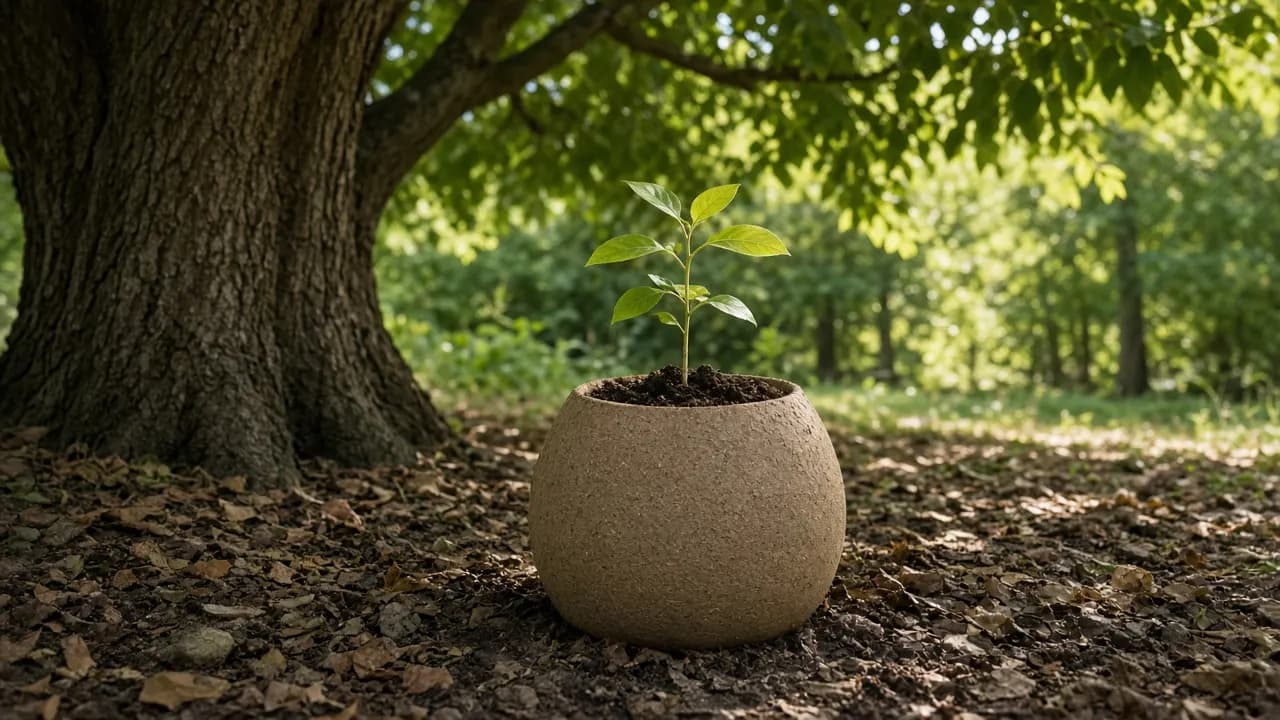
What a greener goodbye costs in Orange
For a medium-size dog, published private aquamation prices at two US providers sit around $200–$259[6], and one Arizona provider's individual aquamation price of $75–$349[7] includes an urn, nameplate and ink paw print. Whether an Orange provider bundles extras like that makes a real difference when you compare. Add the bio urn or tree separately, and use the planner below to see the total.
Rather than repeat the price table on every city page, we keep one for Texas: Texas costs. What each service includes is on the services page.

Free tool
Memorial budget planner
Add up cremation, urn, keepsakes and a farewell so the total holds no surprises.
Rules worth knowing in Texas before you scatter
Rules change more often than most people realise, and many local policies about ashes were never written down at all. Treat any general guide for Texas, including ours, as a starting point. Whoever looks after that particular field, park or shoreline is the one whose answer counts, so it's worth getting it by email where you can.
To find your county or city office in Texas, start with the official Texas local government directory.
Home burial and scattering are governed at the Texas level first; our Texas rules summary has the detail. Then check whether Orange or your HOA adds anything.
From ashes to a growing tree: the steps
- Take your time. There's no clock running on a bio urn. Sort out the cremation, bring the ashes home once they're released, and plant whenever you're ready, even months later.
- Ask for individual cremation, flame or water, so the ashes you plant are your pet's own. Ask for them in a plain container if you won't keep a display urn.
- Check how much ash you have. Many kits are sized for a set volume, and a large dog's ashes may not all fit.
- Choose the place and the tree together. Weigh up light, room to spread, buried pipes or cables, and whether you're likely to be at that address a decade from now.
- Mix, don't layer. Blend the ashes through plenty of compost and soil, let the mix rest if you can and test the pH.
- Plant in the right season, whatever that is in Orange, soak the roots and mulch a wide circle.
- Mark the spot with a small stone or plant label, and note the date somewhere you'll find it.
Remembering your pet in Orange
Orange shares a great deal of culture with neighboring southwest Louisiana, including strong Catholic and Cajun traditions around remembering the dead. Some families mark a pet's passing with a candle, a blessing from a priest, or a small shrine on a bedroom dresser. Whatever your background, a memorial that fits the customs of your own household will feel most natural in the years ahead.
the guides answer the longer questions and the blog the newer ones, or see what other families chose in the poll results, use the free tools before you ring anyone, Compare every option on our services page. If you live between Orange and San Antonio, Fort Worth, El Paso and Austin, either page applies. Every other community in Texas, and all of the United States, is listed too.

Reader polls
What would you choose?
Vote anonymously and see how other readers answered. The results are live counts from people who visit this site, so they show real opinions, not a scientific sample.
Would you consider releasing your pet's ashes in water?
Tap an answer to vote and see how others answered. Anonymous.
If water cremation (aquamation) were offered near you, would you choose it?
Tap an answer to vote and see how others answered. Anonymous.
If you had to decide today, which aftercare would you choose for your pet?
Tap an answer to vote and see how others answered. Anonymous.

Free tools to help you plan
Memorial budget planner
Add up cremation, urn, keepsakes and a farewell so the total holds no surprises.

Memorial tree finder
Pick a tree for a planting urn that suits your climate, space and pet.

Aftercare options compared
Compare private, communal and water cremation with burial on cost, timing and what comes home.
Questions people ask
How does Orange's weather affect pet aftercare?
August is the hottest month in Orange, with average highs around 93°F, so prompt collection matters most then. Winters are mild, with average lows staying above freezing, so outdoor burial or scattering is usually possible year round.
How do Texas attitudes to cremation compare?
NFDA 2024 Cremation & Burial Report state projections (via Occasional Sage) (2024) puts the Texas human cremation rate at about 55.7%[5]. We show it on the Orange page because pet aftercare choices tend to track it: where cremation is normal for people, communal and private pet cremation are both easy to find.
Can a provider from a neighbouring town collect from Orange?
Usually yes. Bridge City is about 8 miles away, Groves is about 15 miles away and Port Neches is about 15 miles away, all inside a normal collection radius. Get the mileage written into the quote so there is no surprise on the day.
Is Orange big enough to have several pet aftercare providers?
Probably, on the numbers. By our estimate about 7,150 Orange households keep a dog or cat and around 600 lose one each year, which is enough steady demand to support more than one provider. We derive that from population (about 19,419), household size and national ownership and lifespan figures.
Do bio urns work with ashes from flame cremation?
Yes. A bio urn works with ashes from flame cremation or water cremation. Both leave mineral-rich, alkaline ash, so the soil advice is the same either way: dilute the ashes well through compost and soil, let the mix rest if you can, and test the pH before a young tree goes in.
What happens to the memorial tree if I move away from Orange?
It stays with the land, and ashes mixed into soil can't be recovered. If a move is possible, plant in a large container, plant at a relative's home, or keep a small portion of the ashes back for a future garden. Cuttings from many shrubs root easily, so you can take a piece of the plant with you.


Sources and our estimates
- [1] 53% of US households own a dog, which is about 71 million households. American Pet Products Association (APPA) 2025 State of the Industry, 2025.
- [2] US dogs have an average life expectancy at birth of 12.69 years. Montoya et al. 2023, Frontiers in Veterinary Science - Banfield Pet Hospital life expectancy tables (13.3 million dogs, 2.4 million cats, 2013-2019), 2023.
- [3] 39% of US households own a cat, which is about 53 million households. American Pet Products Association (APPA) 2025 State of the Industry, 2025.
- [4] US cats seen at Banfield hospitals have an average life expectancy at birth of 11.18 years. Montoya et al. 2023, Frontiers in Veterinary Science - Banfield Pet Hospital life expectancy tables (13.3 million dogs, 2.4 million cats, 2013-2019), 2023.
- [5] The NFDA projected Texas's cremation rate at 55.7% for 2024. NFDA 2024 Cremation & Burial Report state projections (via Occasional Sage), 2024.
- [6] Private aquamation for a 21–50 lb dog costs about $200–$259 at two posted US price lists. Our estimate: Delaware 10–49 lb $200; A Greener Place 21–50 lb $259. How we calculate.
- [7] A Greener Place in Mesa, Arizona, charges $75–$349 for individual pet aquamation by weight, including an urn, nameplate and ink paw print. A Greener Place Pet Aquamation – Pricing, 2026.
- [8] Switching one human-scale cremation to alkaline hydrolysis saves about 112 kg CO2e under TNO's accounting. Our estimate: 79.9 - (-31.8) kg CO2e. How we calculate.
Ask about aquamation near Orange
Tell us what you need and where you are. We'll reply by email with clear options and prices so you can decide in your own time.