Greener pet aftercare in Plano, Texas
Roughly 9,000 Plano families say goodbye to a dog or cat each year, by our count. A living memorial is one way to mark it. This guide explains how to make one that actually grows.
- A memorial that moves with you
- Why pure ashes harm young roots
- Written prices you can compare
Plano, Texas
Where a living memorial fits in Plano
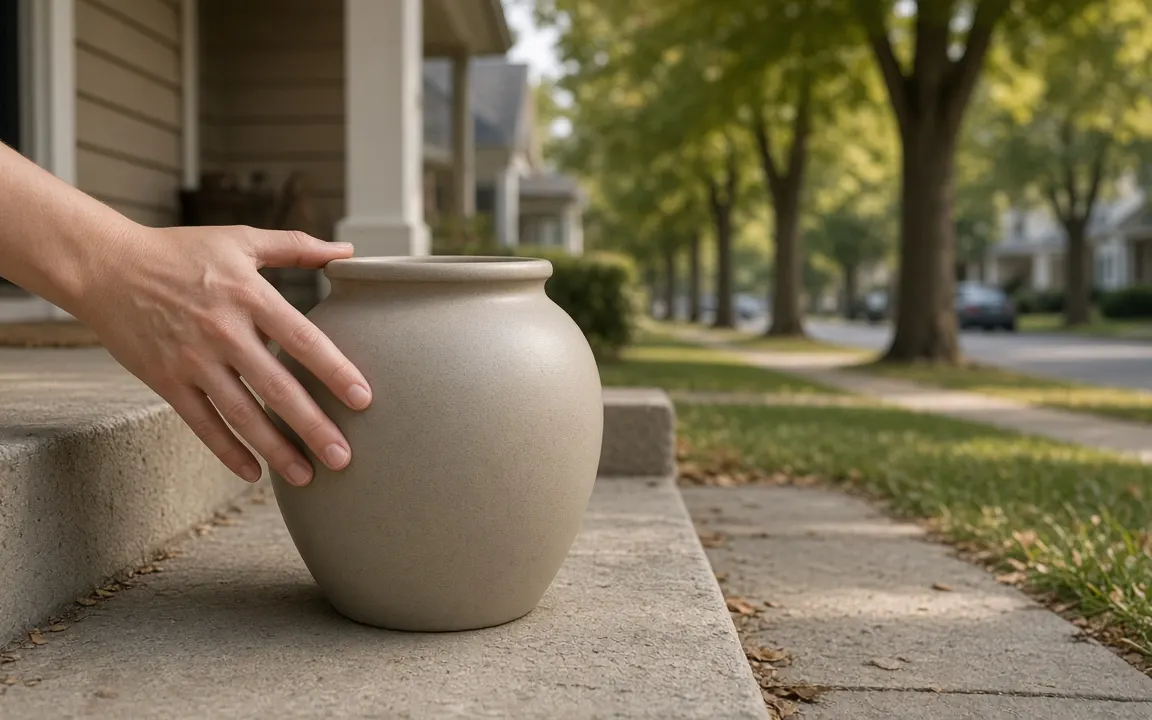
Outdoor memorials in Plano face intense summer sun, hailstorms and the occasional hard freeze. Granite, bronze and stainless steel hold up well, while painted wood and printed plaques fade and crack. Placing a garden stone in the shade of a tree, or keeping a memorial indoors, will help it last. Check HOA rules before placing anything in a front yard.
Plano's large and diverse community brings many traditions to remembering a pet, from candles and prayers to a family meal on an anniversary. There's no right or wrong way. If you'd like a memorial that fits your faith or culture, such as a particular kind of urn or a ceremony, let us know when you ask for options. We pass those details on to providers.
Dogs and some cats will dig into fresh soil, and a planting that holds bone ash smells interesting to them. For the first few months in Plano, cover the planted area with a ring of flat stones, a piece of wire mesh under the mulch or a short temporary fence. Once the ground settles and the smell fades, most pets lose interest.
Plano's population is around 293,028, the 9th-largest of the 325 Texas communities we cover. Some of the providers who serve Plano are based about 18 miles away in Dallas, the nearest larger centre, so collection times reflect that drive.
If you want to compare providers, look at Murphy (5 miles), Richardson (5 miles) and Allen (6 miles). Distance matters because pickup fees and the time until the ashes come back both grow with the drive.
Our estimate
110,000
How many dog- or cat-owning households Plano has (estimate)
How we calculated this
293,028 ÷ 2.5 = 117,211 households; × 53% (dog) + 39% (cat) = 110,000. A household with several pets counts once.
Our estimate
9,000
Estimated dog and cat losses in Plano each year
How we calculated this
110,000 dog/cat-owning homes ÷ average lifespan (dog: 12.69 yrs + cat: 11.18 yrs) ≈ 9,000 a year. A floor, not a ceiling.
53%[1]
53% of US households own a dog, which is about 71 million households.
12.69 years[2]
US dogs have an average life expectancy at birth of 12.69 years.
39%[3]
39% of US households own a cat, which is about 53 million households.
11.18 years[4]
US cats seen at Banfield hospitals have an average life expectancy at birth of 11.18 years.
The numbers above come from American Pet Products Association (APPA) 2025 State of the Industry and Montoya et al. 2023, Frontiers in Veterinary Science, if you'd like to read the original sources.
Why cremation culture in Texas shapes your options
Faith shapes these choices in Texas, where cremation covers about 55.7%[5] of deaths and burial much of the rest. Some traditions that prefer burial for people have no view on pets; others do. If this matters to anyone in your household, ask a faith leader you trust. A planting urn puts the ashes back into the ground, which many people find sits comfortably with a burial tradition.
That Texas rate is a human one, published by NFDA 2024 Cremation & Burial Report state projections (via Occasional Sage) (2024). We quote it for Plano only as a pointer to how families here already think about cremation.
Weather, soil and planting windows in Plano
Plano summers are hard on young trees: August averages highs around 97°F. Don't plant a memorial tree in the hottest months. Aim for the cooler part of the year, when roots can grow before the next summer arrives. Ashes don't need to go into the ground quickly, so keeping them safely at home for a few months is completely fine.
Hot weather in Plano changes the plan for a planting ceremony too. With August highs near 97°F, an outdoor gathering at midday is uncomfortable and stressful for the new plant. Choose an early morning or evening in a cooler month, set out shade and water for guests, and water the tree in well straight after planting. A light, pale mulch helps keep the root zone cool.
What a greener goodbye costs in Plano
For a medium-size dog, published private aquamation prices at two US providers sit around $200–$259[6], and one Arizona provider's individual aquamation price of $75–$349[7] includes an urn, nameplate and ink paw print. Whether a Plano provider bundles extras like that makes a real difference when you compare. Add the bio urn or tree separately, and use the planner below to see the total.
For a line-by-line price table, see the Texas overview; for what's included in each option, see our services.

Free tool
Memorial budget planner
Add up cremation, urn, keepsakes and a farewell so the total holds no surprises.
What Texas allows for ashes, in general terms
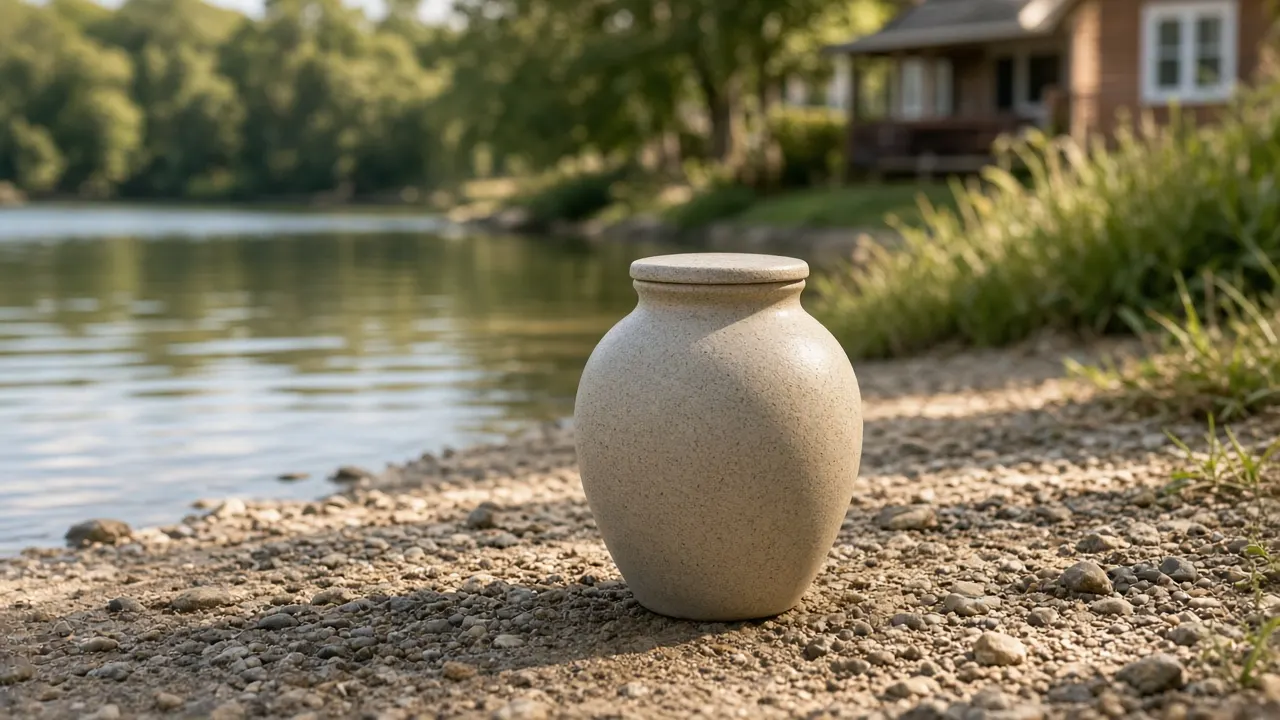
Water releases need a little more care than a garden planting. Rivers, lakes, reservoirs and coastal waters in Texas are managed by different bodies, and drinking-water sources are often off-limits. Wherever you release, use only a water-soluble urn or loose ashes, add nothing but loose flower petals, and let no plastic, ribbon or wreath wire float away.
The official Texas local government directory lists every county and city office, which is the quickest way to find who to ask in Plano.
The rules that apply across Texas (home burial, scattering and who oversees pet cremation) are summarized on our Texas page. Plano may add its own conditions, so check with the city or county before digging.
How to plan a living memorial, in order
- Confirm the ashes will come back. With a communal cremation there's normally nothing to collect afterwards, which leaves you with nothing to put in an urn.
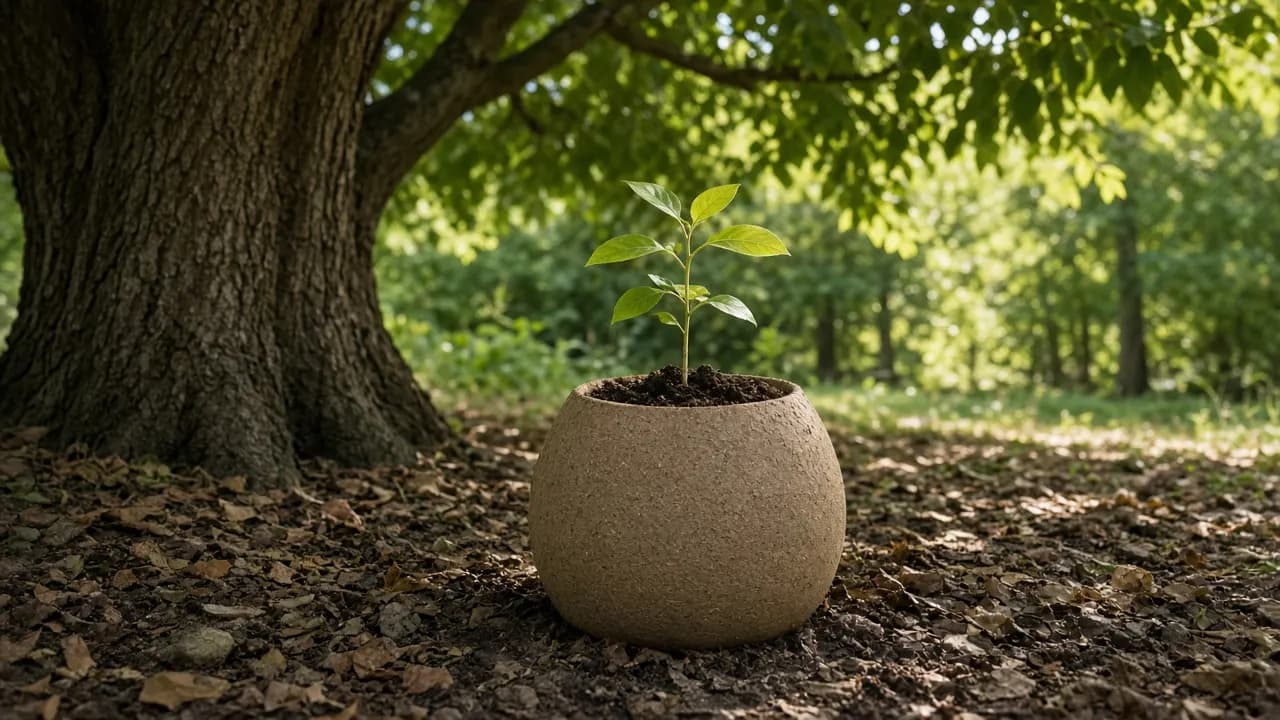
- Pick the type of bio urn: a planting urn for a tree, a plain burial urn for a garden corner, a water urn for a lake or the sea.
- Ask permission before using ground you don't own, whether that's a landlord, a farmer or whoever runs the park.
- Plan for the weather. In Plano, avoid frozen, baked or waterlogged ground; a calm, mild day is best for planting or a release.
- Release gently on water. Set the urn on the surface, let it float and sink on its own, and add only loose petals.
- Come back in a year. Replace mulch, check the tree's growth and take a photo to mark the anniversary.
Keeping the memorial alive in Plano
Many families in Plano moved here for work and may move again, so portable memorials often make sense. An urn on a shelf, a keepsake pendant or ring, or a framed paw print go wherever you go. If you'd like to plant something too, ask for a small portion of the ashes to be kept aside first, so you have both.
or see how other readers answered in our polls, the planning tools turn your pet's details into figures, The services page is the place to compare what is included, go deeper with the guides or catch up on recent articles. More local pages: Houston, Dallas, Austin and Fort Worth, the Texas overview and every city in the United States.

Reader polls
What would you choose?
Vote anonymously and see how other readers answered. The results are live counts from people who visit this site, so they show real opinions, not a scientific sample.
What kind of tree or plant would you choose?
Tap an answer to vote and see how others answered. Anonymous.
Would you consider releasing your pet's ashes in water?
Tap an answer to vote and see how others answered. Anonymous.
If you had to decide today, which aftercare would you choose for your pet?
Tap an answer to vote and see how others answered. Anonymous.

Free tools to help you plan
Memorial budget planner
Add up cremation, urn, keepsakes and a farewell so the total holds no surprises.

Memorial tree finder
Pick a tree for a planting urn that suits your climate, space and pet.

Aftercare options compared
Compare private, communal and water cremation with burial on cost, timing and what comes home.
Questions people ask
Is cremation common in Texas?
For people, yes: about 55.7%[5] of Texas deaths end in cremation, according to NFDA 2024 Cremation & Burial Report state projections (via Occasional Sage) (2024). Nobody publishes the same figure for pets, but in our experience pet choices in Plano follow the human pattern closely, so cremation is the default most families here start from.
Where are the providers that serve Plano actually based?
Some are local, and some run from Dallas, about 18 miles away. That is normal for a city this size. What matters is the collection time they quote for Plano and whether the drive is priced into the total, so ask both up front.
Can a provider from a neighbouring town collect from Plano?
Usually yes. Murphy is about 5 miles away, Richardson is about 5 miles away and Allen is about 6 miles away, all inside a normal collection radius. Get the mileage written into the quote so there is no surprise on the day.
Roughly how many pets die in Plano each year?
Our estimate is around 9,000. It comes from Plano's population (about 293,028), the average household size, the share of homes with a dog or cat (about 110,000 households here) and the average lifespan. It is arithmetic, not a count, so read it as a rough floor.
Is water cremation better for the environment?
It uses much less energy: pet aquamation is claimed to use about 90%[9] less energy than flame cremation, and it uses about as much water as 1–3 pet baths[10] per pet. The strongest carbon figures come from studies of human funerals, not pets, so treat them as a direction rather than a promise. You still get ashes back for a bio urn.
Will the seed in a tree urn grow?
Not always. Seeds from kits can fail to sprout if they weren't stored or chilled correctly, and alkaline soil around them makes it harder. A young tree from a nursery near Plano is far more reliable, and most planting urns work just as well with a sapling in the top chamber.


Sources and our estimates
- [1] 53% of US households own a dog, which is about 71 million households. American Pet Products Association (APPA) 2025 State of the Industry, 2025.
- [2] US dogs have an average life expectancy at birth of 12.69 years. Montoya et al. 2023, Frontiers in Veterinary Science - Banfield Pet Hospital life expectancy tables (13.3 million dogs, 2.4 million cats, 2013-2019), 2023.
- [3] 39% of US households own a cat, which is about 53 million households. American Pet Products Association (APPA) 2025 State of the Industry, 2025.
- [4] US cats seen at Banfield hospitals have an average life expectancy at birth of 11.18 years. Montoya et al. 2023, Frontiers in Veterinary Science - Banfield Pet Hospital life expectancy tables (13.3 million dogs, 2.4 million cats, 2013-2019), 2023.
- [5] The NFDA projected Texas's cremation rate at 55.7% for 2024. NFDA 2024 Cremation & Burial Report state projections (via Occasional Sage), 2024.
- [6] Private aquamation for a 21–50 lb dog costs about $200–$259 at two posted US price lists. Our estimate: Delaware 10–49 lb $200; A Greener Place 21–50 lb $259. How we calculate.
- [7] A Greener Place in Mesa, Arizona, charges $75–$349 for individual pet aquamation by weight, including an urn, nameplate and ink paw print. A Greener Place Pet Aquamation – Pricing, 2026.
- [8] Switching one human-scale cremation to alkaline hydrolysis saves about 112 kg CO2e under TNO's accounting. Our estimate: 79.9 - (-31.8) kg CO2e. How we calculate.
- [9] Pet aquamation is described as available across all 50 US states, and is claimed to use about 90% less energy than flame cremation. Be a Tree Cremation pet aquamation guide, 2025.
- [10] Aquamation uses about the same water per pet as 1–3 pet baths. Veterinary Sustainability Alliance — Aquamation, 2024.
Tell us about your pet and your garden
Tell us what you need and where you are. We'll reply by email with clear options and prices so you can decide in your own time.