Planting your pet's ashes in Taylor
By our estimate, around 6,750 households in Taylor share their home with a dog or cat, and roughly 560 of those pets die each year. More of those families now ask about planting or water memorials. Here's how to do it well.
- Options for renters and apartments
- Water release rules in plain words
- No obligation, we reply by email

Taylor, Texas
Bio urns, trees and water in Taylor
Taylor's brick storefronts and older frame houses give the town a settled feel, and many families like memorials with the same character: a stone under a pecan tree, a small box on a bookshelf, a simple piece worn daily. A memorial you notice as you pass through a doorway usually means more than one tucked away in a closet. A kitchen windowsill works well too.
As Taylor grows, many families here have relatives both in the old part of town and in fast-growing suburbs toward Hutto and Round Rock. Dividing the remains into one principal container plus a few little portions means every branch of the family has something. Small sealed containers also travel safely by mail or in a carry-on bag. Order the portions before the cremation date.
Country land around Taylor gives you options city families don't have, and a few extra things to think about. Keep ash plantings well away from wells, springs and streams, and away from ground where livestock graze or crops are grown. Choose a spot with some shelter from wind for a young tree, and remember that deer and rabbits find new plantings quickly; a simple tree guard or wire cage for the first few years can make all the difference.
With roughly 18,402 residents, Taylor is the 157th-largest of the 325 Texas communities we cover. The nearest larger centre is Austin, about 28 miles (45 km) away, which is where some providers serving Taylor are based.
Our pages for Hutto (7 miles, a larger centre), Pflugerville (15 miles, a larger centre) and Georgetown (15 miles, a larger centre) describe the same choices from those towns' point of view, and the providers overlap, so a quote from one often covers Taylor as well.
Our estimate
6,750
Estimated dog- or cat-owning households in Taylor
How we calculated this
18,402 ÷ 2.5 = 7,361 households; × 53% (dog) + 39% (cat) = 6,750. Homes are counted once however many pets they keep.
Our estimate
560
Estimated dog and cat losses in Taylor each year
How we calculated this
6,750 dog/cat-owning homes ÷ average lifespan (dog: 12.69 yrs + cat: 11.18 yrs) ≈ 560 a year. The real figure is unlikely to be lower.
53%[1]
53% of US households own a dog, which is about 71 million households.
12.69 years[2]
US dogs have an average life expectancy at birth of 12.69 years.
39%[3]
39% of US households own a cat, which is about 53 million households.
11.18 years[4]
US cats seen at Banfield hospitals have an average life expectancy at birth of 11.18 years.
The numbers above come from American Pet Products Association (APPA) 2025 State of the Industry and Montoya et al. 2023, Frontiers in Veterinary Science, if you'd like to read the original sources.

The local attitude to ashes and memorials
Cremation and burial are both familiar in Texas, where about 55.7%[5] of people are cremated. For many families that means a pet's aftercare starts with a question of tradition: bury in the yard as earlier generations did, or cremate and keep the ashes. A bio urn sits happily between the two. It returns the ashes to the earth like a burial, but without a large grave, and it can be planted in a spot you choose later.
The Texas percentage above is from NFDA 2024 Cremation & Burial Report state projections (via Occasional Sage) (2024) and refers to human funerals. Treat it as context for Taylor, not as a count of pets.
Choosing the right month to plant in Taylor
Heat narrows the tree list in Taylor. Months like May, June, July, August and September bring sustained highs, so choose species that already cope locally: drought-tolerant natives, or trees a local nursery recommends for full sun. A seed from a planting kit, bred somewhere cooler, is a gamble here. Plant a sturdy nursery sapling instead, mulch a wide ring around it and plan to water it through its first two summers.
Watering is where most memorial trees in hot places succeed or fail. In Taylor, give a new planting a slow, deep soak once or twice a week through May, June, July, August and September rather than a daily sprinkle. A drip line or a slow-release watering bag works well if you'll be away. A deep soak flushes salts from the ash blend below the root zone and coaxes roots to grow downward too.
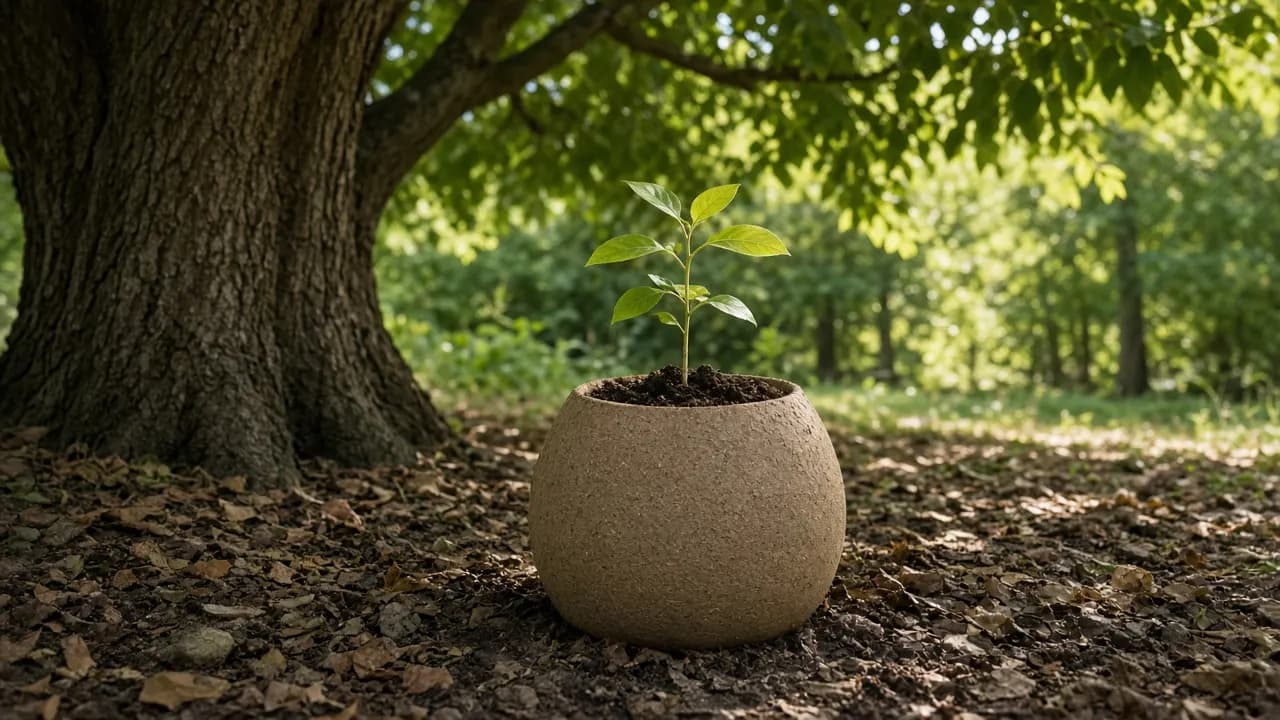
Eco memorial prices, from urn to tree
Add up every part before you commit. Beyond the cremation, a living memorial in Taylor can include the bio urn, compost and bark, a pH kit, the tree or shrub, a guard against deer or rabbits, and perhaps a marker. Our memorial budget planner lists each line so nothing surprises you. Most families find the tree is the cheapest part and the cremation the most expensive.
Prices for Taylor track the wider Texas market, so use the Texas price table as your baseline and the services page to see what is included.

Free tool
Memorial budget planner
Add up cremation, urn, keepsakes and a farewell so the total holds no surprises.
Land, water and permission in Texas
Carrying ashes from one place to another is usually simple, but keep the paperwork. The certificate or letter from the crematory shows what's in the container, which helps if you're crossing borders, flying out of Texas or handing the ashes to a cemetery. Keep a copy with the ashes and another somewhere safe at home.
Not sure which office covers Taylor? The Texas local government directory is the official list.
The rules that apply across Texas (home burial, scattering and who oversees pet cremation) are summarized on our Texas page. Taylor may add its own conditions, so check with the city or county before digging.
A simple plan for your pet's eco memorial
- Talk it through with your household before deciding anything, since someone may quietly prefer the ashes to stay indoors.
- Measure your space. A tree needs room to grow; a shrub, a pot or a flower bed may suit your garden better.
- Test the soil at the planting site. Ground that already reads alkaline calls for a species that tolerates lime, plus more compost or composted bark than usual.
- Spread the ashes through a wide planting area, not in one band directly beneath the root ball.
- Water well for two summers. Most memorial trees that fail do so in their first dry season, not their first winter.
- Keep a record of the species, the date and what went into the soil, so you can care for it or move a cutting later.
Remembering your pet in Taylor
Anything set outdoors in Taylor must cope with fierce sun, occasional hail and clay ground that heaves with the seasons. A heavy granite marker bedded on gravel stays level far longer than a light garden stone. Keep delicate glass or ceramic keepsakes inside, away from direct afternoon light. Sheltered porches on the east side of a house are the gentlest outdoor spots.
go deeper with the guides or catch up on recent articles, or look at how readers voted in our polls, the planning tools turn your pet's details into figures, Compare every option on our services page. More local pages: Houston, Austin, San Antonio and Dallas, the Texas overview and every city in the United States.

Reader polls
What would you choose?
Vote anonymously and see how other readers answered. The results are live counts from people who visit this site, so they show real opinions, not a scientific sample.
What kind of tree or plant would you choose?
Tap an answer to vote and see how others answered. Anonymous.
If water cremation (aquamation) were offered near you, would you choose it?
Tap an answer to vote and see how others answered. Anonymous.
If you had to decide today, which aftercare would you choose for your pet?
Tap an answer to vote and see how others answered. Anonymous.

Free tools to help you plan
Memorial budget planner
Add up cremation, urn, keepsakes and a farewell so the total holds no surprises.

Memorial tree finder
Pick a tree for a planting urn that suits your climate, space and pet.

Aftercare options compared
Compare private, communal and water cremation with burial on cost, timing and what comes home.
Questions people ask
Is Taylor big enough to have several pet aftercare providers?
Probably, on the numbers. By our estimate about 6,750 Taylor households keep a dog or cat and around 560 lose one each year, which is enough steady demand to support more than one provider. We derive that from population (about 18,402), household size and national ownership and lifespan figures.
How does Taylor's weather affect pet aftercare?
August is the hottest month in Taylor, with average highs around 96°F, so prompt collection matters most then. Winters are mild, with average lows staying above freezing, so outdoor burial or scattering is usually possible year round.
How do Texas attitudes to cremation compare?
NFDA 2024 Cremation & Burial Report state projections (via Occasional Sage) (2024) puts the Texas human cremation rate at about 55.7%[5]. We show it on the Taylor page because pet aftercare choices tend to track it: where cremation is normal for people, communal and private pet cremation are both easy to find.
Where are the providers that serve Taylor actually based?
Some are local, and some run from Austin, about 28 miles away. That is normal for a town this size. What matters is the collection time they quote for Taylor and whether the drive is priced into the total, so ask both up front.
How long does it take to get ashes back for planting?
Most private cremations return ashes within one to two weeks, and water cremation cycles themselves take 12–20 hours[7], so allow a similar time. In a smaller place, if the cremation happens in a larger centre such as Austin, it may take a little longer. Planting can wait, so there's no need to rush.
Can I plant a tree directly on my pet's ashes in Taylor?
It's better not to. Cremated remains have a very high pH, around 11.7[8], and they're high in sodium, so a solid layer of ash under the roots can yellow or kill a young tree. Mix the ashes through plenty of compost and soil across a wider area, test the pH, and plant once it has come down. There's no single mixing ratio that suits every pet and every soil.


Sources and our estimates
- [1] 53% of US households own a dog, which is about 71 million households. American Pet Products Association (APPA) 2025 State of the Industry, 2025.
- [2] US dogs have an average life expectancy at birth of 12.69 years. Montoya et al. 2023, Frontiers in Veterinary Science - Banfield Pet Hospital life expectancy tables (13.3 million dogs, 2.4 million cats, 2013-2019), 2023.
- [3] 39% of US households own a cat, which is about 53 million households. American Pet Products Association (APPA) 2025 State of the Industry, 2025.
- [4] US cats seen at Banfield hospitals have an average life expectancy at birth of 11.18 years. Montoya et al. 2023, Frontiers in Veterinary Science - Banfield Pet Hospital life expectancy tables (13.3 million dogs, 2.4 million cats, 2013-2019), 2023.
- [5] The NFDA projected Texas's cremation rate at 55.7% for 2024. NFDA 2024 Cremation & Burial Report state projections (via Occasional Sage), 2024.
- [6] About 59 million U.S. pet-owning households may be open to eco-friendly aftercare options. Our estimate: 86.9M pet households x 68% interested in green funeral options. How we calculate.
- [7] A PET-550 aquamation cycle takes 12–20 hours for a single pet and 14–20 hours for segregated or communal cycles, with up to 14 compartments. Bio-Response Solutions — PET-550 Aquamation System product page, 2026.
- [8] Cremated remains have a very high pH of approximately 11.7, which is toxic to plants without amendment. Larkspur Conservation — Giving Cremated Remains a New Life Through Science, 2024.
Get eco memorial ideas by email
Tell us what you need and where you are. We'll reply by email with clear options and prices so you can decide in your own time.