Planting your pet's ashes in Victoria
Victoria has an estimated 24,500 dog- or cat-owning households. When a planting or water memorial feels right for yours, here's what works in the local climate and what to ask before you buy.
- Planting, garden and water urns compared
- Honest notes on local rules
- Help choosing a native species

Victoria, Texas
Where a living memorial fits in Victoria
Victoria's ranching families and old river-town households often favor memorials with some heft: a granite marker by the barn, a cedar box branded with the ranch's mark, a framed photograph on the mantel. Pendants and small keepsakes appeal to others, especially relatives who live away. Portions of ashes can go to several homes at once. Engraving on an urn can carry a brand, a nickname or the ranch's name.
Gulf humidity, strong sun and the occasional tropical storm are hard on anything left outdoors in Victoria. Solid granite, bronze or dense cast stone will weather far better than thin resin or painted concrete. If you want a tree over a biodegradable urn, a live oak or a native pecan suits coastal-plain soil and is best planted in the cool months.
Space is often generous around Victoria, so think about where you'll see the memorial every day. A tree framed in the kitchen window, beside the path to the barn or at the end of the drive becomes part of the daily routine. Planting it somewhere far from the house can mean it's only visited on anniversaries, which suits some families and not others.
Victoria's population is around 66,500, the 59th-largest of the 325 Texas communities we cover. Some of the providers who serve Victoria are based about 73 miles away in Corpus Christi, the nearest larger centre, so collection times reflect that drive.
Families in Victoria often end up using a provider from Edna (25 miles), Cuero (26 miles) and Port Lavaca (26 miles). That is normal: crematories serve a radius, not a single town, and the drive is priced into collection.
Our estimate
24,500
Estimated dog- or cat-owning households in Victoria
How we calculated this
66,500 ÷ 2.5 = 26,600 households; × 53% (dog) + 39% (cat) = 24,500. Multi-pet homes count once.
Our estimate
2,050
Victoria families who lose a dog or cat each year (estimate)
How we calculated this
24,500 dog/cat-owning homes ÷ average lifespan (dog: 12.69 yrs + cat: 11.18 yrs) ≈ 2,050 a year. The real figure is unlikely to be lower.
53%[1]
53% of US households own a dog, which is about 71 million households.
12.69 years[2]
US dogs have an average life expectancy at birth of 12.69 years.
39%[3]
39% of US households own a cat, which is about 53 million households.
11.18 years[4]
US cats seen at Banfield hospitals have an average life expectancy at birth of 11.18 years.
The published sources behind those figures are American Pet Products Association (APPA) 2025 State of the Industry and Montoya et al. 2023, Frontiers in Veterinary Science.

Why cremation culture in Texas shapes your options
The human cremation rate in Texas sits around 55.7%[5], so many families have a foot in both camps, and generations can disagree. Grandparents may expect a grave in the yard; younger relatives may want ashes they can take with them. Talking it through before the vet asks you to choose saves a hard conversation on a hard day. A tree over buried ashes often satisfies both sides.
NFDA 2024 Cremation & Burial Report state projections (via Occasional Sage) (2024) is where the Texas figure comes from. It counts people; we use it because attitudes to cremating a pet in Victoria tend to follow attitudes to cremation generally.
Weather, soil and planting windows in Victoria
If you're unsure what grows in Victoria, visit a public park, a botanic garden or a cemetery with old trees and see which species look healthy after decades. Those are proven in local weather and soil. Take photos of the labels, or of the leaves and bark, and ask a nursery whether a smaller relative would suit your garden.
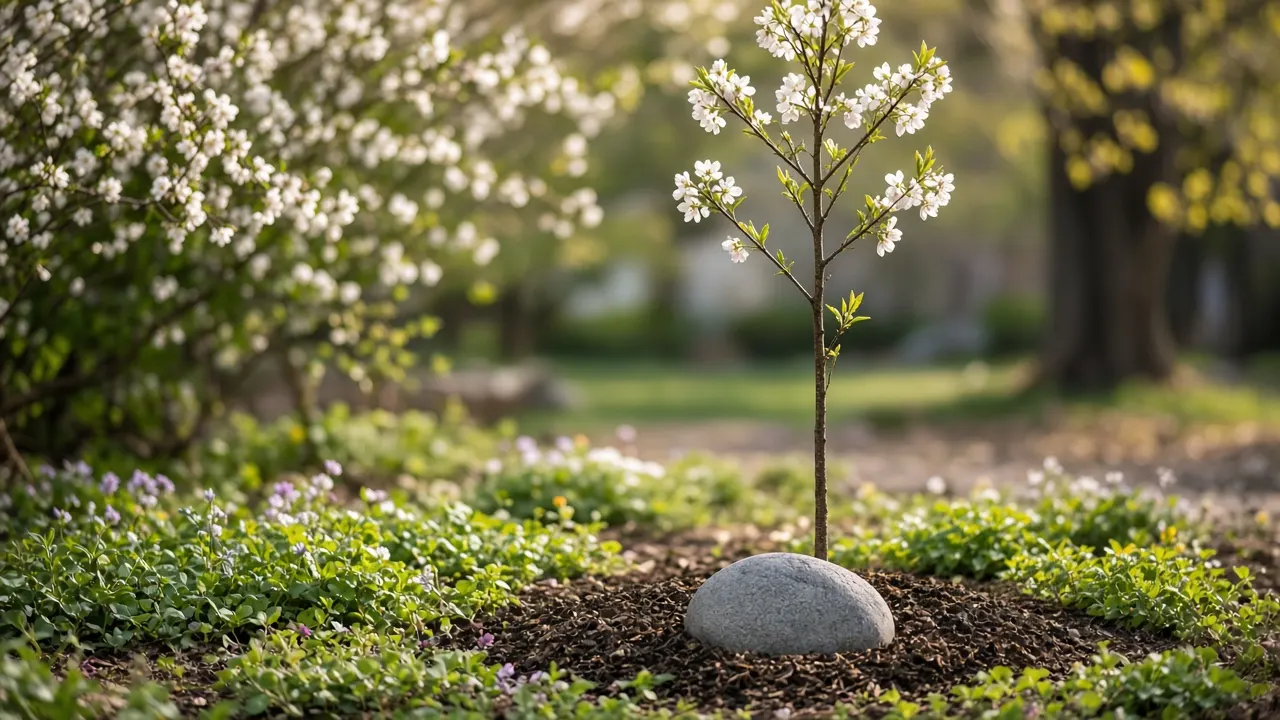
Budgeting for a living memorial in Victoria
Add up every part before you commit. Beyond the cremation, a living memorial in Victoria can include the bio urn, compost and bark, a pH kit, the tree or shrub, a guard against deer or rabbits, and perhaps a marker. Our memorial budget planner lists each line so nothing surprises you. Most families find the tree is the cheapest part and the cremation the most expensive.
The Texas price table breaks costs down by product; our services page explains what sits behind each line.

Free tool
Memorial budget planner
Add up cremation, urn, keepsakes and a farewell so the total holds no surprises.
What Texas allows for ashes, in general terms
Rules change more often than most people realise, and many local policies about ashes were never written down at all. Treat any general guide for Texas, including ours, as a starting point. Whoever looks after that particular field, park or shoreline is the one whose answer counts, so it's worth getting it by email where you can.
The official Texas local government directory lists every county and city office, which is the quickest way to find who to ask in Victoria.
The rules that apply across Texas (home burial, scattering and who oversees pet cremation) are summarized on our Texas page. Victoria may add its own conditions, so check with the city or county before digging.
What to do first, and what can wait for the right season
- If you find your pet has died at home, lift them carefully onto a blanket or towel and lay them in the coolest part of the house, then phone the vet or a nearby pet crematory. Most can either pick them up or point you to a drop-off place.
- Say you want individual cremation and that you plan to plant the ashes. That one sentence steers the provider away from communal options that return nothing.
- Keep the collar, a tag and a little fur while your pet is still with you at home. Later on they can be buried alongside the urn or tucked away in a keepsake box.
- Leave the memorial decisions for another week. Nobody should have to settle on a species and a spot on the evening their pet died.
- When the ashes arrive, open the box once to see how much there is and how the inner bag is sealed, then put the lid back and keep it somewhere dry.
- Use our [memorial tree finder](/tools/memorial-tree-finder) when the time feels right, then pencil in the planting for a quiet weekend during the proper season.
Remembering your pet in Victoria
Church life and long family roots are strong in Victoria, and a pet memorial can take its place naturally among other remembrances at home. No one needs to rush the choice of urn or marker. Keepsakes taken from the body itself are different: paw prints, nose prints and saved fur have to be asked for before cremation. Tell the provider at the first call so nothing is missed.
Our services overview lays out every option side by side, look through our guides and the blog, or compare your instinct with the poll results, run the numbers with the free planning tools. You can also browse every city in the United States. Nearby, we also cover Austin, El Paso, Houston and Dallas, and every city in Texas.

Reader polls
What would you choose?
Vote anonymously and see how other readers answered. The results are live counts from people who visit this site, so they show real opinions, not a scientific sample.
Would you consider releasing your pet's ashes in water?
Tap an answer to vote and see how others answered. Anonymous.
If you rent or might move, how would you handle a memorial planting?
Tap an answer to vote and see how others answered. Anonymous.
If you had to decide today, which aftercare would you choose for your pet?
Tap an answer to vote and see how others answered. Anonymous.

Free tools to help you plan
Memorial budget planner
Add up cremation, urn, keepsakes and a farewell so the total holds no surprises.

Memorial tree finder
Pick a tree for a planting urn that suits your climate, space and pet.

Aftercare options compared
Compare private, communal and water cremation with burial on cost, timing and what comes home.
Questions people ask
How many pet owners live in Victoria?
By our estimate, about 24,500 households in Victoria have at least one dog or cat, and around 2,050 are lost each year. We calculate this from the city's population of about 66,500, the average household size and national ownership and lifespan figures, so treat it as a floor rather than an exact count.
Is cremation common in Texas?
For people, yes: about 55.7%[5] of Texas deaths end in cremation, according to NFDA 2024 Cremation & Burial Report state projections (via Occasional Sage) (2024). Nobody publishes the same figure for pets, but in our experience pet choices in Victoria follow the human pattern closely, so cremation is the default most families here start from.
Will I have to travel to Corpus Christi to arrange things?
Not usually. Providers based in Corpus Christi (roughly 73 miles from Victoria) collect from here as a matter of routine, and the paperwork is done by email or phone. If you want to be present for a witnessed cremation, that is when the drive matters.
Can a provider from a neighbouring town collect from Victoria?
Usually yes. Edna is about 25 miles away, Cuero is about 26 miles away and Port Lavaca is about 26 miles away, all inside a normal collection radius. Get the mileage written into the quote so there is no surprise on the day.
I rent in Victoria. Can I still have a living memorial?
Yes. Plant in a large container, such as a half-barrel or a big pot with a dwarf tree or flowering shrub, and it moves with you. Use only a small share of the ashes in the pot, well mixed with compost. If you'd like to plant in a rented yard, get the landlord's permission in writing, and remember the tree stays when you leave.
Can I plant a tree directly on my pet's ashes in Victoria?
It's better not to. Cremated remains have a very high pH, around 11.7[7], and they're high in sodium, so a solid layer of ash under the roots can yellow or kill a young tree. Mix the ashes through plenty of compost and soil across a wider area, test the pH, and plant once it has come down. There's no single mixing ratio that suits every pet and every soil.


Sources and our estimates
- [1] 53% of US households own a dog, which is about 71 million households. American Pet Products Association (APPA) 2025 State of the Industry, 2025.
- [2] US dogs have an average life expectancy at birth of 12.69 years. Montoya et al. 2023, Frontiers in Veterinary Science - Banfield Pet Hospital life expectancy tables (13.3 million dogs, 2.4 million cats, 2013-2019), 2023.
- [3] 39% of US households own a cat, which is about 53 million households. American Pet Products Association (APPA) 2025 State of the Industry, 2025.
- [4] US cats seen at Banfield hospitals have an average life expectancy at birth of 11.18 years. Montoya et al. 2023, Frontiers in Veterinary Science - Banfield Pet Hospital life expectancy tables (13.3 million dogs, 2.4 million cats, 2013-2019), 2023.
- [5] The NFDA projected Texas's cremation rate at 55.7% for 2024. NFDA 2024 Cremation & Burial Report state projections (via Occasional Sage), 2024.
- [6] U.S. pet flame cremations emit on the order of 47,000 t CO2e a year. Our estimate: 1.5M pet cremations x 31.3 kg CO2e. How we calculate.
- [7] Cremated remains have a very high pH of approximately 11.7, which is toxic to plants without amendment. Larkspur Conservation — Giving Cremated Remains a New Life Through Science, 2024.
Get eco memorial ideas by email
Tell us what you need and where you are. We'll reply by email with clear options and prices so you can decide in your own time.