A living memorial for your pet in Hurricane
Roughly 790 Hurricane families say goodbye to a dog or cat each year, by our count. A living memorial is one way to mark it. This guide explains how to make one that actually grows.
- A memorial that moves with you
- Why pure ashes harm young roots
- Written prices you can compare

Hurricane, Utah
Where a living memorial fits in Hurricane
Many Hurricane residents moved here from other states, which means children and old friends often live hundreds of miles away. If the ashes are to be shared, have the provider split them from the outset or order a family urn along with several tiny keepsakes. Pendants and mini urns travel easily in a carry-on, a real help when relatives visit only once or twice a year.
Intense sun, heat above 100 degrees and sudden late-summer monsoon storms are hard on outdoor memorials. Resin fades and cracks, and dark metal gets too hot to touch by midday. Native stone, granite and bronze last longer, especially set in partial shade. Indoors, any sealed container is fine, so choose based on what you like to look at every day.
In a town the size of Hurricane, the nearest aquamation provider may be an hour or more away, and pet crematories often serve a wide rural area. That doesn't change what you can do with the ashes. A flame-cremated pet's ashes work just as well in a planting urn or water urn. If a lower-impact goodbye is the main reason you're here, the choice of cremation matters more than the urn, so ask about water cremation before you commit.
Hurricane is home to about 25,745 people, the 40th-largest of the 52 Utah communities we cover.
Hurricane sits within easy reach of Washington (7 miles), St. George (13 miles, a larger centre) and Cedar City (40 miles). A provider based in any of them will usually collect from Hurricane; ask what the mileage adds to the bill.
Our estimate
9,450
Estimated dog- or cat-owning households in Hurricane
How we calculated this
25,745 ÷ 2.5 = 10,298 households; × 53% (dog) + 39% (cat) = 9,450. A household with several pets counts once.
Our estimate
790
Hurricane families who lose a dog or cat each year (estimate)
How we calculated this
9,450 dog/cat-owning homes ÷ average lifespan (dog: 12.69 yrs + cat: 11.18 yrs) ≈ 790 a year. A floor, not a ceiling.
53%[1]
53% of US households own a dog, which is about 71 million households.
12.69 years[2]
US dogs have an average life expectancy at birth of 12.69 years.
39%[3]
39% of US households own a cat, which is about 53 million households.
11.18 years[4]
US cats seen at Banfield hospitals have an average life expectancy at birth of 11.18 years.
If a number here surprises you, the primary material is American Pet Products Association (APPA) 2025 State of the Industry and Montoya et al. 2023, Frontiers in Veterinary Science; we only apply it to this.

What local attitudes to cremation mean in Utah
Cremation is less common for people in Utah, where about 46.1%[5] are cremated. For pet owners, that sometimes means fewer local crematories and almost no water cremation nearby, so ashes may come back from a regional provider. It doesn't limit what you do afterwards. A planting urn, a garden bed or a lake release all work the same way, and none of them needs a local specialist.
NFDA 2024 Cremation & Burial Report state projections (via Occasional Sage) (2024) is where the Utah figure comes from. It counts people; we use it because attitudes to cremating a pet in Hurricane tend to follow attitudes to cremation generally.
What Hurricane's climate means for a living memorial
In a hot climate like Hurricane's, with highs of about 100°F in July, salt is a bigger problem than in wetter places. Rain is what washes sodium from ashes down past the roots, and dry heat lets it build up near the surface. Mix the ashes through a much larger volume of soil and compost than you'd think necessary, and water deeply and slowly after planting so salts move down, not up.
Hurricane summers are hard on young trees: July averages highs around 100°F. Don't plant a memorial tree in the hottest months. Aim for the cooler part of the year, when roots can grow before the next summer arrives. Ashes don't need to go into the ground quickly, so keeping them safely at home for a few months is completely fine.
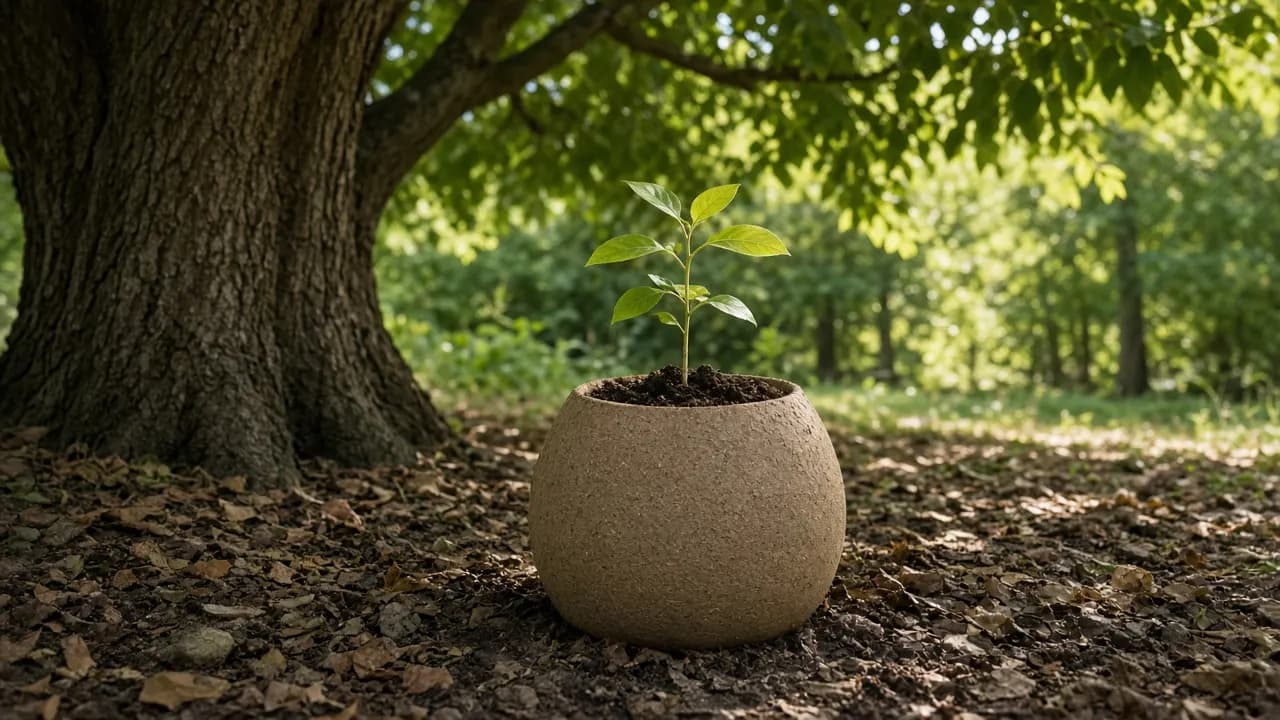
Eco memorial prices, from urn to tree
It helps to compare a planted memorial with the alternatives. A pet cemetery burial for a dog averages about $831[6] in the US, which by our estimate is around 3.2 times the national average for private cremation[7]. Private cremation plus a bio urn and a sapling in your own Hurricane garden usually comes in far below a cemetery plot, and there are no yearly maintenance fees.
The full price table by product is on our Utah page, and the services page explains what each option includes.

Free tool
Memorial budget planner
Add up cremation, urn, keepsakes and a farewell so the total holds no surprises.
Who to ask before you plant or scatter in Utah
Cremated remains aren't a health hazard in the way a body is, which is why planting ashes in your own garden is rarely restricted. Public places are different. Parks, nature reserves, beaches and waterways in Utah each have a manager with their own policy, and some don't allow scattering or planting at all. A short email before the day saves an awkward conversation.
Not sure which office covers Hurricane? The Utah local government directory is the official list.
Home burial and scattering are governed at the Utah level first; our Utah rules summary has the detail. Then check whether Hurricane or your HOA adds anything.
How to plan a living memorial, in order
- Talk it through with your household before deciding anything, since someone may quietly prefer the ashes to stay indoors.
- Measure your space. A tree needs room to grow; a shrub, a pot or a flower bed may suit your garden better.
- Test the soil where you plan to plant. If it's already alkaline, choose a lime-tolerant species and add extra compost or composted bark.
- Spread the ashes through a wide planting area, never as a single layer under the roots.
- Water well for two summers. It's drought in the early years, not cold, that kills the majority of memorial trees that don't make it.
- Keep a record noting which species you planted, when, and how the soil was mixed, so future care or taking a cutting is straightforward.
Keeping the memorial alive in Hurricane
Southwest Utah's scenery gives memorials a natural theme: a sandstone marker, an urn in a red or ochre glaze, or a keepsake engraved with the outline of the Pine Valley Mountains or the Zion cliffs. You don't need anything elaborate. A simple piece that brings to mind the landscape where you shared your days with your pet is often enough.
there are guides for the big decisions and articles for the details, try the free planning tools, or compare your instinct with the poll results, See what each option includes on our services page. If you live between Hurricane and West Jordan, Salt Lake City, West Valley City and Provo, either page applies. Every other community in Utah, and all of the United States, is listed too.

Reader polls
What would you choose?
Vote anonymously and see how other readers answered. The results are live counts from people who visit this site, so they show real opinions, not a scientific sample.
What kind of tree or plant would you choose?
Tap an answer to vote and see how others answered. Anonymous.
Would you consider releasing your pet's ashes in water?
Tap an answer to vote and see how others answered. Anonymous.
If you had to decide today, which aftercare would you choose for your pet?
Tap an answer to vote and see how others answered. Anonymous.

Free tools to help you plan
Memorial budget planner
Add up cremation, urn, keepsakes and a farewell so the total holds no surprises.

Memorial tree finder
Pick a tree for a planting urn that suits your climate, space and pet.

Aftercare options compared
Compare private, communal and water cremation with burial on cost, timing and what comes home.
Questions people ask
How does Hurricane's weather affect pet aftercare?
July is the hottest month in Hurricane, with average highs around 100°F, so prompt collection matters most then. Average lows drop below freezing in January and December, which can make digging a grave hard until spring.
Which nearby towns can I compare with Hurricane?
The closest communities we cover are Washington (about 7 miles), St. George (about 13 miles) and Cedar City (about 40 miles). Providers based in those places often serve Hurricane too. Ask each one for a written total that includes collection, so the distance is priced in.
How many pet owners live in Hurricane?
By our estimate, about 9,450 households in Hurricane have at least one dog or cat, and around 790 are lost each year. We calculate this from the city's population of about 25,745, the average household size and national ownership and lifespan figures, so treat it as a floor rather than an exact count.
Is cremation common in Utah?
For people, yes: about 46.1%[5] of Utah deaths end in cremation, according to NFDA 2024 Cremation & Burial Report state projections (via Occasional Sage) (2024). Nobody publishes the same figure for pets, but in our experience pet choices in Hurricane follow the human pattern closely, so cremation is the default most families here start from.
Is there water cremation for pets near Hurricane?
It depends on whether a provider nearby has invested in the equipment. Smaller places rarely have their own, but some aquamation providers in larger centres such as Hurricane collect from vets across a wide area. Ask your vet whether they work with one. If not, a flame cremation followed by a bio urn still gives you a living memorial.
How do I prepare pet ashes for planting?
Spread the ashes through a large volume of compost and soil rather than pouring them into the hole in one layer. Many gardeners add acidic material such as composted pine bark or leaf mould. One gardening guide suggests letting the mix rest for 90–120 days[9] before planting. A garden-center pH kit tells you when the mix is ready.


Sources and our estimates
- [1] 53% of US households own a dog, which is about 71 million households. American Pet Products Association (APPA) 2025 State of the Industry, 2025.
- [2] US dogs have an average life expectancy at birth of 12.69 years. Montoya et al. 2023, Frontiers in Veterinary Science - Banfield Pet Hospital life expectancy tables (13.3 million dogs, 2.4 million cats, 2013-2019), 2023.
- [3] 39% of US households own a cat, which is about 53 million households. American Pet Products Association (APPA) 2025 State of the Industry, 2025.
- [4] US cats seen at Banfield hospitals have an average life expectancy at birth of 11.18 years. Montoya et al. 2023, Frontiers in Veterinary Science - Banfield Pet Hospital life expectancy tables (13.3 million dogs, 2.4 million cats, 2013-2019), 2023.
- [5] The NFDA projected Utah's cremation rate at 46.1% for 2024. NFDA 2024 Cremation & Burial Report state projections (via Occasional Sage), 2024.
- [6] CareCredit's 2025 cost study put the US national average for pet cemetery burial of a dog at $831 (range $659-$1,513). CareCredit (Synchrony) - How Much Does It Cost To Euthanize a Dog? (2025 ASQ360 procedural cost study), 2025.
- [7] US pet cemetery burial for a dog costs about 3.2x a private cremation ($831 vs $260 national averages). Our estimate: 831 / 260 = 3.20. How we calculate.
- [8] Switching one human-scale cremation to alkaline hydrolysis saves about 112 kg CO2e under TNO's accounting. Our estimate: 79.9 - (-31.8) kg CO2e. How we calculate.
- [9] Gardening Know How advises letting an ash/soil-amendment mixture sit for at least 90 to 120 days before planting. Gardening Know How — Planting With Cremains: Is There a Safe Way to Bury Ashes, 2024.
Plan a living memorial in Hurricane
Tell us what you need and where you are. We'll reply by email with clear options and prices so you can decide in your own time.