Bio urns and eco memorials in Suffolk
Suffolk has an estimated 38,500 dog- or cat-owning households. When a planting or water memorial feels right for yours, here's what works in the local climate and what to ask before you buy.
- A memorial that moves with you
- Why pure ashes harm young roots
- Written prices you can compare
Suffolk, Virginia
Planning a greener goodbye in Suffolk
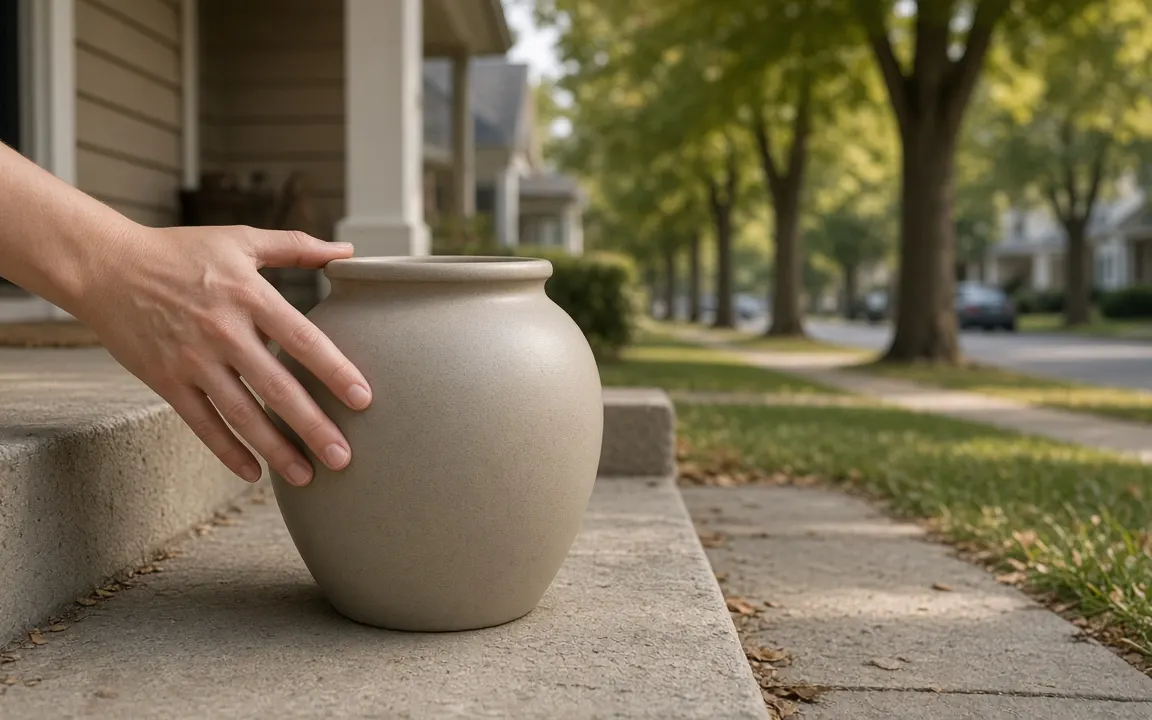
Suffolk's long connection to peanut farming and its wide rural stretches give many families a deep attachment to the land. On a farm, a stone marker beneath a spreading oak or a newly planted pecan or dogwood can feel natural. In newer subdivisions, an indoor urn or keepsake may suit smaller yards and homeowners' association rules, while a potted crape myrtle on the patio offers a living reminder able to relocate with the family.
Many Suffolk families have kin spread across Hampton Roads and down into North Carolina. A provider can divide cremated remains into one principal urn alongside several miniature vessels, giving each household its own portion. Label every piece with the animal's name and dates, and pack mailed portions carefully; the postal service has specific rules for shipping cremated remains. Priority Mail Express is the required service for that.
Suffolk is big enough to have a real mix of homeowners and renters, and the right memorial differs between the two. Owners can plant in the ground, though soil tests and utility checks still apply. Renters need the landlord's written permission to plant in a rented yard, and most people who rent choose a pot, a relative's garden or a water release instead. Neither is a lesser memorial; it's just matching the memorial to your life.
Suffolk is home to about 104,699 people, the 9th-largest of the 32 Virginia communities we cover. Some of the providers who serve Suffolk are based about 19 miles away in Chesapeake, the nearest larger centre, so collection times reflect that drive.
If you want to compare providers, look at Chesapeake (18 miles, a larger centre), Portsmouth (19 miles) and Norfolk (27 miles, a larger centre). Distance matters because pickup fees and the time until the ashes come back both grow with the drive.
Our estimate
38,500
How many dog- or cat-owning households Suffolk has (estimate)
How we calculated this
104,699 ÷ 2.5 = 41,880 households; × 53% (dog) + 39% (cat) = 38,500. Multi-pet homes count once.
Our estimate
3,200
dog and cat deaths per year in Suffolk, our estimate
How we calculated this
38,500 dog/cat-owning homes ÷ average lifespan (dog: 12.69 yrs + cat: 11.18 yrs) ≈ 3,200 a year. Treat it as a minimum.
53%[1]
53% of US households own a dog, which is about 71 million households.
12.69 years[2]
US dogs have an average life expectancy at birth of 12.69 years.
39%[3]
39% of US households own a cat, which is about 53 million households.
11.18 years[4]
US cats seen at Banfield hospitals have an average life expectancy at birth of 11.18 years.
We built the this numbers from Montoya et al. 2023, Frontiers in Veterinary Science and American Pet Products Association (APPA) 2025 State of the Industry, and both are worth a look if you want the detail.
How Virginia feels about cremation
About 55.6%[5] of people in Virginia are cremated, which puts it in the middle: cremation is common, but so is burial. For pets, that often means families weigh a planting urn against a whole-body burial in the yard. Both can grow a tree. The planting urn takes less space and can go almost anywhere; a whole-body grave needs more depth and distance from water, and the tree should go beside it rather than directly on top.
The Virginia percentage above is from NFDA 2024 Cremation & Burial Report state projections (via Occasional Sage) (2024) and refers to human funerals. Treat it as context for Suffolk, not as a count of pets.
When to plant in Suffolk's climate
If you're unsure what grows in Suffolk, visit a public park, a botanic garden or a cemetery with old trees and see which species look healthy after decades. Those are proven in local weather and soil. Take photos of the labels, or of the leaves and bark, and ask a nursery whether a smaller relative would suit your garden.
Budgeting for a living memorial in Suffolk
Bio urns vary more in price than you might expect. A national guide puts biodegradable urns at $70–$260[6], depending on material, size and whether a seed or tree system is included. For a lake or sea release, one water urn designed to float briefly and dissolve sells for $149[7]. In Suffolk, the tree and the soil amendments are usually the cheapest part of the whole memorial.
Prices for Suffolk track the wider Virginia market, so use the Virginia price table as your baseline and the services page to see what is included.

Free tool
Memorial budget planner
Add up cremation, urn, keepsakes and a farewell so the total holds no surprises.
Rules worth knowing in Virginia before you scatter
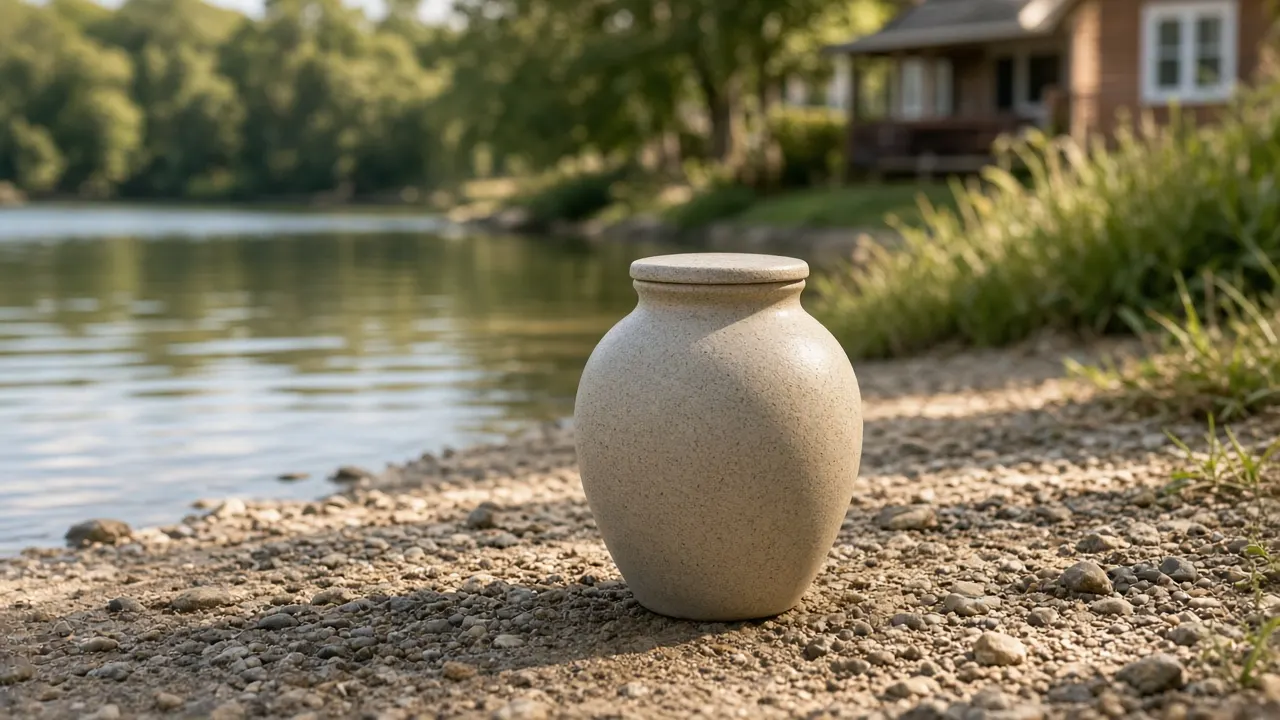
Burying ashes, scattering them loose and releasing them on water are often treated as three different things. In Virginia, a place that welcomes a scattering may forbid digging, and a lake that allows a release may not allow a gathering on the shore. When you ask permission, say exactly which one you have in mind.
Virginia keeps an official directory of local governments; use it to reach the county or city office that covers Suffolk.
For Virginia's rules on burying a pet at home or scattering ashes, see the Virginia guide. Local rules in Suffolk can be stricter than the state's, especially in homeowners' associations and rentals.
From ashes to a growing tree: the steps
- If your pet dies while you're away from Suffolk, have a vet close to where you are set up individual cremation locally. Transporting a body a long way home almost never works out.
- Ask how the ashes can reach you: collected in person, posted by a tracked courier service, or sent to your own vet.
- Flying home with the ashes? Keep them in your carry-on, inside a container security can scan, and pack the crematory's paperwork alongside them.
- Don't buy the bio urn on the road. Wait until you're home and know the spot, so the urn matches the place.
- Plant somewhere that links both places if the idea appeals: perhaps a species native to the area your pet died in, or one already growing at home, provided it can cope with the climate in Suffolk.
- Write down the date and place where your pet died and where it was cremated. Those details fade faster than you'd expect.
Remembering your pet in Suffolk
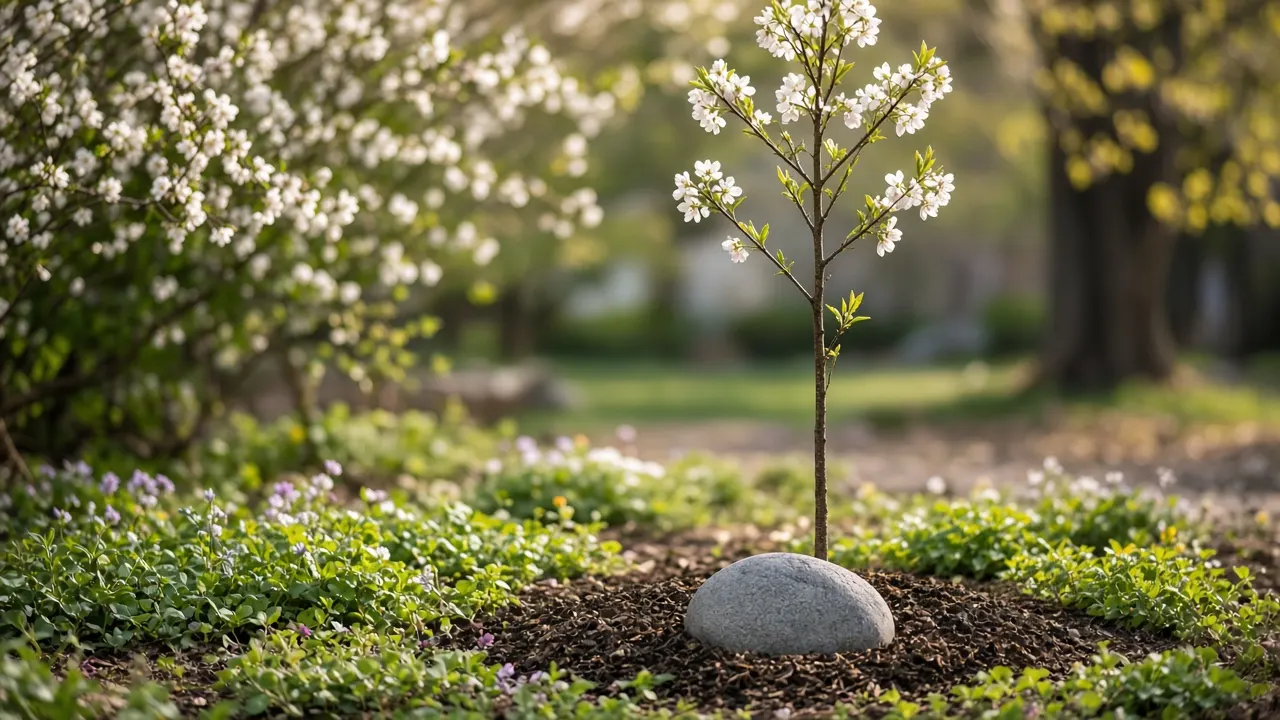
Coastal Virginia heat, humidity and hurricane downpours wear on outdoor tributes. Resin fades and splits in the sun, and sandy, soft soil lets flat stones settle unevenly. Polished granite and bronze castings endure it for decades. For a living marker, a dogwood, an eastern redbud or, on soggy ground, a bald cypress suits Suffolk's climate and marks the spot with spring color or feathery green.
read our guides and latest articles, the planning tools turn your pet's details into figures, or see how other readers answered in our polls, For a plain comparison of the choices, open services. Close to Suffolk we also cover Chesapeake, Arlington, Newport News and Virginia Beach; the full list for Virginia and for the United States is a click away.

Reader polls
What would you choose?
Vote anonymously and see how other readers answered. The results are live counts from people who visit this site, so they show real opinions, not a scientific sample.
What kind of tree or plant would you choose?
Tap an answer to vote and see how others answered. Anonymous.
Would you consider releasing your pet's ashes in water?
Tap an answer to vote and see how others answered. Anonymous.
If you had to decide today, which aftercare would you choose for your pet?
Tap an answer to vote and see how others answered. Anonymous.

Free tools to help you plan
Memorial budget planner
Add up cremation, urn, keepsakes and a farewell so the total holds no surprises.

Memorial tree finder
Pick a tree for a planting urn that suits your climate, space and pet.

Aftercare options compared
Compare private, communal and water cremation with burial on cost, timing and what comes home.
Questions people ask
Where are the providers that serve Suffolk actually based?
Some are local, and some run from Chesapeake, about 19 miles away. That is normal for a city this size. What matters is the collection time they quote for Suffolk and whether the drive is priced into the total, so ask both up front.
Can a provider from a neighbouring town collect from Suffolk?
Usually yes. Chesapeake is about 18 miles away, Portsmouth is about 19 miles away and Norfolk is about 27 miles away, all inside a normal collection radius. Get the mileage written into the quote so there is no surprise on the day.
Is cremation common in Virginia?
For people, yes: about 55.6%[5] of Virginia deaths end in cremation, according to NFDA 2024 Cremation & Burial Report state projections (via Occasional Sage) (2024). Nobody publishes the same figure for pets, but in our experience pet choices in Suffolk follow the human pattern closely, so cremation is the default most families here start from.
How many pet owners live in Suffolk?
By our estimate, about 38,500 households in Suffolk have at least one dog or cat, and around 3,200 are lost each year. We calculate this from the city's population of about 104,699, the average household size and national ownership and lifespan figures, so treat it as a floor rather than an exact count.
How many dogs and cats are there in Suffolk?
By our estimate, about 38,500 households in Suffolk have a dog or a cat, and around 3,200 of those pets die each year. We calculate this from the city's population, average household size and national pet ownership and lifespan figures. The method is shown on this page, and the real number of animals is higher.
Is water cremation better for the environment?
It uses much less energy: pet aquamation is claimed to use about 90%[9] less energy than flame cremation, and it uses about as much water as 1–3 pet baths[10] per pet. The strongest carbon figures come from studies of human funerals, not pets, so treat them as a direction rather than a promise. You still get ashes back for a bio urn.


Sources and our estimates
- [1] 53% of US households own a dog, which is about 71 million households. American Pet Products Association (APPA) 2025 State of the Industry, 2025.
- [2] US dogs have an average life expectancy at birth of 12.69 years. Montoya et al. 2023, Frontiers in Veterinary Science - Banfield Pet Hospital life expectancy tables (13.3 million dogs, 2.4 million cats, 2013-2019), 2023.
- [3] 39% of US households own a cat, which is about 53 million households. American Pet Products Association (APPA) 2025 State of the Industry, 2025.
- [4] US cats seen at Banfield hospitals have an average life expectancy at birth of 11.18 years. Montoya et al. 2023, Frontiers in Veterinary Science - Banfield Pet Hospital life expectancy tables (13.3 million dogs, 2.4 million cats, 2013-2019), 2023.
- [5] The NFDA projected Virginia's cremation rate at 55.6% for 2024. NFDA 2024 Cremation & Burial Report state projections (via Occasional Sage), 2024.
- [6] Funeral.com cites U.S. Funerals Online that biodegradable urns typically cost about $70–$260. Funeral.com – How Much Do Cremation Urns Cost in 2025, 2025.
- [7] The Living Urn's Eco Water Urn for water burial costs $149 and holds up to 225 cubic inches; it floats for several minutes before dissolving. The Living Urn – Eco Water Urn, 2026.
- [8] About 59 million U.S. pet-owning households may be open to eco-friendly aftercare options. Our estimate: 86.9M pet households x 68% interested in green funeral options. How we calculate.
- [9] Pet aquamation is described as available across all 50 US states, and is claimed to use about 90% less energy than flame cremation. Be a Tree Cremation pet aquamation guide, 2025.
- [10] Aquamation uses about the same water per pet as 1–3 pet baths. Veterinary Sustainability Alliance — Aquamation, 2024.
Get eco memorial ideas by email
Tell us what you need and where you are. We'll reply by email with clear options and prices so you can decide in your own time.