Greener pet aftercare in Kent, Washington
Roughly 4,150 Kent families say goodbye to a dog or cat each year, by our count. A living memorial is one way to mark it. This guide explains how to make one that actually grows.
- Options for renters and apartments
- Water release rules in plain words
- No obligation, we reply by email
Kent, Washington
Living memorials in Kent: the local picture
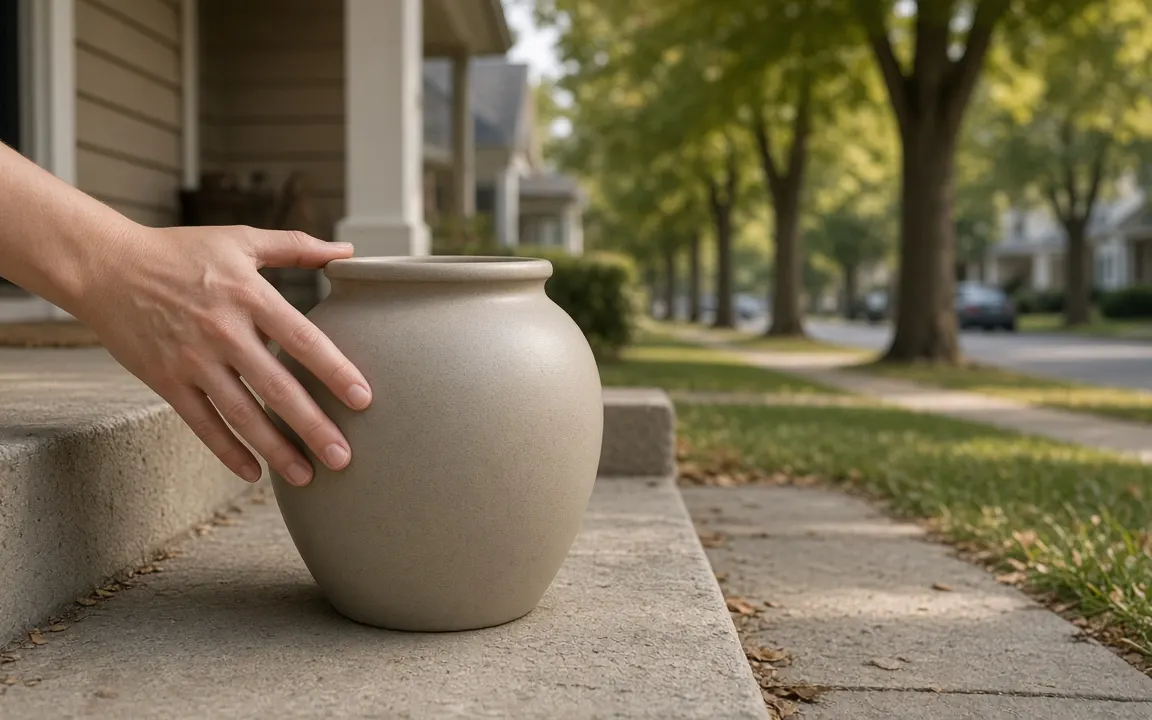
The Green River, the Cascade foothills and Puget Sound give many Kent families places they connect with their pets. Some choose a biodegradable urn to plant a tree at home; others keep all the ashes indoors and visit those places. Before scattering in parks, forests or on land you do not own, check the rules and ask the managing authority. Keep a portion back for keepsakes.
Paw prints, nose prints and fur clippings can only be taken before cremation, so ask about them at the start. In Kent's many multi-generational and immigrant households, dividing ashes lets several people keep something, including relatives in other countries. Engraving, jewelry and memorial stones can be ordered later. Ask for a certificate if a portion may travel abroad. A paw print tile also fits easily on a small shelf.
Dogs and some cats will dig into fresh soil, and a planting that holds bone ash smells interesting to them. For the first few months in Kent, cover the planted area with a ring of flat stones, a piece of wire mesh under the mulch or a short temporary fence. Once the ground settles and the smell fades, most pets lose interest.
With roughly 134,871 residents, Kent is the 6th-largest of the 67 Washington communities we cover. Tacoma, roughly 14 miles off, is the closest larger centre, and a share of the providers who cover Kent run from there.
For a second opinion on price, Des Moines (5 miles), Covington (5 miles) and SeaTac (5 miles) are close enough that their providers cover Kent routinely. Two written quotes tell you more than any price list.
Our estimate
49,500
Estimated dog- or cat-owning households in Kent
How we calculated this
134,871 ÷ 2.5 = 53,948 households; × 53% (dog) + 39% (cat) = 49,500. Multi-pet homes count once.
Our estimate
4,150
Estimated dog and cat losses in Kent each year
How we calculated this
49,500 dog/cat-owning homes ÷ average lifespan (dog: 12.69 yrs + cat: 11.18 yrs) ≈ 4,150 a year. The real figure is unlikely to be lower.
53%[1]
53% of US households own a dog, which is about 71 million households.
12.69 years[2]
US dogs have an average life expectancy at birth of 12.69 years.
39%[3]
39% of US households own a cat, which is about 53 million households.
11.18 years[4]
US cats seen at Banfield hospitals have an average life expectancy at birth of 11.18 years.
None of the figures on this this page are ours alone: they rest on Montoya et al. 2023, Frontiers in Veterinary Science and American Pet Products Association (APPA) 2025 State of the Industry.
The local attitude to ashes and memorials
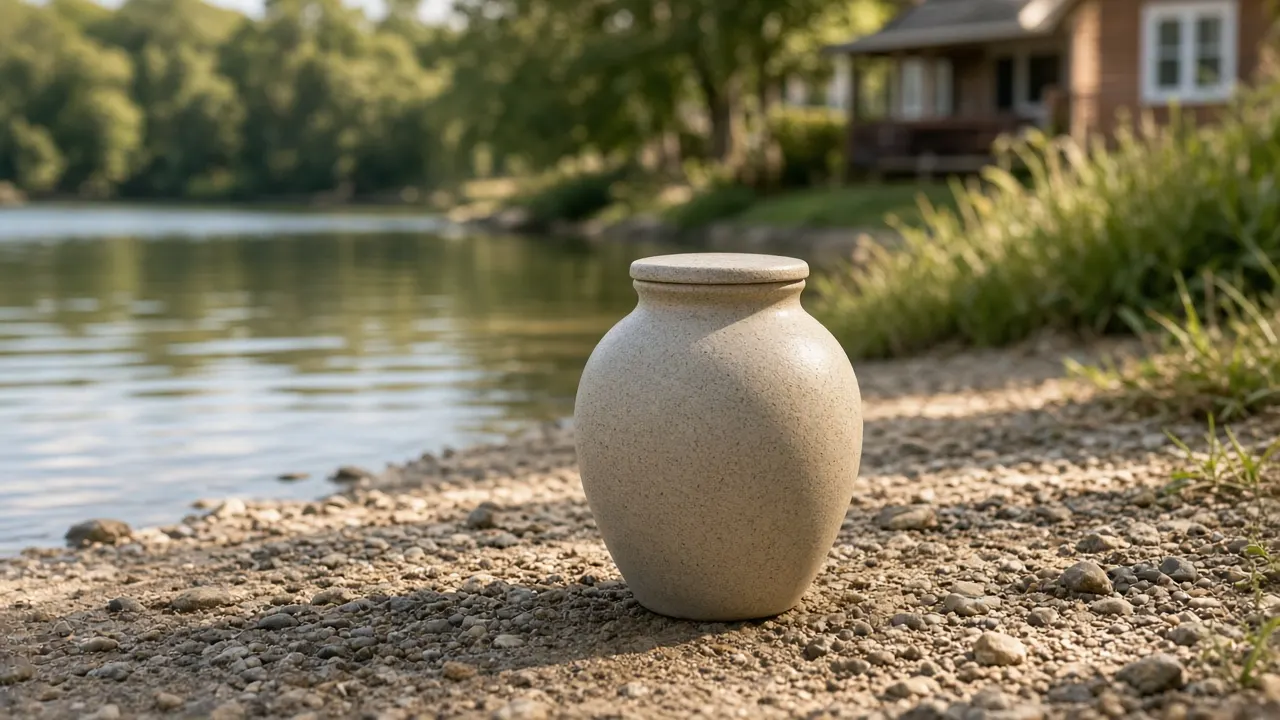
Scattering gardens and woodland memorials are familiar sights in Washington, where cremation is the choice for around 79.1%[5] of people who die. Many families already have a place where a grandparent's ashes were scattered. If that place is on land you own or have permission to use, a pet's ashes can join it quietly. Human cemeteries and crematoria grounds are different, and most don't accept animal remains, so ask first.
We take the Washington rate from Direct Cremate (citing CANA) (2024). It is a human statistic; there is no equivalent pet figure for Kent, and we would rather show a real number than invent one.
What Kent's climate means for a living memorial
Rain is your friend with a planting urn. In a place like Kent, with regular rainfall and few hard frosts, water gradually carries salts from the ashes down and away from the root zone. You still need to mix the ashes through plenty of compost and soil first, but a mild, damp climate makes the soil chemistry more forgiving than in a desert or a cold, dry region.
Damp, mild air suits fungus as well as trees. In Kent, choose a species or variety known to resist the leaf spots, mildews and cankers that local gardeners complain about, and plant it where air moves freely rather than in a sheltered, stagnant corner. A nursery that has sold trees locally for years will know which ones stay clean.
Budgeting for a living memorial in Kent
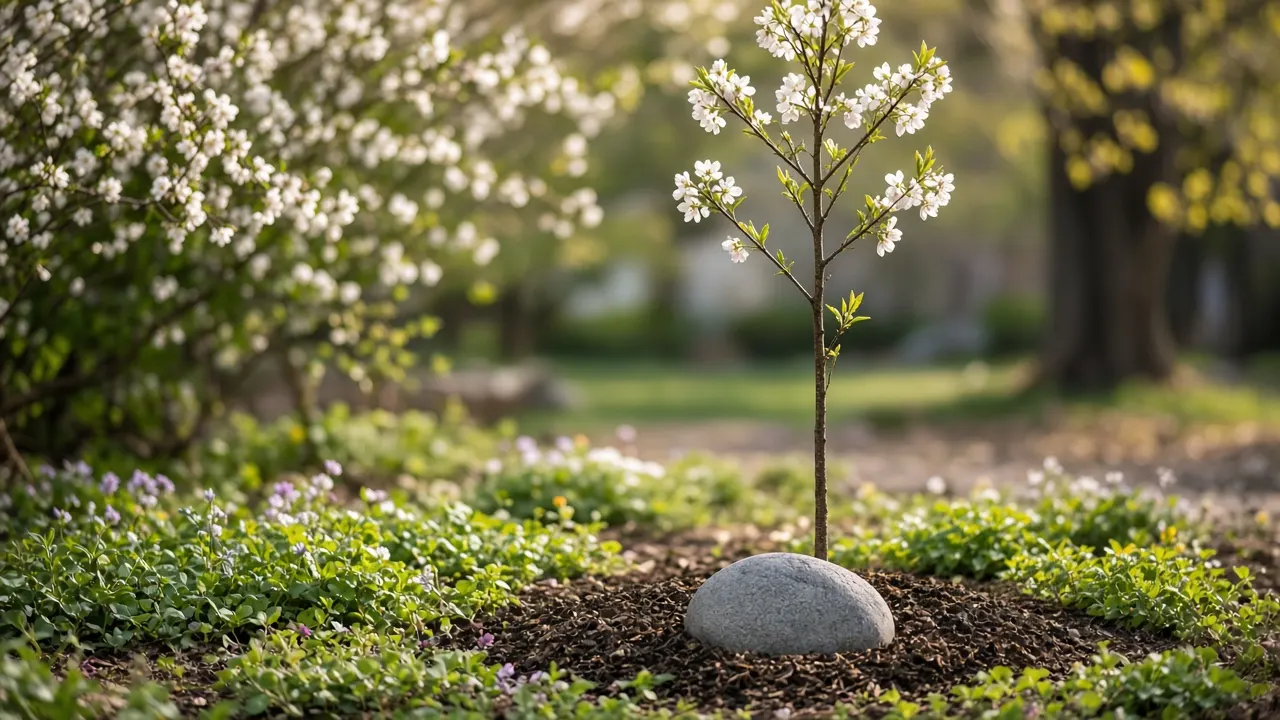
Here's how the pieces add up for a Kent family. Private cremation of a dog averages about $260[6] nationally. A pet bio urn with a seed capsule is sold for about $99[7], and a planting system without the tree for $119[8]. Compost, pine bark and a pH kit add a few dollars more. Ask local providers for a written total before you choose.
Prices for Kent track the wider Washington market, so use the Washington price table as your baseline and the services page to see what is included.

Free tool
Memorial budget planner
Add up cremation, urn, keepsakes and a farewell so the total holds no surprises.
Who to ask before you plant or scatter in Washington
If you live under a homeowners' association, a co-op board or a tenancy agreement in Washington, its rules can matter more than any public law. Many restrict new trees, digging near shared pipes or heavy pots on balconies. A quick read of the rules, or one email to the manager, tells you whether a tree, a shrub bed or a container memorial is the right fit.
Not sure which office covers Kent? The Washington local government directory is the official list.
Home burial and scattering are governed at the Washington level first; our Washington rules summary has the detail. Then check whether Kent or your HOA adds anything.
Your next steps, whatever your situation
- If your pet dies while you're away from Kent, have a vet close to where you are set up individual cremation locally. Transporting a body a long way home almost never works out.
- Ask how the ashes can reach you: collected in person, posted by a tracked courier service, or sent to your own vet.
- Flying home with the ashes? Keep them in your carry-on, inside a container security can scan, and pack the crematory's paperwork alongside them.
- Don't buy the bio urn on the road. Hold off until you're back and have settled on a location, then choose an urn that suits it.
- Plant somewhere that links both places if you like: a tree from the region where your pet died, or one from your own garden, if it suits the climate in Kent.
- Write down the date and place of your pet's death and the name of the crematory. Memories of those particulars slip away sooner than most people think.
Ways to mark the spot and the date
Many Kent homes are apartments or townhouses, so memorials often live indoors: a compact urn on a shelf, a framed paw print or a small keepsake box. Families on East Hill or West Hill with a garden may add a stone or a planted urn among ferns and rhododendrons. If you rent or might move, choose something portable. Decide where the memory will sit, then choose the object.
The services page is the place to compare what is included, try the free planning tools, there are guides for the big decisions and articles for the details, or see how other readers answered in our polls. More local pages: Tacoma, Everett, Vancouver and Bellevue, the Washington overview and every city in the United States.

Reader polls
What would you choose?
Vote anonymously and see how other readers answered. The results are live counts from people who visit this site, so they show real opinions, not a scientific sample.
If water cremation (aquamation) were offered near you, would you choose it?
Tap an answer to vote and see how others answered. Anonymous.
What kind of tree or plant would you choose?
Tap an answer to vote and see how others answered. Anonymous.
If you had to decide today, which aftercare would you choose for your pet?
Tap an answer to vote and see how others answered. Anonymous.

Free tools to help you plan
Memorial budget planner
Add up cremation, urn, keepsakes and a farewell so the total holds no surprises.

Memorial tree finder
Pick a tree for a planting urn that suits your climate, space and pet.

Aftercare options compared
Compare private, communal and water cremation with burial on cost, timing and what comes home.
Questions people ask
Can a provider from a neighbouring town collect from Kent?
Usually yes. Des Moines is about 5 miles away, Covington is about 5 miles away and SeaTac is about 5 miles away, all inside a normal collection radius. Get the mileage written into the quote so there is no surprise on the day.
When is the hardest time of year to arrange a burial in Kent?
There is no frozen-ground season here; average lows stay above freezing all year. The other pressure point is August, when highs around 78°F mean a body needs cooling and collecting quickly.
Where are the providers that serve Kent actually based?
Some are local, and some run from Tacoma, about 14 miles away. That is normal for a city this size. What matters is the collection time they quote for Kent and whether the drive is priced into the total, so ask both up front.
Is cremation common in Washington?
For people, yes: about 79.1%[5] of Washington deaths end in cremation, according to Direct Cremate (citing CANA) (2024). Nobody publishes the same figure for pets, but in our experience pet choices in Kent follow the human pattern closely, so cremation is the default most families here start from.
Is it legal to release pet ashes in the sea or a river?
Rules differ by place and by who manages the water, and many were written for human remains. In general, avoid drinking-water reservoirs, busy swimming areas and places where anglers gather, use a water-soluble urn or loose ashes only, and let nothing plastic float away. Ask the relevant agency or landowner before the day.
What if the soil in Kent is already alkaline?
Then ashes push it further, so be generous with compost and composted bark, choose a lime-tolerant tree or shrub, and test the pH before planting. Chalky and limestone soils are common in many regions. Plants that dislike lime, such as azaleas and blueberries, are a poor choice for an ash planting anywhere.


Sources and our estimates
- [1] 53% of US households own a dog, which is about 71 million households. American Pet Products Association (APPA) 2025 State of the Industry, 2025.
- [2] US dogs have an average life expectancy at birth of 12.69 years. Montoya et al. 2023, Frontiers in Veterinary Science - Banfield Pet Hospital life expectancy tables (13.3 million dogs, 2.4 million cats, 2013-2019), 2023.
- [3] 39% of US households own a cat, which is about 53 million households. American Pet Products Association (APPA) 2025 State of the Industry, 2025.
- [4] US cats seen at Banfield hospitals have an average life expectancy at birth of 11.18 years. Montoya et al. 2023, Frontiers in Veterinary Science - Banfield Pet Hospital life expectancy tables (13.3 million dogs, 2.4 million cats, 2013-2019), 2023.
- [5] Washington had a 79.1% cremation rate in 2024, among the highest in the US. Direct Cremate (citing CANA), 2024.
- [6] CareCredit's 2025 cost study put the US national average for private dog cremation at $260 (range $206-$473). CareCredit (Synchrony) - How Much Does It Cost To Euthanize a Dog? (2025 ASQ360 procedural cost study), 2025.
- [7] The Bios Urn for pets, a biodegradable urn with a seed capsule, costs $99. Bios Urn – Pets, 2026.
- [8] The Living Urn's pet bio-urn planting system (without a tree) costs $119. The Living Urn – Pet tree urn, 2026.
- [9] U.S. pet flame cremations emit on the order of 47,000 t CO2e a year. Our estimate: 1.5M pet cremations x 31.3 kg CO2e. How we calculate.
Get eco memorial ideas by email
Tell us what you need and where you are. We'll reply by email with clear options and prices so you can decide in your own time.