Growing something from the goodbye in Kirkland
Roughly 3,000 Kirkland families say goodbye to a dog or cat each year, by our count. A living memorial is one way to mark it. This guide explains how to make one that actually grows.
- Planting, garden and water urns compared
- Honest notes on local rules
- Help choosing a native species

Kirkland, Washington
What an eco memorial looks like in Kirkland
Some Kirkland families take a share of the ashes onto the lake by paddleboard or kayak on a still morning, while others keep everything at home. If you plan to split the remains between a scattering, a wearable piece and relatives elsewhere, tell the crematory before the cremation happens, so every portion comes back in its own clearly labeled container and nobody has to divide anything at home.
Kirkland takes pride in its public art, with bronze sculptures dotted along the downtown waterfront, and that eye for design often carries into how families choose a memorial. A sculpted ceramic vessel, a hand-blown glass piece from a regional studio or a simple bronze plaque can look like art rather than something funereal. Let the room where it will sit guide the size and finish.
Horses, cattle, goats and sheep often share the land in the country around Kirkland, and some trees are dangerous to them. Wilted red maple leaves are toxic to horses, and yew is poisonous to most livestock. If the memorial will stand near a pasture or fence line, ask a vet or the local extension office which species are safe for the animals that graze nearby.
Kirkland's population is around 97,410, the 12th-largest of the 67 Washington communities we cover. The nearest larger centre is Seattle, about 7 miles (12 km) away, which is where some providers serving Kirkland are based.
Families in Kirkland often end up using a provider from Redmond (4 miles), Bellevue (5 miles) and Kenmore (5 miles). That is normal: crematories serve a radius, not a single town, and the drive is priced into collection.
Our estimate
36,000
How many dog- or cat-owning households Kirkland has (estimate)
How we calculated this
97,410 ÷ 2.5 = 38,964 households; × 53% (dog) + 39% (cat) = 36,000. Homes are counted once however many pets they keep.
Our estimate
3,000
Estimated dog and cat losses in Kirkland each year
How we calculated this
36,000 dog/cat-owning homes ÷ average lifespan (dog: 12.69 yrs + cat: 11.18 yrs) ≈ 3,000 a year. The real figure is unlikely to be lower.
53%[1]
53% of US households own a dog, which is about 71 million households.
12.69 years[2]
US dogs have an average life expectancy at birth of 12.69 years.
39%[3]
39% of US households own a cat, which is about 53 million households.
11.18 years[4]
US cats seen at Banfield hospitals have an average life expectancy at birth of 11.18 years.
The published sources behind those figures are American Pet Products Association (APPA) 2025 State of the Industry and Montoya et al. 2023, Frontiers in Veterinary Science.

Cremation, burial and green choices in Washington
Cremation is the usual choice for people in Washington: about 79.1%[5] of those who die there are cremated. That figure is about people, not pets, but it tells you something useful. Where cremation is ordinary, families already think about what to do with ashes, and planting or scattering is a familiar next step. You're less likely to have to explain a bio urn to relatives, and more likely to find a crematory nearby that returns ashes promptly.
Source for the Washington number: Direct Cremate (citing CANA) (2024). Nobody publishes a pet cremation rate for Kirkland, so the human figure is the best local signal available.
Weather, soil and planting windows in Kirkland
In Kirkland, winters are gentle, with February lows around 37°F, and summers are warm rather than scorching. That opens up evergreen choices, such as a native evergreen shrub or a small conifer, which give you a green memorial all year. Whatever you choose, water through the first summer, keep grass away from the base and replace mulch each spring.
Mild weather in Kirkland makes almost any month workable for a planting ceremony or a water release, so choose a date that means something: a birthday, the anniversary of adoption, the first warm weekend of spring. If you're releasing on water, check the forecast for wind; a calm morning lets a water urn float for a moment before it sinks, which is the part many families remember.
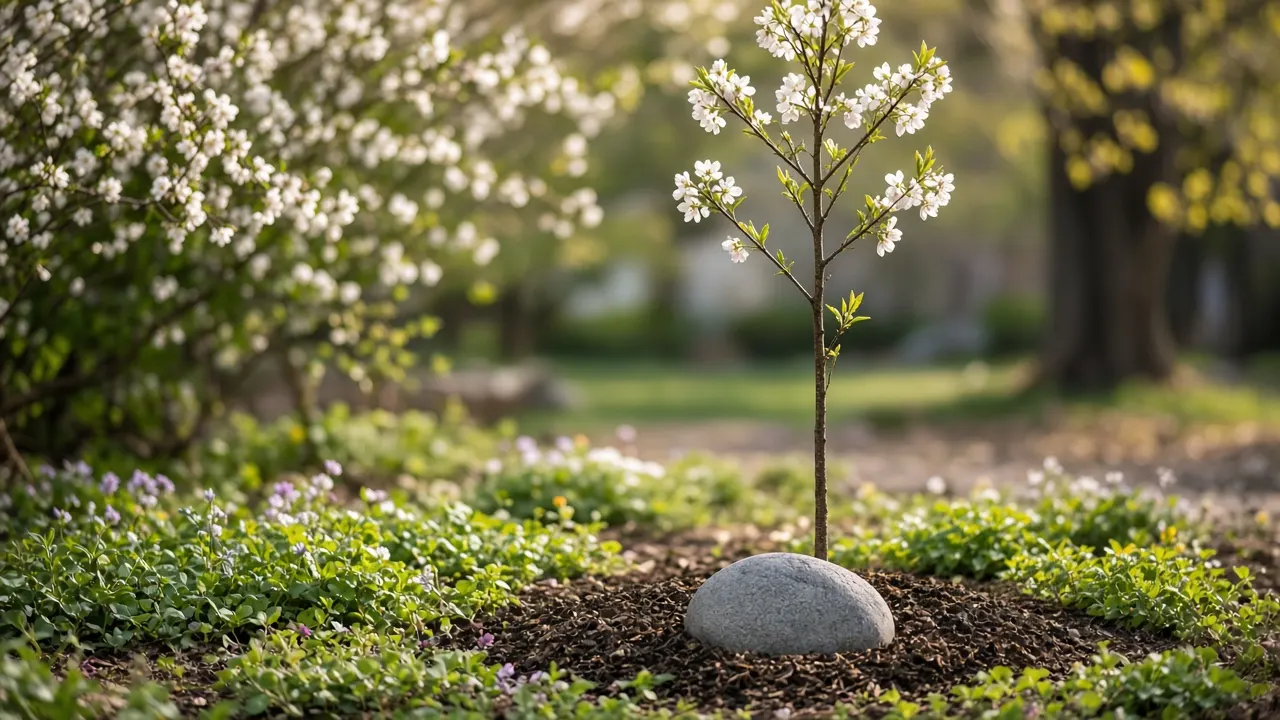
Price ranges for planting and water urns
The container the ashes come back in can quietly add to the bill. One Virginia crematory, for example, sells private cremation at $189 with a temporary container and $225 with a wooden urn[6]. If you're planting, the plain option is all you need. Wooden pet urns alone run about $30–$150[7] in one national guide, money that could buy a good tree for your Kirkland garden instead.
The full price table by product is on our Washington page, and the services page explains what each option includes.

Free tool
Memorial budget planner
Add up cremation, urn, keepsakes and a farewell so the total holds no surprises.
Scattering and planting rules in Washington
What you plant can matter as much as where. Parks and nature reserves in Washington often forbid planting anything at all, and even on private land some trees and shrubs are listed as invasive in parts of the region. A local nursery or native plant society can steer you toward a species that won't spread into wild land.
Washington keeps an official directory of local governments; use it to reach the county or city office that covers Kirkland.
Home burial and scattering are governed at the Washington level first; our Washington rules summary has the detail. Then check whether Kirkland or your HOA adds anything.
Your next steps, whatever your situation
- Confirm the ashes will come back. Communal cremation usually means no ashes are returned, and you can't plant what you don't receive.
- Pick the type of bio urn: one that grows a tree, a simple biodegradable urn to bury in a quiet bed, or a floating urn meant for a lake, river or the coast.
- Ask permission from the landowner, landlord or park manager for anywhere that isn't yours.
- Plan for the weather. Around Kirkland, skip days when the soil is rock-hard, frozen or sodden, and wait for still, gentle conditions to plant or release.
- Release gently on water. Rest the urn on the surface, leave it to drift and go under in its own time, and scatter only a few loose petals.
- Come back in a year. Top up the mulch, see how much the tree has put on, and photograph it to record the first anniversary.
Ways to mark the spot and the date
Condos and townhomes make up much of Kirkland's newer housing, and many residents move every few years. Portable memorials suit that life: a small vessel that fits a shelf, a ring with a tiny chamber for ash, or a nose print pressed into clay. Any outdoor piece on a balcony should be glazed or metal, because constant Eastside moisture stains porous stone within a season.
try the free planning tools, or see what other families chose in the poll results, browse in-depth guides or recent articles, Our services overview lays out every option side by side. Close to Kirkland we also cover Tacoma, Spokane, Bellevue and Kent; the full list for Washington and for the United States is a click away.

Reader polls
What would you choose?
Vote anonymously and see how other readers answered. The results are live counts from people who visit this site, so they show real opinions, not a scientific sample.
If water cremation (aquamation) were offered near you, would you choose it?
Tap an answer to vote and see how others answered. Anonymous.
What kind of tree or plant would you choose?
Tap an answer to vote and see how others answered. Anonymous.
If you had to decide today, which aftercare would you choose for your pet?
Tap an answer to vote and see how others answered. Anonymous.

Free tools to help you plan
Memorial budget planner
Add up cremation, urn, keepsakes and a farewell so the total holds no surprises.

Memorial tree finder
Pick a tree for a planting urn that suits your climate, space and pet.

Aftercare options compared
Compare private, communal and water cremation with burial on cost, timing and what comes home.
Questions people ask
Roughly how many pets die in Kirkland each year?
Our estimate is around 3,000. It comes from Kirkland's population (about 97,410), the average household size, the share of homes with a dog or cat (about 36,000 households here) and the average lifespan. It is arithmetic, not a count, so read it as a rough floor.
How do Washington attitudes to cremation compare?
Direct Cremate (citing CANA) (2024) puts the Washington human cremation rate at about 79.1%[5]. We show it on the Kirkland page because pet aftercare choices tend to track it: where cremation is normal for people, communal and private pet cremation are both easy to find.
Where are the providers that serve Kirkland actually based?
Some are local, and some run from Seattle, about 7 miles away. That is normal for a town this size. What matters is the collection time they quote for Kirkland and whether the drive is priced into the total, so ask both up front.
When is the hardest time of year to arrange a burial in Kirkland?
There is no frozen-ground season here; average lows stay above freezing all year. The other pressure point is August, when highs around 77°F mean a body needs cooling and collecting quickly.
Can I bury pet ashes on a farm or rural land near Kirkland?
On land you own, burying ashes is generally allowed. Keep the planting well away from wells, springs and streams, and away from ground where livestock graze or crops are grown. On someone else's land, including family land, ask the owner first and agree that the memorial can stay if the land changes hands.
Can I scatter my pet's ashes in a park in Kirkland?
Usually only with permission, and some parks don't allow it at all. Parks are managed by a city, county, state or national agency, each with its own policy, and many were written for human ashes. Contact the park office, explain it's a small amount of pet ash, and ask whether there's a preferred spot.


Sources and our estimates
- [1] 53% of US households own a dog, which is about 71 million households. American Pet Products Association (APPA) 2025 State of the Industry, 2025.
- [2] US dogs have an average life expectancy at birth of 12.69 years. Montoya et al. 2023, Frontiers in Veterinary Science - Banfield Pet Hospital life expectancy tables (13.3 million dogs, 2.4 million cats, 2013-2019), 2023.
- [3] 39% of US households own a cat, which is about 53 million households. American Pet Products Association (APPA) 2025 State of the Industry, 2025.
- [4] US cats seen at Banfield hospitals have an average life expectancy at birth of 11.18 years. Montoya et al. 2023, Frontiers in Veterinary Science - Banfield Pet Hospital life expectancy tables (13.3 million dogs, 2.4 million cats, 2013-2019), 2023.
- [5] Washington had a 79.1% cremation rate in 2024, among the highest in the US. Direct Cremate (citing CANA), 2024.
- [6] Heavenly Paws Cremations in Chantilly, Virginia, sells private cremation packages at $189 (temporary container), $225 (wooden urn) and $300 (wooden photo urn), each including a paw print and fur clipping. Heavenly Paws Cremations – Packages, 2026.
- [7] Memorials.com puts wooden pet urns at $30–$150. Memorials.com – Pet Urn Cost Guide, 2025.
- [8] Each shelter-animal flame cremation emits about 31 kg CO2e on average. Our estimate: 19,000 t CO2e / 607,000 animals. How we calculate.
Tell us about your pet and your garden
Tell us what you need and where you are. We'll reply by email with clear options and prices so you can decide in your own time.