Biodegradable pet urns explained: what they're made of and how fast they go
A biodegradable urn is made from materials that soil microbes or water can break down, such as paper, coconut coir, salt, sand, gelatin or unfired clay. Water urns usually dissolve within minutes to hours, while soil urns soften over weeks and fade within a season or two. The container disappears; the ashes, which are mineral, do not.
By the Bio Urns & Eco Memorials editorial team · Updated September 24, 2026 · 5 min read · Sources
- Material by material: soil, water or both
- How to read 'biodegradable' and 'compostable' labels
- Sourced US price ranges, no guesswork
The short answer
What is a biodegradable pet urn, exactly?
It's an urn built to disappear. Instead of glazed ceramic, metal or sealed wood, it uses materials that either dissolve in water or get eaten by fungi and bacteria in soil. Most are made for one of two settings: burial in the ground, or release into a lake, river or the sea.
The choice of material decides where the urn works and how quickly it vanishes. A salt urn is lovely on water and pointless in a flower bed; a stiff coir urn does well in damp soil but can bob around for ages on a pond. So the first question isn't which urn looks nicest, it's where it's going.
Prices are modest by urn standards. A pet urn cost guide puts biodegradable pet urns at $15–$80[1], and a broader US figure for biodegradable urns, including larger sizes, is about $70–$260[2]. If you're weighing a bio urn against a keepsake you'd keep indoors, see bio urns vs permanent display urns.
Materials
Which materials are used, and where does each work?
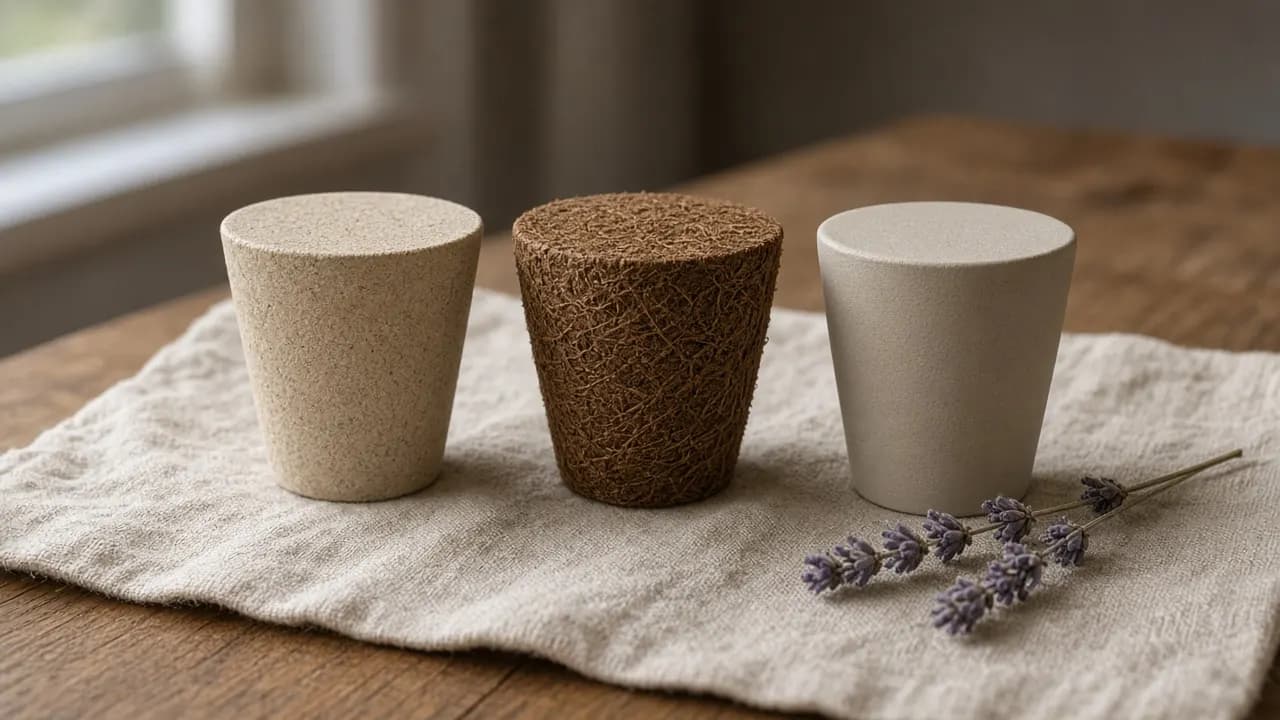
Here's how the common materials behave. Times are rough, because temperature, moisture, soil life and wall thickness all change them. A maker should be able to tell you what its own product does.
| Material | Made for | Typical behavior | Worth knowing |
|---|---|---|---|
| Recycled paper or card | Soil and water | Softens fast when wet; gone within weeks in soil | Often dyed or printed; ask about inks and glues |
| Mulberry or handmade paper | Water | Floats briefly, then soaks through and sinks | Delicate; handle and carry carefully |
| Coconut coir or plant fiber | Soil | Holds shape a while, then breaks down over months | Thick coir can float for a long time on water |
| Salt (Himalayan or rock) | Water | Dissolves over minutes to hours | Heavy; poor for soil because salt harms roots |
| Compressed sand | Water | Sinks and crumbles apart on the bottom | Weighty; sturdy enough to transport |
| Gelatin | Water | Dissolves quickly in water | Animal-derived; some families prefer to avoid it |
| Unfired clay | Soil and water | Slumps back into mud over time | Fired, glazed clay is ceramic and is not biodegradable |
| Cornstarch-based | Soil or water | Depends on the formula | Ask whether it's starch pulp or a PLA-type bioplastic |
| Bamboo | Mostly display, some soil | Slow; months to years | Resins and lacquers slow it further |
Soil or water
How long does each type take to break down?
In water, the useful ones are designed to float for a short farewell and then sink. The Living Urn's Eco Water Urn, priced at $149[3], is described as floating for several minutes before dissolving. Salt and sand urns sink faster and come apart on the bottom. Paper urns take on water from the base and go down gently. For sea releases in the US, bear in mind the EPA states its permit is for human remains only; the agency's burial-at-sea page sets out the rules, so ask your state about a pet.
In soil, the shell has to get wet and meet microbes before anything happens. Thin paper fades within weeks in moist ground; molded fiber and coir take a season or more; bamboo can last for years. Burying the urn in dry, compacted or very cold ground slows every material down.
If you're still choosing between the two settings, our comparison of soil vs water bio urns looks at visiting afterwards, capacity and cost side by side. The aftercare options comparison also weighs a water release against planting and keeping ashes at home.

Free tool
Aftercare options compared
Compare private, communal and water cremation with burial on cost, timing and what comes home.
Would you consider releasing your pet's ashes in water?
Tap an answer to vote and see how others answered. Anonymous.
Reading labels
What do 'biodegradable' and 'compostable' really mean?
On a product listing, biodegradable usually has no time limit attached. Almost anything breaks down eventually, so the word alone tells you little. The questions that matter are: in what setting, and roughly how long?
Compostable is more specific but has its own catch. Many compostable plastics are certified for industrial composting, where piles run hot for weeks. A backyard bed or a cool lake is nothing like that, so an urn that's certified compostable may still linger for a long time in your garden. Look for wording like home compostable, or ask directly. The EPA's home composting guide shows how different a backyard pile is from an industrial one, which is why the certification setting matters so much.
- Ask for the full material list, including glues, linings, dyes and any coating on the outside.
- Ask how it behaves in your setting: moist soil, dry soil, fresh water or salt water.
- Check whether a liner is included. A plastic inner bag defeats the purpose if it gets buried.
- Be wary of lacquered or varnished finishes on bamboo and wood; a shiny surface often means a slow breakdown.
- Look for a named maker and a returns policy. A seller who can't say what the urn is made of probably doesn't know.
Concern about this is common. One market report says 40%[4] of consumers raise environmental concerns about pet aftercare, so you're far from alone in wanting clear answers. Our bio urn buying checklist turns these questions into a list you can use before you order.
Common misunderstandings
What does a biodegradable urn not do?
A few assumptions trip people up, and it's easier to know them before the urn arrives.
- The ashes don't biodegrade. Cremated remains are ground bone mineral. The container goes; the ash stays in the soil or settles on the bed of the lake.
- It doesn't make the ash plant-friendly. Ash tests at a pH of about 11.7[5]. Unless you mix it with compost or another amendment, it can still burn roots once the shell is gone. Our soil-mix guide explains how.
- It isn't permission. A dissolving urn doesn't change who owns the land or water. Our article on questions to ask before scattering covers yards, parks, beaches and rented homes.
- It isn't automatically the greenest choice overall. The cremation method and travel usually weigh far more than the container. The eco-friendly aftercare guide puts those pieces in order. By our estimate from US shelter data, an animal flame cremation averages ~31 kg CO2e per animal[6], far more than any paper shell.
Cost
How much do biodegradable pet urns cost?
Most small pet biodegradable urns fall into the $15–$80[1] range quoted by a major urn retailer. Kits that add a seed or a tree cost more; the Bios Urn for pets, with its seed capsule, lists at $99[8], and The Living Urn's pet planting system is $119[9] before a tree is added.
Size pushes the price up. A large dog may need an urn two or three times the volume of a cat's, and some designs aren't made that big. The memorial budget planner lets you add the urn, a marker and any cremation costs together, so you can see the whole picture before you decide.

Free tool
Memorial budget planner
Add up cremation, urn, keepsakes and a farewell so the total holds no surprises.
If you'd like us to find urns that suit your setting, tell us about your pet and whether you're thinking of soil or water. We'll reply by email with materials, sizes and prices. You can also read how a planting kit works underground in how a tree urn works. Local rules and climate notes are on our location pages, and the poll results show which settings other readers prefer.

Reader polls
What would you choose?
Vote anonymously and see how other readers answered. The results are live counts from people who visit this site, so they show real opinions, not a scientific sample.
What matters most to you in a greener goodbye?
Tap an answer to vote and see how others answered. Anonymous.
How much would you spend on a memorial item, beyond the cremation itself?
Tap an answer to vote and see how others answered. Anonymous.
Had you heard of water cremation (aquamation) before today?
Tap an answer to vote and see how others answered. Anonymous.

Questions people ask
Can I use a water urn in the garden instead?
It depends on the material. Paper and unfired clay water urns will break down in soil, but salt urns are a poor choice because salt damages roots and soil life. Sand urns simply leave sand behind. If there's any chance you'll bury rather than release, choose an urn labeled for both soil and water.
Are biodegradable urns strong enough to keep at home for a while?
Most are, if they stay dry. Paper, coir and fiber urns sit fine on a shelf for months. Salt urns can absorb moisture in a humid room, and gelatin urns soften if they get damp. Keep the ashes in their sealed bag until the day, then transfer them just before burial or release.
Is a bamboo urn biodegradable?
Raw bamboo fiber will break down eventually, but many bamboo urns are pressed with resin or finished with lacquer, which slows things dramatically. That makes them better suited to display than to quick burial. If you want one to go into the ground, ask the seller about binders and coatings first.
Do biodegradable urns come in sizes for large dogs?
Some do, but the range narrows as size grows. Many designs are made for cats and small to medium dogs. For a large or giant breed, check the capacity in cubic inches against your pet's weight, or split the ashes between a biodegradable urn and a keepsake you keep at home.
What happens to the ashes after a water urn dissolves?
They settle. Cremated remains are dense mineral, so they sink and gradually mix with sediment on the bed of the lake, river or sea. They don't float away as a film. Choosing a calm day and a spot away from swimmers and boat ramps keeps the moment peaceful for everyone.


Sources and our estimates
- [1] Memorials.com's pet urn cost guide puts biodegradable pet urns at $15–$80. Memorials.com – Pet Urn Cost Guide, 2025.
- [2] Funeral.com cites U.S. Funerals Online that biodegradable urns typically cost about $70–$260. Funeral.com – How Much Do Cremation Urns Cost in 2025, 2025.
- [3] The Living Urn's Eco Water Urn for water burial costs $149 and holds up to 225 cubic inches; it floats for several minutes before dissolving. The Living Urn – Eco Water Urn, 2026.
- [4] Astute Analytica reports that 40% of consumers raise environmental concerns about pet aftercare choices. Astute Analytica via GlobeNewswire — Global Pet Preservation Services Market to Hit USD 112.7 Million by 2032 (Apr 2, 2024), 2024.
- [5] Cremated remains have a very high pH of approximately 11.7, which is toxic to plants without amendment. Larkspur Conservation — Giving Cremated Remains a New Life Through Science, 2024.
- [6] Each shelter-animal flame cremation emits about 31 kg CO2e on average. Our estimate: 19,000 t CO2e / 607,000 animals. How we calculate.
- [7] Outdoor rock and sandstone pet urns cost $300–$395 at Final Gift; a scattering tube costs $18. Final Gift Pet Memorial Center – Memorial Products, 2026.
- [8] The Bios Urn for pets, a biodegradable urn with a seed capsule, costs $99. Bios Urn – Pets, 2026.
- [9] The Living Urn's pet bio-urn planting system (without a tree) costs $119. The Living Urn – Pet tree urn, 2026.
Get biodegradable urn options by email
Tell us what you need and where you are. We'll reply by email with clear options and prices so you can decide in your own time.