Bio urns and eco memorials in Orange
About 1,150 dogs and cats are lost in Orange each year, by our estimate. If you'd like your pet's ashes to grow into a tree or return to the water, this page covers the soil, the season and the cost.
- Trees matched to Orange's climate
- Soil-safe planting method for ashes
- Real prices for bio urns and aquamation

Orange, New South Wales
Planning a greener goodbye in Orange
Some Orange families scatter a little ash on the slopes of Mount Canobolas, beside Lake Canobolas or on a property that has been in the family for generations. National park and reserve rules vary, so check before scattering on public land. Many people keep part of the ashes indoors as well, in an urn on a shelf or a small keepsake.
Repeated frost and thaw on the tablelands is tough on anything left outside. Sandstone flakes, terracotta splits and some glazed pots craze within a few winters, while granite, bronze and dense concrete stay sound. For an indoor memorial, a timber box made from local hardwood, a clay impression of a paw or hoof, or a ring with ash set under a stone all suit Orange homes.
Many people near Orange have a lake, pond or river they walked with their dog every day. A water-soluble urn released there can feel exactly right. Before you do it, check who owns or manages the water: a private pond needs the owner's say-so, a public lake is usually managed by a state or county agency, and some reservoirs supply drinking water and don't allow anything to be released. Choose a quiet time and let nothing float away.
With roughly 42,000 residents, Orange is the 7th-largest of the 9 New South Wales communities we cover.
Nearby, we also have local pages for Bathurst (29 miles), Dubbo (77 miles) and Sydney (128 miles, a larger centre), which can help if your vet or the provider you prefer is based there.
Our estimate
14,000
Estimated dog- or cat-owning households in Orange
How we calculated this
42,000 ÷ 2.5 = 16,800 households; × 49% (dog) + 34% (cat) = 14,000. A household with several pets counts once.
Our estimate
1,150
dog and cat deaths per year in Orange, our estimate
How we calculated this
14,000 dog/cat-owning homes ÷ average lifespan (dog: 12.69 yrs + cat: 11.18 yrs) ≈ 1,150 a year. Treat it as a minimum.
49%[1]
49% of Australian households have at least one dog, up from 40% in 2019.
12.69 years[2]
US dogs have an average life expectancy at birth of 12.69 years.
34%[3]
34% of Australian households have at least one cat, up from 27% in 2019.
11.18 years[4]
US cats seen at Banfield hospitals have an average life expectancy at birth of 11.18 years.
If a number here surprises you, the primary material is Animal Medicines Australia, Pets in Australia 2025 (media release) and Montoya et al. 2023, Frontiers in Veterinary Science; we only apply it to this.

Why cremation culture in Australia shapes your options
With a human cremation rate near 71%[5], Australia has plenty of crematories competing for families, and that tends to show in the choice on offer. Ask more than one pet provider what they include. Some return ashes in a simple cardboard or paper tube, some add a wooden urn you may not want, and a few can quote for water cremation. The cheapest honest quote is usually the one you can plant from.
The Australia figure comes from FuneralSmart (2023). It describes people, not pets, so read it as a sign of local attitudes rather than a pet statistic.
Orange seasons and your memorial tree
We don't have detailed weather data for Orange, so use a simple rule: plant a memorial tree in the mildest part of your year, when the ground isn't frozen, baked or waterlogged. A local nursery will know when that is. Ashes can wait safely at home, so there's no need to plant in the wrong season.
Budgeting for a living memorial in Orange
New Zealand and Australian prices follow the same pattern: the cremation is the main cost and the bio urn is a smaller extra. An Auckland crematorium lists NZD 445 for individual cremation of a 15 to 25 kg dog and NZD 85 for communal[6], a gap worth knowing about before you choose. In Orange, ask for individual cremation, confirm the ashes come back in something plain, and put the difference toward a native tree from a local nursery.
We keep the detailed New South Wales price table on one page so it stays current: see New South Wales prices.

Free tool
Memorial budget planner
Add up cremation, urn, keepsakes and a farewell so the total holds no surprises.
What New South Wales allows for ashes, in general terms
If you live under a homeowners' association, a co-op board or a tenancy agreement in New South Wales, its rules can matter more than any public law. Many restrict new trees, digging near shared pipes or heavy pots on balconies. A quick read of the rules, or one email to the manager, tells you whether a tree, a shrub bed or a container memorial is the right fit.
In Australia, water cremation for people is legal only in New South Wales and the ACT[8], and pet aquamation is uncommon, so most bio urns hold ashes from flame cremation. Many inland soils are already alkaline, so extra compost matters. Choose a local native, and check the import rules before ordering a tree urn that ships with seeds from overseas.
We keep New South Wales's burial and scattering rules in one place: the New South Wales rules summary. Before a home burial in Orange, also ask the city whether local ordinances add anything.
Planting a memorial in Orange, step by step
- If the pet belonged to a child, be straightforward about the death and explain cremation simply, pitched at a level they can understand.
- Let them choose the plant, but from a handful of options you've vetted first for hardiness and for being harmless to the other animals in the house.
- Use a pot for a small pet like a guinea pig, rabbit or hamster: the ashes amount to very little, and a container keeps the memorial within reach.
- Give them real jobs on the day: filling the pot, mixing the soil, watering, choosing a painted stone.
- Explain the ashes honestly as what's left of their pet, now helping the plant to grow, and keep answering whatever they ask, however long afterwards it comes up.
- Take a photo of the child with the plant each year on the same date. It becomes a record of both of them growing.
Keeping the memorial alive in Orange
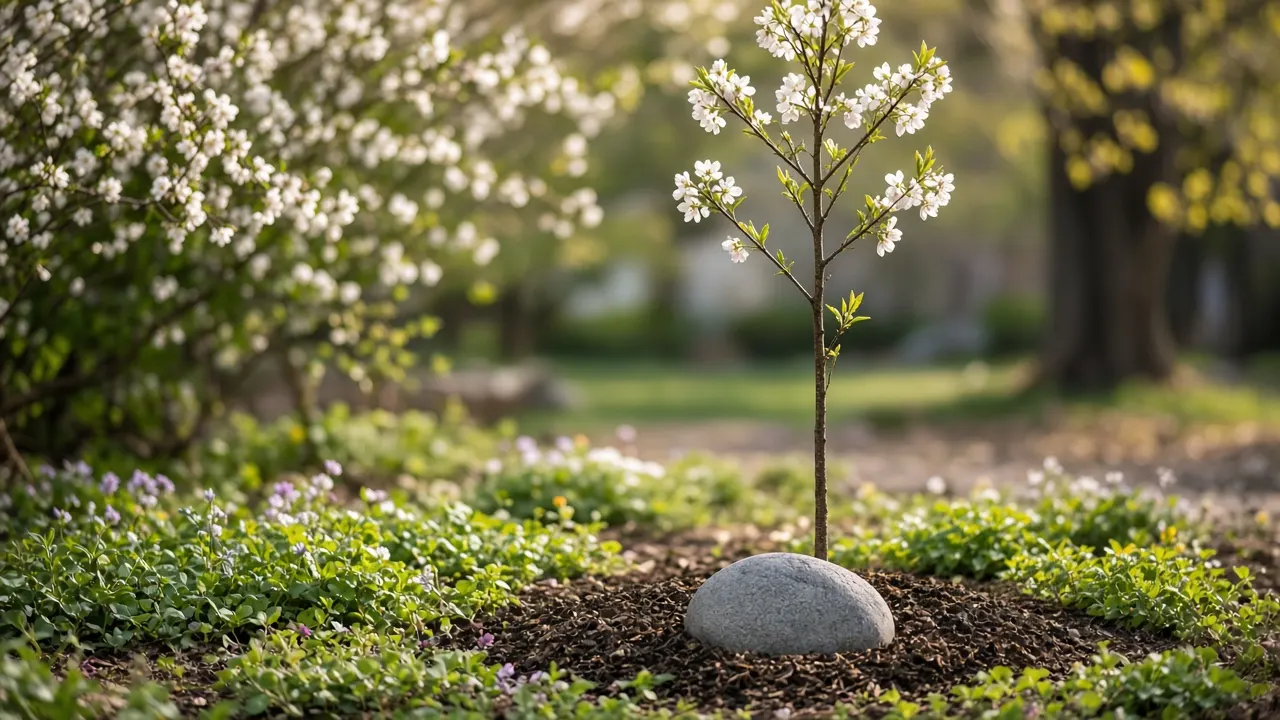
Orange is proud of its gardens and its autumn colour, and many families choose a memorial that grows. A flowering cherry, a crab apple or a rose planted with ashes gives something that changes with the seasons. Blend the ash well with soil and compost before planting, and choose a variety that handles tableland frosts. A small plaque at the base marks the spot once the plant has grown.
try the free planning tools, go deeper with the guides or catch up on recent articles, or compare your instinct with the poll results, For a plain comparison of the choices, open services. Close to Orange we also cover Wagga Wagga, Newcastle, Wollongong and Dubbo; the full list for New South Wales and for Australia is a click away.

Reader polls
What would you choose?
Vote anonymously and see how other readers answered. The results are live counts from people who visit this site, so they show real opinions, not a scientific sample.
If you rent or might move, how would you handle a memorial planting?
Tap an answer to vote and see how others answered. Anonymous.
What kind of tree or plant would you choose?
Tap an answer to vote and see how others answered. Anonymous.
If you had to decide today, which aftercare would you choose for your pet?
Tap an answer to vote and see how others answered. Anonymous.

Free tools to help you plan
Memorial budget planner
Add up cremation, urn, keepsakes and a farewell so the total holds no surprises.

Memorial tree finder
Pick a tree for a planting urn that suits your climate, space and pet.

Aftercare options compared
Compare private, communal and water cremation with burial on cost, timing and what comes home.
Questions people ask
Which nearby towns can I compare with Orange?
The closest communities we cover are Bathurst (about 29 miles), Dubbo (about 77 miles) and Sydney (about 128 miles). Providers based in those places often serve Orange too. Ask each one for a written total that includes collection, so the distance is priced in.
How many pet owners live in Orange?
By our estimate, about 14,000 households in Orange have at least one dog or cat, and around 1,150 are lost each year. We calculate this from the city's population of about 42,000, the average household size and national ownership and lifespan figures, so treat it as a floor rather than an exact count.
How do Australia attitudes to cremation compare?
FuneralSmart (2023) puts the Australia human cremation rate at about 71%[5]. We show it on the Orange page because pet aftercare choices tend to track it: where cremation is normal for people, communal and private pet cremation are both easy to find.
Is it legal to release pet ashes in the sea or a river?
Rules differ by place and by who manages the water, and many were written for human remains. In general, avoid drinking-water reservoirs, busy swimming areas and places where anglers gather, use a water-soluble urn or loose ashes only, and let nothing plastic float away. Ask the relevant agency or landowner before the day.
Can I bury pet ashes on a farm or rural land near Orange?
On land you own, burying ashes is generally allowed. Keep the planting well away from wells, springs and streams, and away from ground where livestock graze or crops are grown. On someone else's land, including family land, ask the owner first and agree that the memorial can stay if the land changes hands.
What happens to the memorial tree if I move away from Orange?
It stays with the land, and ashes mixed into soil can't be recovered. If a move is possible, plant in a large container, plant at a relative's home, or keep a small portion of the ashes back for a future garden. Cuttings from many shrubs root easily, so you can take a piece of the plant with you.


Sources and our estimates
- [1] 49% of Australian households have at least one dog, up from 40% in 2019. Animal Medicines Australia, Pets in Australia 2025 (media release), 2025.
- [2] US dogs have an average life expectancy at birth of 12.69 years. Montoya et al. 2023, Frontiers in Veterinary Science - Banfield Pet Hospital life expectancy tables (13.3 million dogs, 2.4 million cats, 2013-2019), 2023.
- [3] 34% of Australian households have at least one cat, up from 27% in 2019. Animal Medicines Australia, Pets in Australia 2025 (media release), 2025.
- [4] US cats seen at Banfield hospitals have an average life expectancy at birth of 11.18 years. Montoya et al. 2023, Frontiers in Veterinary Science - Banfield Pet Hospital life expectancy tables (13.3 million dogs, 2.4 million cats, 2013-2019), 2023.
- [5] Australian cremation rates hovered around 70-72% between 2020 and 2023, with Sydney and Melbourne often above 80%. FuneralSmart, 2023.
- [6] An Auckland pet crematorium lists individual cremation at NZD 445 for a 15-25 kg dog and communal cremation at NZD 85 for the same weight. Caring Cremations (Auckland) - Pet cremation prices, 2026.
- [7] Each shelter-animal flame cremation emits about 31 kg CO2e on average. Our estimate: 19,000 t CO2e / 607,000 animals. How we calculate.
- [8] In Australia, human Resomation (water cremation) is legal only in New South Wales and the ACT. Resomation Ltd: Where is Resomation permitted, 2024.
Plan a living memorial in Orange
Tell us what you need and where you are. We'll reply by email with clear options and prices so you can decide in your own time.