Greener pet aftercare in Wagga Wagga, New South Wales
Roughly 1,550 Wagga Wagga families say goodbye to a dog or cat each year, by our count. A living memorial is one way to mark it. This guide explains how to make one that actually grows.
- Options for renters and apartments
- Water release rules in plain words
- No obligation, we reply by email

Wagga Wagga, New South Wales
Where a living memorial fits in Wagga Wagga
Cremation is the norm at Australian funerals, so a box of ashes on the mantel or a quiet scattering is nothing unusual for Wagga families. Some choose a sandy bend of the Murrumbidgee near Wagga Beach, a shady corner of the showground they visited every spring, or the family farm where the animal grew up. Where the land is not yours, get the owner's permission, and keep public scatterings small.
Many Wagga homes have garden space, so outdoor memorials are popular: a stone under a gum tree, a small plaque, or a tree planted with ashes. Choose materials that can take the Riverina sun and frost. Granite and other dense stone hold their finish; softer stone and some resins fade or crack. A keepsake pendant or small urn indoors can sit alongside an outdoor marker.
In a town the size of Wagga Wagga, the nearest aquamation provider may be an hour or more away, and pet crematories often serve a wide rural area. That doesn't change what you can do with the ashes. A flame-cremated pet's ashes work just as well in a planting urn or water urn. If a lower-impact goodbye is the main reason you're here, the choice of cremation matters more than the urn, so ask about water cremation before you commit.
Wagga Wagga's population is around 57,000, the 4th-largest of the 9 New South Wales communities we cover.
The closest communities we cover are Albury (71 miles) and Canberra (101 miles, a larger centre). Providers serving those towns often travel to Wagga Wagga too, so it can be worth asking them for a quote.
Our estimate
19,000
Wagga Wagga: dog- or cat-owning households, our estimate
How we calculated this
57,000 ÷ 2.5 = 22,800 households; × 49% (dog) + 34% (cat) = 19,000. Homes are counted once however many pets they keep.
Our estimate
1,550
Wagga Wagga families who lose a dog or cat each year (estimate)
How we calculated this
19,000 dog/cat-owning homes ÷ average lifespan (dog: 12.69 yrs + cat: 11.18 yrs) ≈ 1,550 a year. The real figure is unlikely to be lower.
49%[1]
49% of Australian households have at least one dog, up from 40% in 2019.
12.69 years[2]
US dogs have an average life expectancy at birth of 12.69 years.
34%[3]
34% of Australian households have at least one cat, up from 27% in 2019.
11.18 years[4]
US cats seen at Banfield hospitals have an average life expectancy at birth of 11.18 years.
Where these figures come from: Animal Medicines Australia, Pets in Australia 2025 (media release) and Montoya et al. 2023, Frontiers in Veterinary Science.

How Australia feels about cremation
In Australia, about 71%[5] of people are cremated, one of the higher rates around. When most human funerals end with ashes, the question "what shall we do with them?" comes up in nearly every family, and a tree, a garden bed or a lake release is a common answer. That familiarity carries over to pets. It also means more crematories to choose from, and more chance that one of them offers water cremation.
The Australia figure comes from FuneralSmart (2023). It describes people, not pets, so read it as a sign of local attitudes rather than a pet statistic.
Weather, soil and planting windows in Wagga Wagga
One cautious approach in Wagga Wagga: plant the memorial in a large pot for its first year and watch how it copes through your hottest and coldest weeks. If it thrives, move it into the ground the following autumn or spring, pot and all removed, with the ash blend around it. If it struggles, you've learned that before committing to a spot.
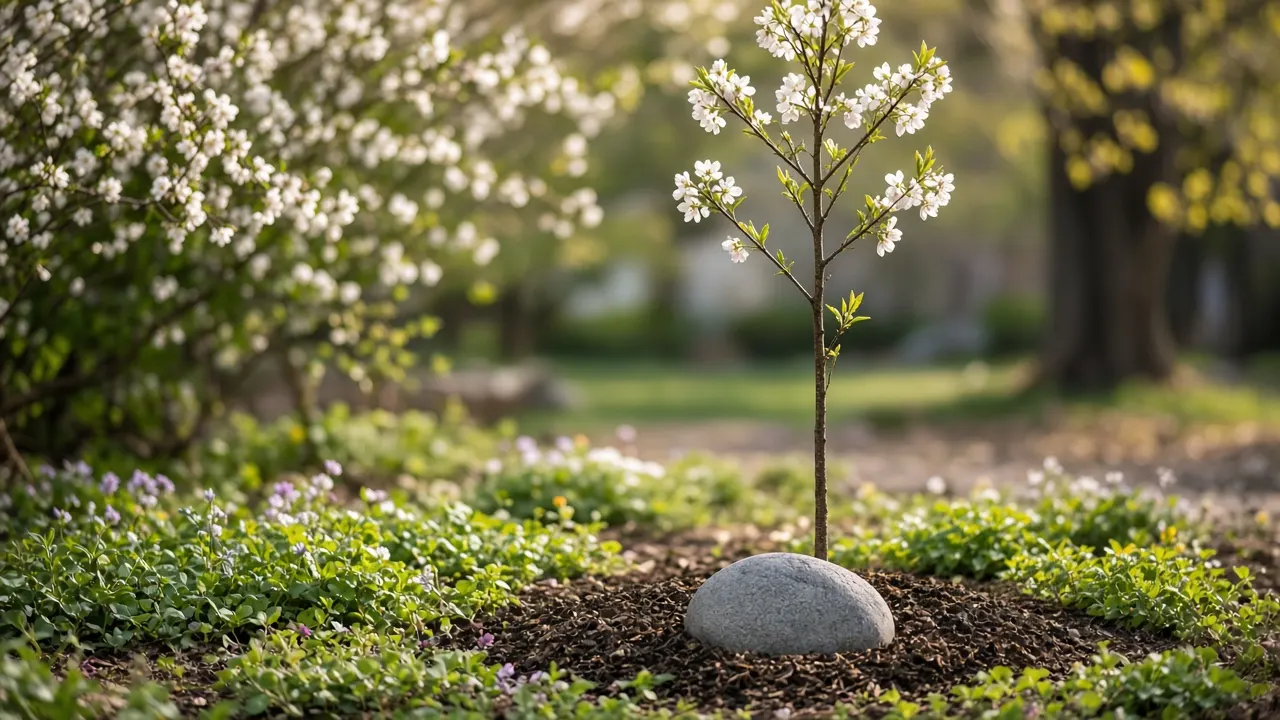
Adding up the cost of a bio urn memorial in Wagga Wagga
By our estimate, private cremation for a Labrador-sized dog costs about 27% more in Australia than the US midpoint[6]. In New Zealand, one Auckland provider charges NZD 305 for individual cremation of a 2 to 7 kg pet against NZD 55 for communal[7]. Only the individual option returns ashes. For a planting in Wagga Wagga, that's the one that matters.
For a line-by-line price table, see the New South Wales overview; for what's included in each option, see our services.

Free tool
Memorial budget planner
Add up cremation, urn, keepsakes and a farewell so the total holds no surprises.
Land, water and permission in New South Wales
Natural burial grounds and some pet cemeteries in New South Wales accept ashes in biodegradable urns, and a few ask for nothing else: no plastic, no metal, no varnish. If you're considering one, ask what the urn may be made of, whether a tree or marker is allowed above it, and whether the fee includes looking after the plot.
In Australia, water cremation for people is legal only in New South Wales and the ACT[9], and pet aquamation is uncommon, so most bio urns hold ashes from flame cremation. Many inland soils are already alkaline, so extra compost matters. Choose a local native, and check the import rules before ordering a tree urn that ships with seeds from overseas.
Home burial and scattering are governed at the New South Wales level first; our New South Wales rules summary has the detail. Then check whether Wagga Wagga or your HOA adds anything.
Planting a memorial in Wagga Wagga, step by step
- Decide what the memorial is for. Wanting somewhere to sit, a living plant, a release on water or simply the gentlest footprint each leads you toward a different kind of urn.
- If a greener cremation matters, ask about aquamation before anything else; it's the step with the biggest environmental difference.
- Keep a small portion back in a keepsake in case a house move or a second memorial is on the cards down the line.
- Buy the tree locally. A young native tree from a grower around Wagga Wagga tends to outgrow anything sprouted from a packet seed.
- Prepare the soil a season ahead where you can, and the mixture of compost and ash will have settled by the time you dig the hole.
- Plant with the people who loved your pet, and give each of them a job: mixing, filling, watering.
Keeping the memorial alive in Wagga Wagga
Families in the Riverina are often spread out, with children in Sydney, Canberra or Melbourne. Dividing ashes into a main urn and a few small keepsakes means several households can share the memory. A paw or hoof print, a fur clipping or a piece of jewellery can travel easily, and many people find that a small object helps the family stay connected.
or see what other families chose in the poll results, Our services overview lays out every option side by side, browse in-depth guides or recent articles, run the numbers with the free planning tools. Close to Wagga Wagga we also cover Wollongong, Albury, Orange and Sydney; the full list for New South Wales and for Australia is a click away.

Reader polls
What would you choose?
Vote anonymously and see how other readers answered. The results are live counts from people who visit this site, so they show real opinions, not a scientific sample.
If you rent or might move, how would you handle a memorial planting?
Tap an answer to vote and see how others answered. Anonymous.
Would you consider releasing your pet's ashes in water?
Tap an answer to vote and see how others answered. Anonymous.
If you had to decide today, which aftercare would you choose for your pet?
Tap an answer to vote and see how others answered. Anonymous.

Free tools to help you plan
Memorial budget planner
Add up cremation, urn, keepsakes and a farewell so the total holds no surprises.

Memorial tree finder
Pick a tree for a planting urn that suits your climate, space and pet.

Aftercare options compared
Compare private, communal and water cremation with burial on cost, timing and what comes home.
Questions people ask
How do Australia attitudes to cremation compare?
FuneralSmart (2023) puts the Australia human cremation rate at about 71%[5]. We show it on the Wagga Wagga page because pet aftercare choices tend to track it: where cremation is normal for people, communal and private pet cremation are both easy to find.
Can a provider from a neighbouring town collect from Wagga Wagga?
Usually yes. Albury is about 71 miles away and Canberra is about 101 miles away, all inside a normal collection radius. Get the mileage written into the quote so there is no surprise on the day.
Is Wagga Wagga big enough to have several pet aftercare providers?
Probably, on the numbers. By our estimate about 19,000 Wagga Wagga households keep a dog or cat and around 1,550 lose one each year, which is enough steady demand to support more than one provider. We derive that from population (about 57,000), household size and national ownership and lifespan figures.
How long does it take to get ashes back for planting?
Most private cremations return ashes within one to two weeks, and water cremation cycles themselves take 12–20 hours[10], so allow a similar time. In a smaller place, if the cremation happens in a larger centre such as Wagga Wagga, it may take a little longer. Planting can wait, so there's no need to rush.
I rent in Wagga Wagga. Can I still have a living memorial?
Yes. Plant in a large container, such as a half-barrel or a big pot with a dwarf tree or flowering shrub, and it moves with you. Use only a small share of the ashes in the pot, well mixed with compost. If you'd like to plant in a rented yard, get the landlord's permission in writing, and remember the tree stays when you leave.
Is it legal to release pet ashes in the sea or a river?
Rules differ by place and by who manages the water, and many were written for human remains. In general, avoid drinking-water reservoirs, busy swimming areas and places where anglers gather, use a water-soluble urn or loose ashes only, and let nothing plastic float away. Ask the relevant agency or landowner before the day.


Sources and our estimates
- [1] 49% of Australian households have at least one dog, up from 40% in 2019. Animal Medicines Australia, Pets in Australia 2025 (media release), 2025.
- [2] US dogs have an average life expectancy at birth of 12.69 years. Montoya et al. 2023, Frontiers in Veterinary Science - Banfield Pet Hospital life expectancy tables (13.3 million dogs, 2.4 million cats, 2013-2019), 2023.
- [3] 34% of Australian households have at least one cat, up from 27% in 2019. Animal Medicines Australia, Pets in Australia 2025 (media release), 2025.
- [4] US cats seen at Banfield hospitals have an average life expectancy at birth of 11.18 years. Montoya et al. 2023, Frontiers in Veterinary Science - Banfield Pet Hospital life expectancy tables (13.3 million dogs, 2.4 million cats, 2013-2019), 2023.
- [5] Australian cremation rates hovered around 70-72% between 2020 and 2023, with Sydney and Melbourne often above 80%. FuneralSmart, 2023.
- [6] A private cremation for a Labrador-sized dog costs about 27% more in Australia (AUD 480 median, ~$317) than the US 51-70 lb midpoint ($250). Our estimate: 480 x 0.66 = 317; 317/250 - 1. How we calculate.
- [7] The same Auckland provider lists individual cremation at NZD 625 and communal at NZD 215 for a 70-95 kg dog, and NZD 305 vs NZD 55 for a 2-7 kg pet. Caring Cremations (Auckland) - Pet cremation prices, 2026.
- [8] If just 10% of U.S. pet cremations moved to aquamation, about 4,200 t CO2e a year would be avoided. Our estimate: 1.5M x 10% x 31.3 kg x 90% reduction. How we calculate.
- [9] In Australia, human Resomation (water cremation) is legal only in New South Wales and the ACT. Resomation Ltd: Where is Resomation permitted, 2024.
- [10] A PET-550 aquamation cycle takes 12–20 hours for a single pet and 14–20 hours for segregated or communal cycles, with up to 14 compartments. Bio-Response Solutions — PET-550 Aquamation System product page, 2026.
Tell us about your pet and your garden
Tell us what you need and where you are. We'll reply by email with clear options and prices so you can decide in your own time.