Greener pet aftercare in Wollongong, New South Wales
By our estimate, around 105,000 households in Wollongong share their home with a dog or cat, and roughly 8,600 of those pets die each year. More of those families now ask about planting or water memorials. Here's how to do it well.
- Planting, garden and water urns compared
- Honest notes on local rules
- Help choosing a native species
Wollongong, New South Wales
Bio urns, trees and water in Wollongong
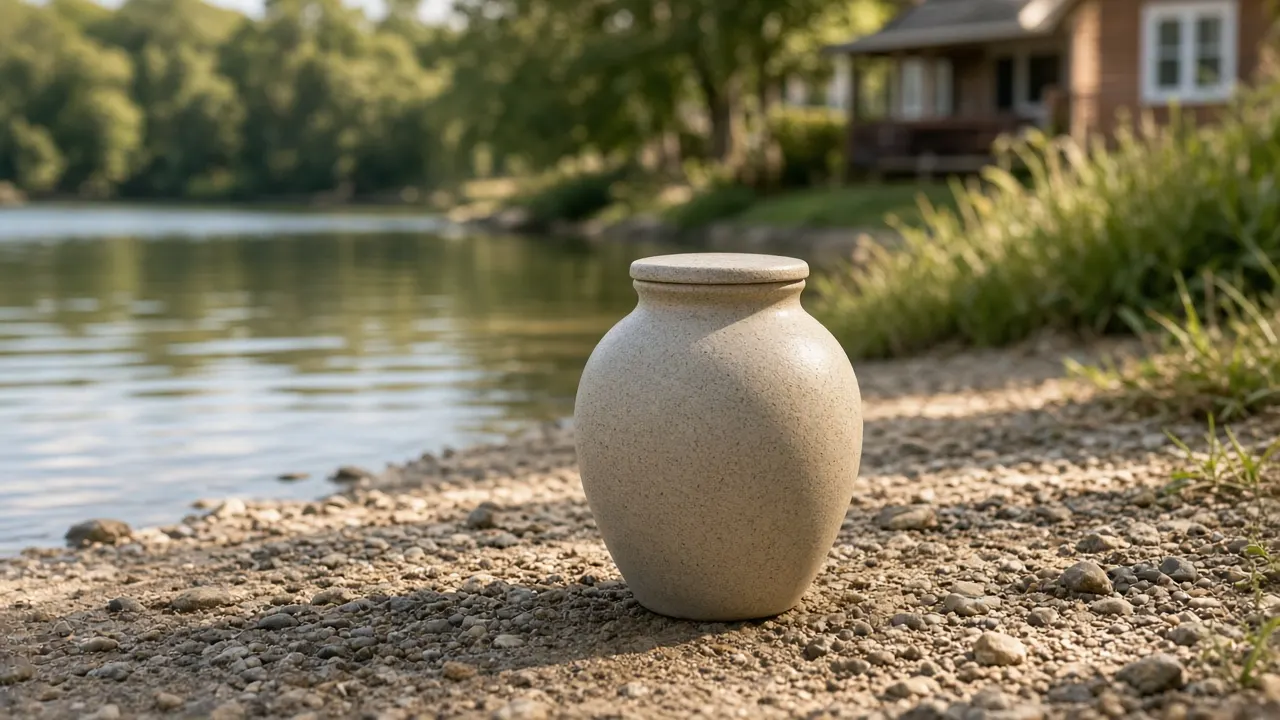
Many Wollongong families keep a pet's ashes at home in an urn with a photo, or share them in keepsake containers among relatives. Pendants holding a pinch of ashes, framed paw prints and engraved garden stones are also popular. Paw prints and fur clippings are taken before cremation, so mention them early. Small keepsakes also travel well if you move.
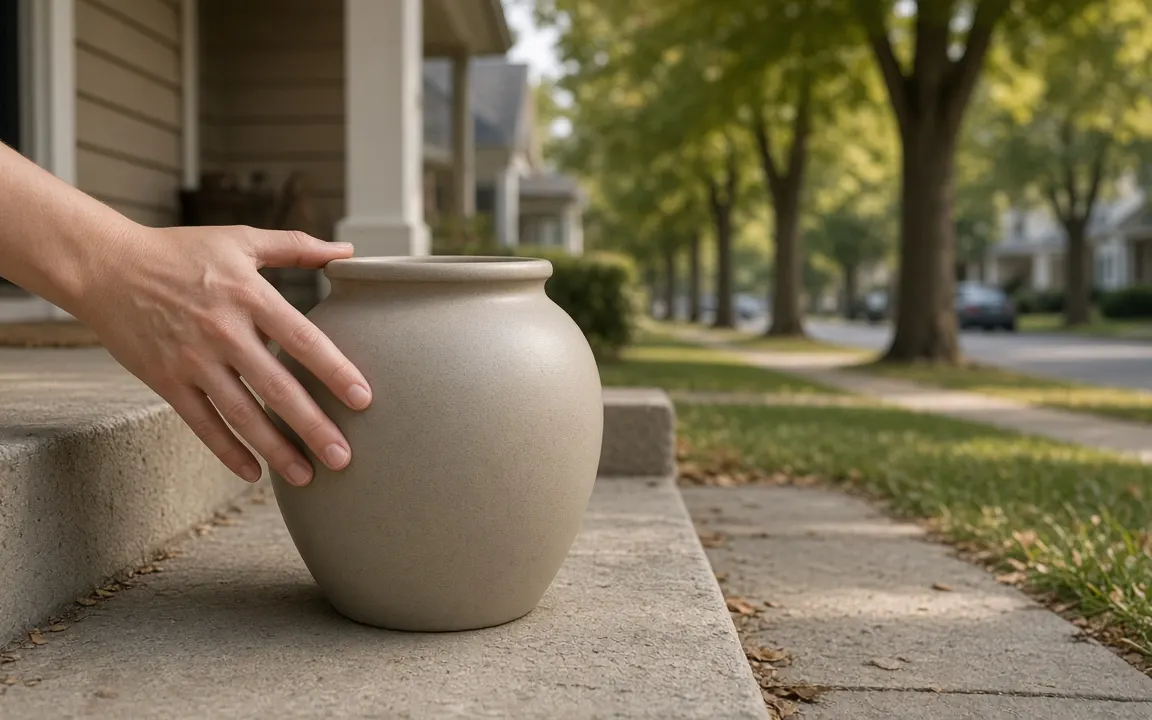
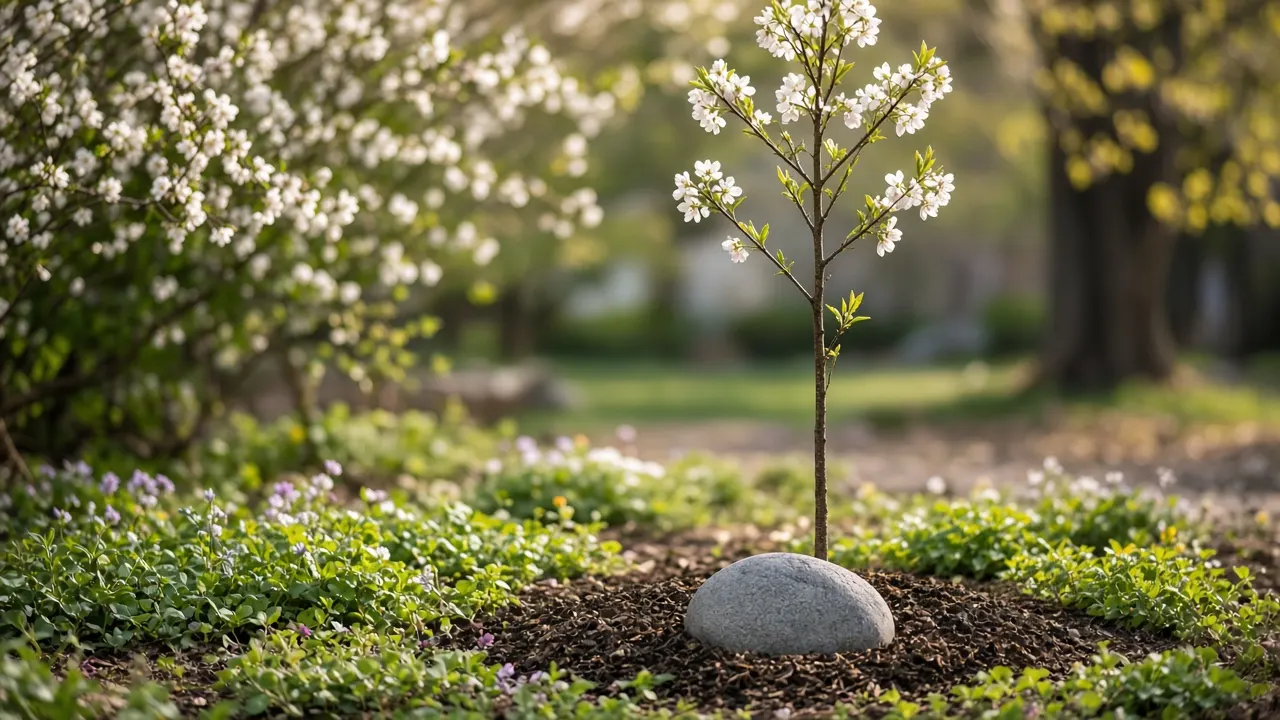
Salt air, strong sun and heavy coastal rain are hard on outdoor memorials in Wollongong. Natural stone, glazed ceramic and marine-grade metal last longest, while painted timber and some resins fade. A native tree or shrub planted with a biodegradable urn can be a lovely living memorial, as long as it's placed where water won't pool after a storm. Plant in autumn or spring for the gentlest start.
If you'd like water cremation, Wollongong is the kind of place where it may be offered by one local provider or by a larger centre such as Sydney. It's worth one phone call to find out. Some aquamation providers collect from a vet clinic across a wide area, and turnaround is usually measured in days to a couple of weeks rather than hours, so there's no need to decide anything in the first evening.
With roughly 312,000 residents, Wollongong is the 3rd-largest of the 9 New South Wales communities we cover. The nearest larger centre is Sydney, about 43 miles (69 km) away, which is where some providers serving Wollongong are based.
Our pages for Sydney (43 miles, a larger centre), Mosman (46 miles) and Bathurst (103 miles) describe the same choices from those towns' point of view, and the providers overlap, so a quote from one often covers Wollongong as well.
Our estimate
105,000
How many dog- or cat-owning households Wollongong has (estimate)
How we calculated this
312,000 ÷ 2.5 = 124,800 households; × 49% (dog) + 34% (cat) = 105,000. Multi-pet homes count once.
Our estimate
8,600
Wollongong families who lose a dog or cat each year (estimate)
How we calculated this
105,000 dog/cat-owning homes ÷ average lifespan (dog: 12.69 yrs + cat: 11.18 yrs) ≈ 8,600 a year. A floor, not a ceiling.
49%[1]
49% of Australian households have at least one dog, up from 40% in 2019.
12.69 years[2]
US dogs have an average life expectancy at birth of 12.69 years.
34%[3]
34% of Australian households have at least one cat, up from 27% in 2019.
11.18 years[4]
US cats seen at Banfield hospitals have an average life expectancy at birth of 11.18 years.
Where these figures come from: Montoya et al. 2023, Frontiers in Veterinary Science and Animal Medicines Australia, Pets in Australia 2025 (media release).
What local attitudes to cremation mean in Australia
In Australia, about 71%[5] of people are cremated, one of the higher rates around. When most human funerals end with ashes, the question "what shall we do with them?" comes up in nearly every family, and a tree, a garden bed or a lake release is a common answer. That familiarity carries over to pets. It also means more crematories to choose from, and more chance that one of them offers water cremation.
Source for the Australia number: FuneralSmart (2023). Nobody publishes a pet cremation rate for Wollongong, so the human figure is the best local signal available.
What Wollongong's climate means for a living memorial
If you're unsure what grows in Wollongong, visit a public park, a botanic garden or a cemetery with old trees and see which species look healthy after decades. Those are proven in local weather and soil. Take photos of the labels, or of the leaves and bark, and ask a nursery whether a smaller relative would suit your garden.
Eco memorial prices, from urn to tree
Water cremation for people is legal in only two Australian jurisdictions, New South Wales and the ACT[6], and pet aquamation is still uncommon, so most families in Wollongong start with a flame cremation. The ashes work just as well in a planting urn. Communal cremation starts from AUD 80[7] but doesn't return ashes, so choose individual cremation if you want to plant.
Prices for Wollongong track the wider New South Wales market, so use the New South Wales price table as your baseline and the services page to see what is included.

Free tool
Memorial budget planner
Add up cremation, urn, keepsakes and a farewell so the total holds no surprises.
What New South Wales allows for ashes, in general terms
Two questions cover most situations in New South Wales: who owns or manages this land or water, and have they said yes? For your own garden, the answer is you. For a rented home, it's your landlord, in writing. For parks and public water, it's the relevant agency. For a relative's garden, it's them, and it's worth agreeing that the tree stays even if the house is sold.
In Australia, water cremation for people is legal only in New South Wales and the ACT[6], and pet aquamation is uncommon, so most bio urns hold ashes from flame cremation. Many inland soils are already alkaline, so extra compost matters. Choose a local native, and check the import rules before ordering a tree urn that ships with seeds from overseas.
Start with the New South Wales rules, which cover burial, scattering and oversight for the whole state, and treat Wollongong's local ordinances as a possible extra layer.
What to do first, and what can wait for the right season
- If euthanasia is planned, ask the vet a few days ahead which crematory they use and whether water cremation is one of the choices.
- Book the aftercare before the appointment, which leaves the day free for nothing but sitting with your pet.
- Ask for a paw print or nose print before cremation if you'd like one. It can't be made afterwards.
- Choose the plant in advance when that feels easier. Knowing the exact spot their pet is headed for brings some families real comfort.
- Skip the display urn. A simple box or tube from the crematory is all a planting needs, and the saving can go toward the tree or shrub.
- Prepare the soil blend while you wait for the ashes, so the planting can follow within a season rather than drifting on for years.
Keeping the memorial alive in Wollongong
Wollongong's beaches, the lookouts along the escarpment and the coast road over the Sea Cliff Bridge are places many families link with their pets. Some families let a small share go at one of these spots and keep the remainder in an urn. Check rules for national parks and beaches first, and choose a calm morning when the wind is light. Only a small share is needed for that.
the planning tools turn your pet's details into figures, The services page is the place to compare what is included, look through our guides and the blog, or look at how readers voted in our polls. You can also browse every city in Australia. Nearby, we also cover Orange, Sydney, Wagga Wagga and Albury, and every city in New South Wales.

Reader polls
What would you choose?
Vote anonymously and see how other readers answered. The results are live counts from people who visit this site, so they show real opinions, not a scientific sample.
If you rent or might move, how would you handle a memorial planting?
Tap an answer to vote and see how others answered. Anonymous.
What kind of tree or plant would you choose?
Tap an answer to vote and see how others answered. Anonymous.
If you had to decide today, which aftercare would you choose for your pet?
Tap an answer to vote and see how others answered. Anonymous.

Free tools to help you plan
Memorial budget planner
Add up cremation, urn, keepsakes and a farewell so the total holds no surprises.

Memorial tree finder
Pick a tree for a planting urn that suits your climate, space and pet.

Aftercare options compared
Compare private, communal and water cremation with burial on cost, timing and what comes home.
Questions people ask
Which nearby towns can I compare with Wollongong?
The closest communities we cover are Sydney (about 43 miles), Mosman (about 46 miles) and Bathurst (about 103 miles). Providers based in those places often serve Wollongong too. Ask each one for a written total that includes collection, so the distance is priced in.
Why does the Wollongong page quote a human cremation rate?
Because it is the best local signal we have. FuneralSmart (2023) reports about 71%[5] of Australia residents are cremated. There is no official pet equivalent, and inventing one would be worse than quoting a real, clearly labelled number.
Will I have to travel to Sydney to arrange things?
Not usually. Providers based in Sydney (roughly 43 miles from Wollongong) collect from here as a matter of routine, and the paperwork is done by email or phone. If you want to be present for a witnessed cremation, that is when the drive matters.
Is Wollongong big enough to have several pet aftercare providers?
Probably, on the numbers. By our estimate about 105,000 Wollongong households keep a dog or cat and around 8,600 lose one each year, which is enough steady demand to support more than one provider. We derive that from population (about 312,000), household size and national ownership and lifespan figures.
How long does it take to get ashes back for planting?
Most private cremations return ashes within one to two weeks, and water cremation cycles themselves take 12–20 hours[9], so allow a similar time. In a smaller place, if the cremation happens in a larger centre such as Sydney, it may take a little longer. Planting can wait, so there's no need to rush.
Do bio urns work with ashes from flame cremation?
Yes. A bio urn works with ashes from flame cremation or water cremation. Both leave mineral-rich, alkaline ash, so the soil advice is the same either way: dilute the ashes well through compost and soil, let the mix rest if you can, and test the pH before a young tree goes in.


Sources and our estimates
- [1] 49% of Australian households have at least one dog, up from 40% in 2019. Animal Medicines Australia, Pets in Australia 2025 (media release), 2025.
- [2] US dogs have an average life expectancy at birth of 12.69 years. Montoya et al. 2023, Frontiers in Veterinary Science - Banfield Pet Hospital life expectancy tables (13.3 million dogs, 2.4 million cats, 2013-2019), 2023.
- [3] 34% of Australian households have at least one cat, up from 27% in 2019. Animal Medicines Australia, Pets in Australia 2025 (media release), 2025.
- [4] US cats seen at Banfield hospitals have an average life expectancy at birth of 11.18 years. Montoya et al. 2023, Frontiers in Veterinary Science - Banfield Pet Hospital life expectancy tables (13.3 million dogs, 2.4 million cats, 2013-2019), 2023.
- [5] Australian cremation rates hovered around 70-72% between 2020 and 2023, with Sydney and Melbourne often above 80%. FuneralSmart, 2023.
- [6] In Australia, human Resomation (water cremation) is legal only in New South Wales and the ACT. Resomation Ltd: Where is Resomation permitted, 2024.
- [7] Australian communal cremation starts from about AUD 80 at the industry low end. Pet Farewell (Australia) - Pet Cremation Cost Australia (2026), 2026.
- [8] If just 10% of U.S. pet cremations moved to aquamation, about 4,200 t CO2e a year would be avoided. Our estimate: 1.5M x 10% x 31.3 kg x 90% reduction. How we calculate.
- [9] A PET-550 aquamation cycle takes 12–20 hours for a single pet and 14–20 hours for segregated or communal cycles, with up to 14 compartments. Bio-Response Solutions — PET-550 Aquamation System product page, 2026.
Ask about aquamation near Wollongong
Tell us what you need and where you are. We'll reply by email with clear options and prices so you can decide in your own time.