Bio urns and eco memorials in Yuma
By our estimate, around 38,500 households in Yuma share their home with a dog or cat, and roughly 3,250 of those pets die each year. More of those families now ask about planting or water memorials. Here's how to do it well.
- A memorial that moves with you
- Why pure ashes harm young roots
- Written prices you can compare
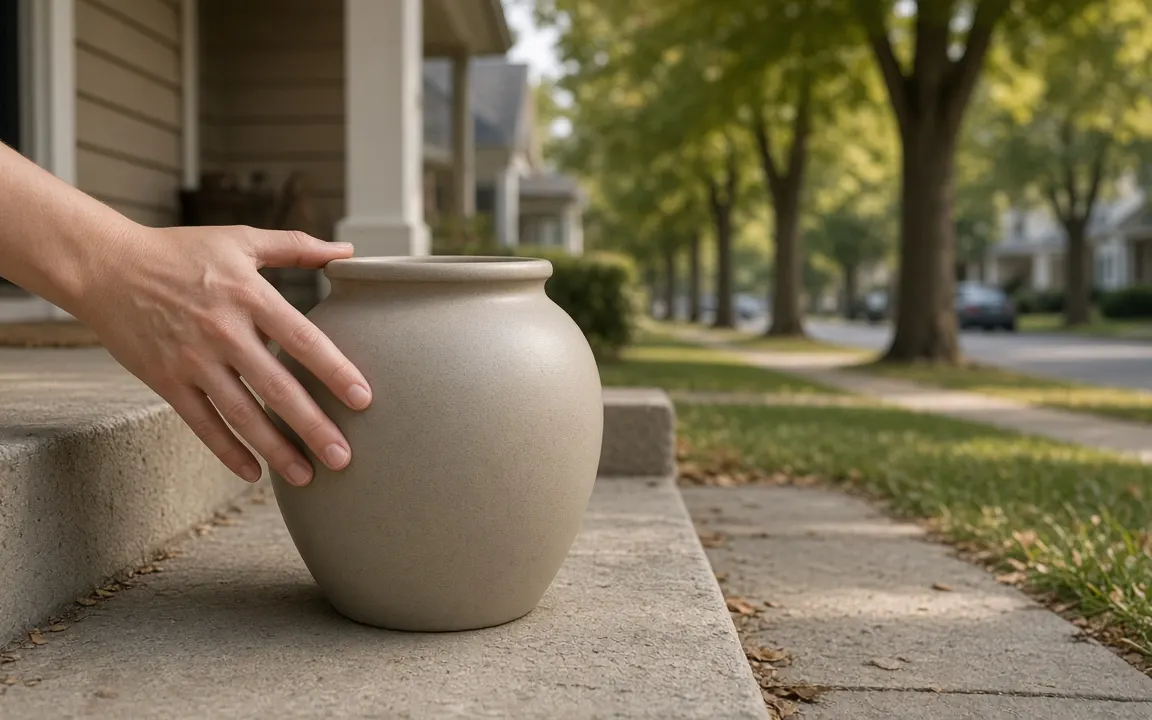
Yuma, Arizona
Where a living memorial fits in Yuma
In Yuma, the Colorado River, the desert and the green winter fields are the backdrop for many people's lives with their animals. Families sometimes choose a memorial that reflects that: a stone with a river scene, a desert plant grown from a biodegradable urn, or a simple marker in the yard. Let the place your pet loved guide the choice.
Many Yuma families keep a memorial close by, since the city's winter visitors and military families often move on. Small urns, paw prints and jewelry travel easily and can go wherever you do. If you plan to scatter ashes somewhere far from Yuma, set aside a small portion first so you have something to keep. A keepsake urn is small enough to fit in a carry-on bag.
Yuma is big enough to have a real mix of homeowners and renters, and the right memorial differs between the two. Owners can plant in the ground, though soil tests and utility checks still apply. Renters need the landlord's written permission to plant in a rented yard, and most people who rent choose a pot, a relative's garden or a water release instead. Neither is a lesser memorial; it's just matching the memorial to your life.
With roughly 105,227 residents, Yuma is the 13th-largest of the 29 Arizona communities we cover.
For a second opinion on price, San Luis (12 miles), Coachella (124 miles) and Buckeye (126 miles) are close enough that their providers cover Yuma routinely. Two written quotes tell you more than any price list.
Our estimate
38,500
How many dog- or cat-owning households Yuma has (estimate)
How we calculated this
105,227 ÷ 2.5 = 42,091 households; × 53% (dog) + 39% (cat) = 38,500. Homes are counted once however many pets they keep.
Our estimate
3,250
Yuma families who lose a dog or cat each year (estimate)
How we calculated this
38,500 dog/cat-owning homes ÷ average lifespan (dog: 12.69 yrs + cat: 11.18 yrs) ≈ 3,250 a year. A floor, not a ceiling.
53%[1]
53% of US households own a dog, which is about 71 million households.
12.69 years[2]
US dogs have an average life expectancy at birth of 12.69 years.
39%[3]
39% of US households own a cat, which is about 53 million households.
11.18 years[4]
US cats seen at Banfield hospitals have an average life expectancy at birth of 11.18 years.
Sources for the statistics above: Montoya et al. 2023, Frontiers in Veterinary Science and American Pet Products Association (APPA) 2025 State of the Industry.
How Arizona feels about cremation
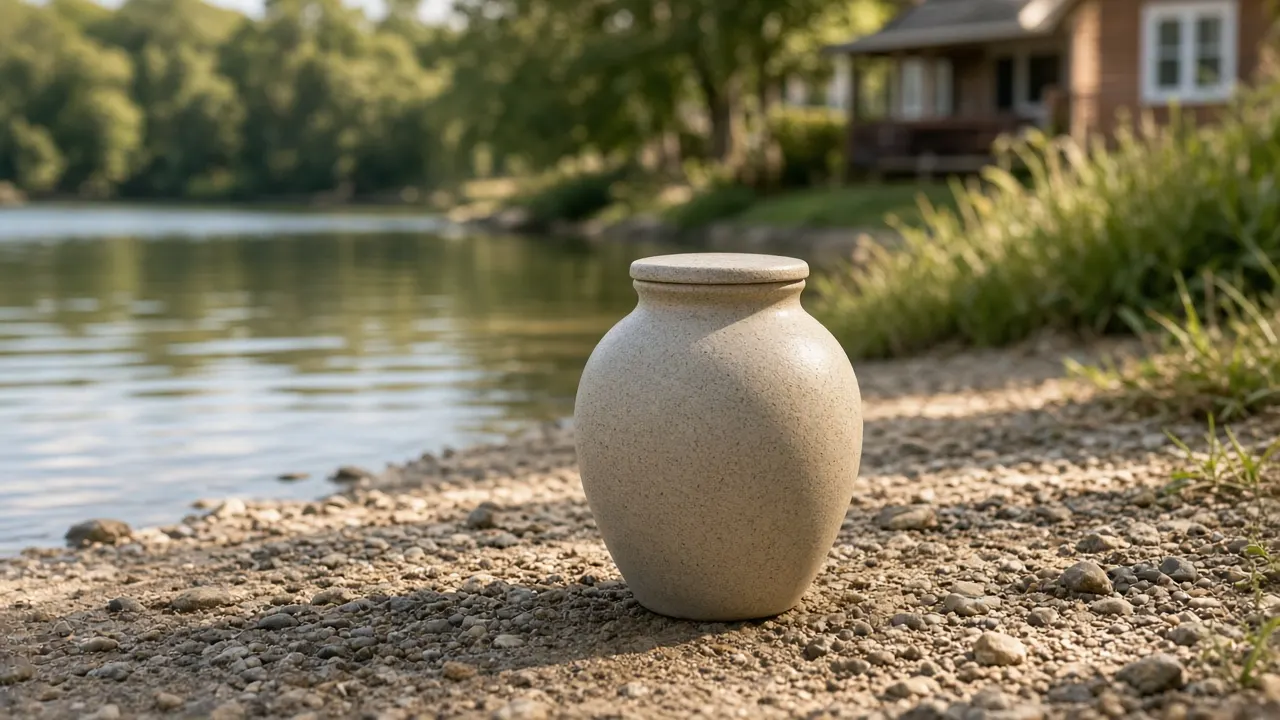
Scattering gardens and woodland memorials are familiar sights in Arizona, where cremation is the choice for around 80.7%[5] of people who die. Many families already have a place where a grandparent's ashes were scattered. If that place is on land you own or have permission to use, a pet's ashes can join it quietly. Human cemeteries and crematoria grounds are different, and most don't accept animal remains, so ask first.
The Arizona figure comes from NFDA 2024 Cremation & Burial Report state projections (via Occasional Sage) (2024). It describes people, not pets, so read it as a sign of local attitudes rather than a pet statistic.
Weather, soil and planting windows in Yuma
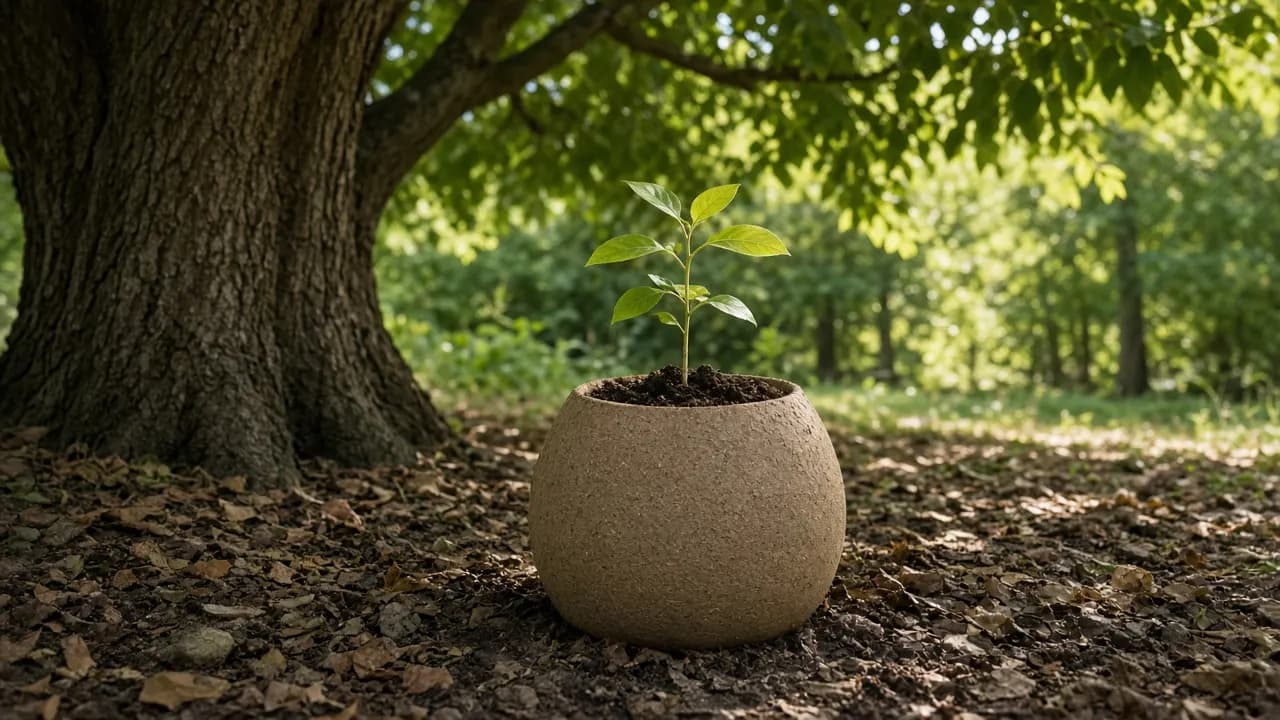
Heat narrows the tree list in Yuma. Months like April, May, June, July, August, September and October bring sustained highs, so choose species that already cope locally: drought-tolerant natives, or trees a local nursery recommends for full sun. A seed from a planting kit, bred somewhere cooler, is a gamble here. Plant a sturdy nursery sapling instead, mulch a wide ring around it and plan to water it through its first two summers.
Summer water can be busy or unsafe in hot places. Around Yuma, shorelines are crowded in July, and some lakes close for algae blooms in the heat. For a lake or river goodbye, pick a cooler month or go at first light, check for any water-quality notices, and choose a spot where you can reach the water easily without slipping.
Adding up the cost of a bio urn memorial in Yuma
Water cremation prices overlap with flame cremation. One Delaware provider charges $150–$450[6] for private aquamation by weight, including a standard urn, and $50–$225[7] for communal. That makes private about 2.5 times the shared price[8]. Prices in Yuma depend on who offers it locally, so ask for a written quote that says whether the ashes come back and in what container.
For a line-by-line price table, see the Arizona overview; for what's included in each option, see our services.

Free tool
Memorial budget planner
Add up cremation, urn, keepsakes and a farewell so the total holds no surprises.
Who to ask before you plant or scatter in Arizona
Rules change more often than most people realise, and many local policies about ashes were never written down at all. Treat any general guide for Arizona, including ours, as a starting point. Whoever looks after that particular field, park or shoreline is the one whose answer counts, so it's worth getting it by email where you can.
Not sure which office covers Yuma? The Arizona local government directory is the official list.
For Arizona's rules on burying a pet at home or scattering ashes, see the Arizona guide. Local rules in Yuma can be stricter than the state's, especially in homeowners' associations and rentals.
From ashes to a growing tree: the steps
- If the pet belonged to a child, be straightforward about the death and explain cremation simply, pitched at a level they can understand.
- Let them choose the plant, but from a handful of options you've vetted first for hardiness and for being harmless to the other animals in the house.
- Use a pot for a small pet such as a hamster, rabbit or guinea pig: there's only a small amount of ash, and a pot keeps the memorial close.
- Give them real jobs on the day: filling the pot, mixing the soil, watering, choosing a painted stone.
- Explain the ashes honestly as part of their pet that's now feeding the plant, and answer questions as they come, even months later.
- Take a photo of the child with the plant on the same day every year; over time you'll have a record of the two of them growing up.
Keeping the memorial alive in Yuma
Yuma's desert sun is hard on anything outdoors. Plastic, resin and painted markers fade and crack quickly, and dark metal can get too hot to touch. If you want a garden memorial, pale natural stone or engraved desert rock holds up well. Indoors, an urn kept out of direct sunlight will look the same for decades. If you plan to move, choose something that packs easily.
or see how other readers answered in our polls, For a plain comparison of the choices, open services, look through our guides and the blog, use the free tools before you ring anyone. If you live between Yuma and Gilbert, Glendale, Chandler and Mesa, either page applies. Every other community in Arizona, and all of the United States, is listed too.

Reader polls
What would you choose?
Vote anonymously and see how other readers answered. The results are live counts from people who visit this site, so they show real opinions, not a scientific sample.
Would you consider releasing your pet's ashes in water?
Tap an answer to vote and see how others answered. Anonymous.
If water cremation (aquamation) were offered near you, would you choose it?
Tap an answer to vote and see how others answered. Anonymous.
If you had to decide today, which aftercare would you choose for your pet?
Tap an answer to vote and see how others answered. Anonymous.

Free tools to help you plan
Memorial budget planner
Add up cremation, urn, keepsakes and a farewell so the total holds no surprises.

Memorial tree finder
Pick a tree for a planting urn that suits your climate, space and pet.

Aftercare options compared
Compare private, communal and water cremation with burial on cost, timing and what comes home.
Questions people ask
Why does the Yuma page quote a human cremation rate?
Because it is the best local signal we have. NFDA 2024 Cremation & Burial Report state projections (via Occasional Sage) (2024) reports about 80.7%[5] of Arizona residents are cremated. There is no official pet equivalent, and inventing one would be worse than quoting a real, clearly labelled number.
How many pet owners live in Yuma?
By our estimate, about 38,500 households in Yuma have at least one dog or cat, and around 3,250 are lost each year. We calculate this from the city's population of about 105,227, the average household size and national ownership and lifespan figures, so treat it as a floor rather than an exact count.
Does the Yuma climate change what I should do first?
Only the timing. In July, with highs near 107°F, cool the body and book collection the same day. Winters here are mild enough that burial or scattering is possible in any month.
Can a provider from a neighbouring town collect from Yuma?
Usually yes. San Luis is about 12 miles away, Coachella is about 124 miles away and Buckeye is about 126 miles away, all inside a normal collection radius. Get the mileage written into the quote so there is no surprise on the day.
What if my pet dies when it's too hot or cold to plant?
Wait. Ashes don't need to go into the ground quickly, and a tree planted in the wrong season is more likely to fail. Keep them in the container from the crematory, use the time to choose a species and prepare the soil mix, and plant when the weather in Yuma is kind to young roots.
Can I take my pet's ashes on a plane to plant them somewhere else?
Usually, yes. Most airlines let you carry cremated remains in hand luggage, but security staff need to be able to X-ray the container, so a wooden, plastic or cardboard container is easier than a metal urn. Keep the certificate from the crematory with you. Leave any seed pod at home if you're crossing a border that restricts plant material.


Sources and our estimates
- [1] 53% of US households own a dog, which is about 71 million households. American Pet Products Association (APPA) 2025 State of the Industry, 2025.
- [2] US dogs have an average life expectancy at birth of 12.69 years. Montoya et al. 2023, Frontiers in Veterinary Science - Banfield Pet Hospital life expectancy tables (13.3 million dogs, 2.4 million cats, 2013-2019), 2023.
- [3] 39% of US households own a cat, which is about 53 million households. American Pet Products Association (APPA) 2025 State of the Industry, 2025.
- [4] US cats seen at Banfield hospitals have an average life expectancy at birth of 11.18 years. Montoya et al. 2023, Frontiers in Veterinary Science - Banfield Pet Hospital life expectancy tables (13.3 million dogs, 2.4 million cats, 2013-2019), 2023.
- [5] The NFDA projected Arizona's cremation rate at 80.7% for 2024. NFDA 2024 Cremation & Burial Report state projections (via Occasional Sage), 2024.
- [6] Delaware Pet Aquamation charges $150–$450 for private aquamation by weight, from under 10 lb to 150 lb and over, including a standard urn. Delaware Pet Aquamation – Pricing, 2026.
- [7] Communal aquamation at the same Delaware provider costs $50–$225 by weight. Delaware Pet Aquamation – Pricing, 2026.
- [8] Private pet aquamation costs about 2.5 times communal aquamation at the same provider. Our estimate: mean of tier ratios 150/50, 200/75, 250/100, 350/150, 450/225. How we calculate.
- [9] Switching one human-scale cremation to alkaline hydrolysis saves about 112 kg CO2e under TNO's accounting. Our estimate: 79.9 - (-31.8) kg CO2e. How we calculate.
Ask about aquamation near Yuma
Tell us what you need and where you are. We'll reply by email with clear options and prices so you can decide in your own time.