Greener pet aftercare in Buckeye, Arizona
By our estimate, around 46,000 households in Buckeye share their home with a dog or cat, and roughly 3,850 of those pets die each year. More of those families now ask about planting or water memorials. Here's how to do it well.
- A memorial that moves with you
- Why pure ashes harm young roots
- Written prices you can compare
Buckeye, Arizona
Planning a greener goodbye in Buckeye
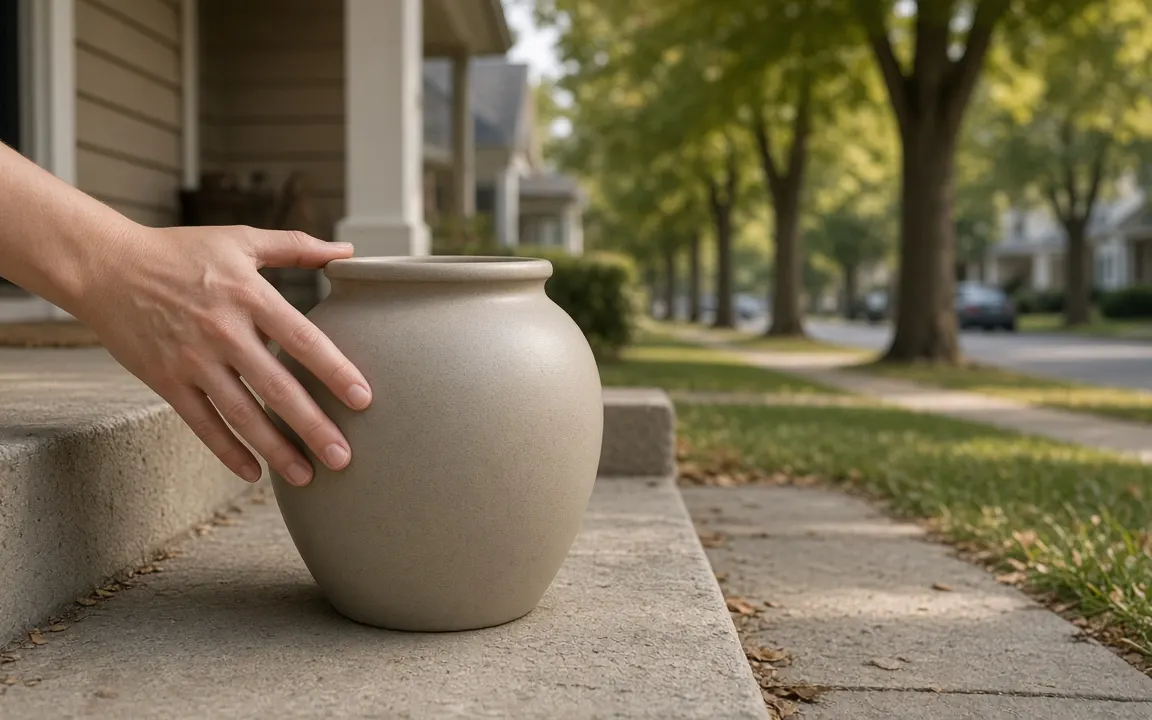
Many Buckeye homes are new, and families may not yet know how long they'll stay. Portable memorials, such as a keepsake urn, a paw print impression, a framed photo with a small ash compartment or a piece of jewelry holding a little ash, can move with you. Ashes can also be divided among family members who live elsewhere in Arizona or out of state.
The White Tank Mountains, the Gila River and the open desert around Buckeye are places many residents associate with sunrises, trail rides and quiet. If you're thinking of scattering ashes on public land, check the rules for that area first, since agencies set their own. Keeping part of the ashes for an urn or keepsake gives you a memorial at home as well.
Families in Buckeye often combine a private cremation arranged through their vet with a planting at home a few weeks or months later. That gap is normal and useful. It gives you time to choose a species, prepare the soil mix and wait for the right planting season. Ask the crematory for the ashes in a simple container rather than paying for a decorative urn you won't keep, and put that money toward a good tree.
Buckeye is home to about 125,445 people, the 11th-largest of the 29 Arizona communities we cover. Some of the providers who serve Buckeye are based about 25 miles away in Peoria, the nearest larger centre, so collection times reflect that drive.
Buckeye sits within easy reach of Avondale (20 miles), Goodyear (20 miles) and Surprise (21 miles). A provider based in any of them will usually collect from Buckeye; ask what the mileage adds to the bill.
Our estimate
46,000
How many dog- or cat-owning households Buckeye has (estimate)
How we calculated this
125,445 ÷ 2.5 = 50,178 households; × 53% (dog) + 39% (cat) = 46,000. A household with several pets counts once.
Our estimate
3,850
Estimated dog and cat losses in Buckeye each year
How we calculated this
46,000 dog/cat-owning homes ÷ average lifespan (dog: 12.69 yrs + cat: 11.18 yrs) ≈ 3,850 a year. A floor, not a ceiling.
53%[1]
53% of US households own a dog, which is about 71 million households.
12.69 years[2]
US dogs have an average life expectancy at birth of 12.69 years.
39%[3]
39% of US households own a cat, which is about 53 million households.
11.18 years[4]
US cats seen at Banfield hospitals have an average life expectancy at birth of 11.18 years.
The numbers above come from Montoya et al. 2023, Frontiers in Veterinary Science and American Pet Products Association (APPA) 2025 State of the Industry, if you'd like to read the original sources.
Why cremation culture in Arizona shapes your options
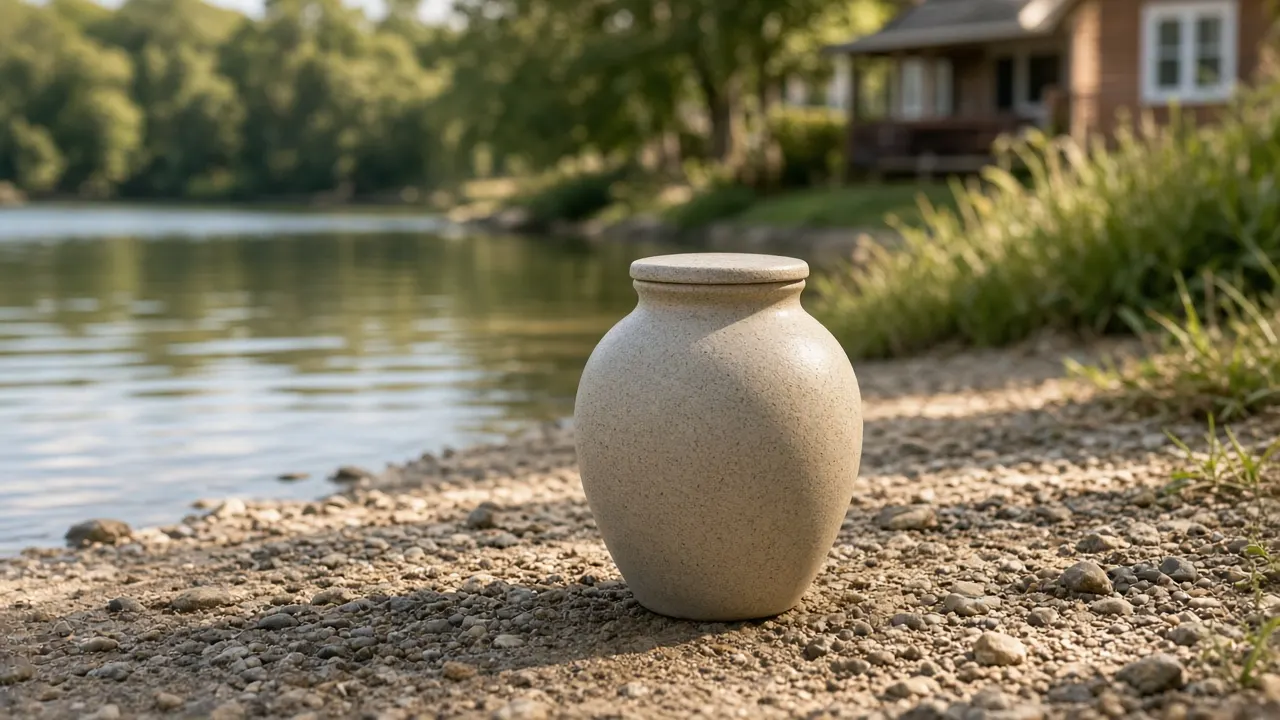
Cremation accounts for roughly 80.7%[5] of human deaths in Arizona, and a lot of those ashes end up waiting on a shelf. That's true of pets as well. If you already have an urn at home from an earlier pet, a bio urn can be a way to finish that story: the older ashes and the new can go into one planting, or two trees side by side, whenever you feel ready.
For the Arizona figure we rely on NFDA 2024 Cremation & Burial Report state projections (via Occasional Sage) (2024). Read it as a picture of local custom around death and remembrance in Buckeye rather than as pet data.
When to plant in Buckeye's climate
Watering is where most memorial trees in hot places succeed or fail. In Buckeye, give a new planting a slow, deep soak once or twice a week through May, June, July, August, September and October rather than a daily sprinkle. A drip line or a slow-release watering bag works well if you'll be away. A deep soak flushes salts from the ash blend below the root zone and coaxes roots to grow downward too.
Buckeye summers are hard on young trees: July averages highs around 105°F. Don't plant a memorial tree in the hottest months. Aim for the cooler part of the year, when roots can grow before the next summer arrives. Ashes don't need to go into the ground quickly, so keeping them safely at home for a few months is completely fine.
Eco memorial prices, from urn to tree
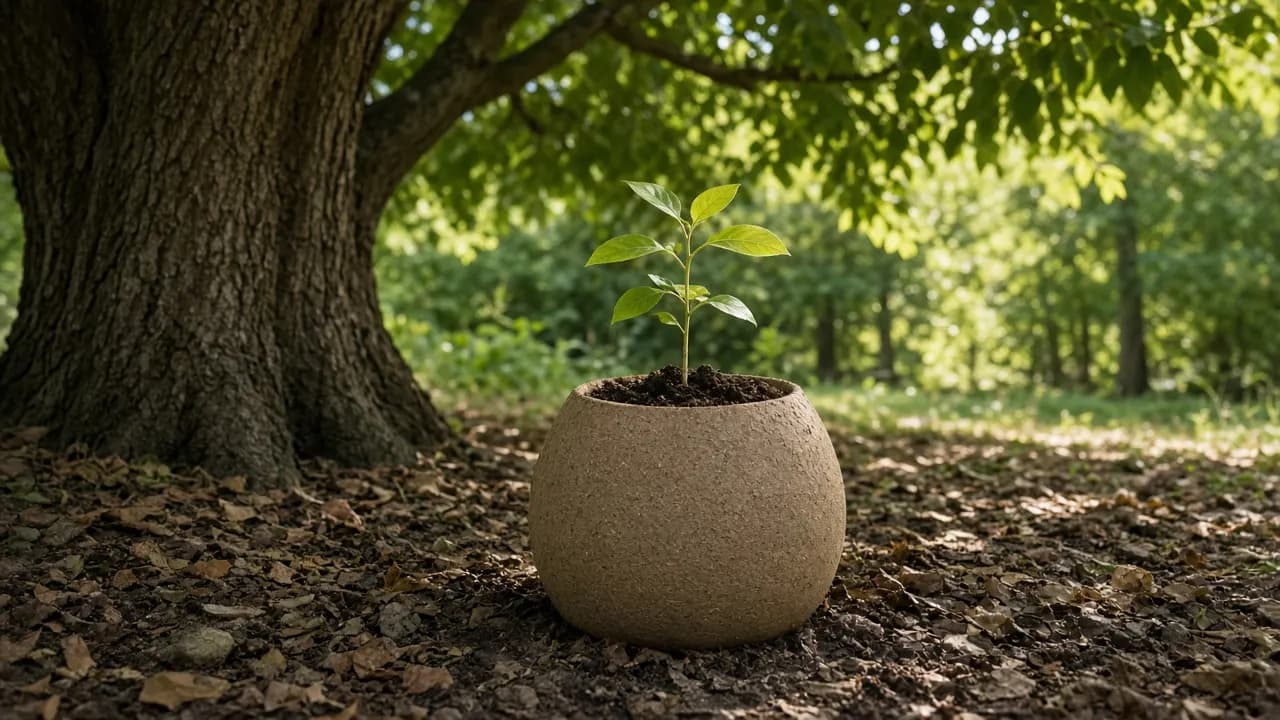
The container the ashes come back in can quietly add to the bill. One Virginia crematory, for example, sells private cremation at $189 with a temporary container and $225 with a wooden urn[6]. If you're planting, the plain option is all you need. Wooden pet urns alone run about $30–$150[7] in one national guide, money that could buy a good tree for your Buckeye garden instead.
Rather than repeat the price table on every city page, we keep one for Arizona: Arizona costs. What each service includes is on the services page.

Free tool
Memorial budget planner
Add up cremation, urn, keepsakes and a farewell so the total holds no surprises.
Land, water and permission in Arizona
Burying ashes, scattering them loose and releasing them on water are often treated as three different things. In Arizona, a place that welcomes a scattering may forbid digging, and a lake that allows a release may not allow a gathering on the shore. When you ask permission, say exactly which one you have in mind.
Arizona keeps an official directory of local governments; use it to reach the county or city office that covers Buckeye.
We keep Arizona's burial and scattering rules in one place: the Arizona rules summary. Before a home burial in Buckeye, also ask the city whether local ordinances add anything.
How to plan a living memorial, in order
- If the ashes have been on a shelf for years, planting is still an option. Ashes don't degrade with age, so nothing has been missed.
- Open the container carefully somewhere sheltered from wind, and check whether the ashes are in a sealed bag inside.
- Weigh or measure what you have, and put the figure into our urn size calculator to find a planting or water urn of the right capacity.
- Decide whether to keep any back. Having lived with the ashes so long, plenty of families choose to plant the bulk and hold on to a small amount.
- Pick a date that carries meaning, perhaps the day they died or the day they were born, and ask the people who loved them to come.
- Treat the old urn kindly afterwards. Many people reuse a wooden or ceramic urn as a plant pot or keepsake box.
Living memorials beyond the backyard
Intense sun and summer monsoon storms are hard on outdoor memorials. An engraved stone or granite marker holds up far better than wood or resin, and placing it in partial shade reduces fading. If you'd like a living memorial, a biodegradable urn planted with a desert-adapted tree or shrub, such as a palo verde or mesquite, suits the climate better than a thirsty plant.
try the free planning tools, Our services overview lays out every option side by side, look through our guides and the blog, or compare your instinct with the poll results. Close to Buckeye we also cover Tucson, Chandler, Mesa and Glendale; the full list for Arizona and for the United States is a click away.

Reader polls
What would you choose?
Vote anonymously and see how other readers answered. The results are live counts from people who visit this site, so they show real opinions, not a scientific sample.
What kind of tree or plant would you choose?
Tap an answer to vote and see how others answered. Anonymous.
If you rent or might move, how would you handle a memorial planting?
Tap an answer to vote and see how others answered. Anonymous.
If you had to decide today, which aftercare would you choose for your pet?
Tap an answer to vote and see how others answered. Anonymous.

Free tools to help you plan
Memorial budget planner
Add up cremation, urn, keepsakes and a farewell so the total holds no surprises.

Memorial tree finder
Pick a tree for a planting urn that suits your climate, space and pet.

Aftercare options compared
Compare private, communal and water cremation with burial on cost, timing and what comes home.
Questions people ask
How does Buckeye's weather affect pet aftercare?
July is the hottest month in Buckeye, with average highs around 105°F, so prompt collection matters most then. Winters are mild, with average lows staying above freezing, so outdoor burial or scattering is usually possible year round.
Where are the providers that serve Buckeye actually based?
Some are local, and some run from Peoria, about 25 miles away. That is normal for a city this size. What matters is the collection time they quote for Buckeye and whether the drive is priced into the total, so ask both up front.
How many pet owners live in Buckeye?
By our estimate, about 46,000 households in Buckeye have at least one dog or cat, and around 3,850 are lost each year. We calculate this from the city's population of about 125,445, the average household size and national ownership and lifespan figures, so treat it as a floor rather than an exact count.
Can a provider from a neighbouring town collect from Buckeye?
Usually yes. Avondale is about 20 miles away, Goodyear is about 20 miles away and Surprise is about 21 miles away, all inside a normal collection radius. Get the mileage written into the quote so there is no surprise on the day.
What happens to the memorial tree if I move away from Buckeye?
It stays with the land, and ashes mixed into soil can't be recovered. If a move is possible, plant in a large container, plant at a relative's home, or keep a small portion of the ashes back for a future garden. Cuttings from many shrubs root easily, so you can take a piece of the plant with you.
I rent in Buckeye. Can I still have a living memorial?
Yes. Plant in a large container, such as a half-barrel or a big pot with a dwarf tree or flowering shrub, and it moves with you. Use only a small share of the ashes in the pot, well mixed with compost. If you'd like to plant in a rented yard, get the landlord's permission in writing, and remember the tree stays when you leave.


Sources and our estimates
- [1] 53% of US households own a dog, which is about 71 million households. American Pet Products Association (APPA) 2025 State of the Industry, 2025.
- [2] US dogs have an average life expectancy at birth of 12.69 years. Montoya et al. 2023, Frontiers in Veterinary Science - Banfield Pet Hospital life expectancy tables (13.3 million dogs, 2.4 million cats, 2013-2019), 2023.
- [3] 39% of US households own a cat, which is about 53 million households. American Pet Products Association (APPA) 2025 State of the Industry, 2025.
- [4] US cats seen at Banfield hospitals have an average life expectancy at birth of 11.18 years. Montoya et al. 2023, Frontiers in Veterinary Science - Banfield Pet Hospital life expectancy tables (13.3 million dogs, 2.4 million cats, 2013-2019), 2023.
- [5] The NFDA projected Arizona's cremation rate at 80.7% for 2024. NFDA 2024 Cremation & Burial Report state projections (via Occasional Sage), 2024.
- [6] Heavenly Paws Cremations in Chantilly, Virginia, sells private cremation packages at $189 (temporary container), $225 (wooden urn) and $300 (wooden photo urn), each including a paw print and fur clipping. Heavenly Paws Cremations – Packages, 2026.
- [7] Memorials.com puts wooden pet urns at $30–$150. Memorials.com – Pet Urn Cost Guide, 2025.
- [8] Switching one human-scale cremation to alkaline hydrolysis saves about 112 kg CO2e under TNO's accounting. Our estimate: 79.9 - (-31.8) kg CO2e. How we calculate.
Get eco memorial ideas by email
Tell us what you need and where you are. We'll reply by email with clear options and prices so you can decide in your own time.