Growing something from the goodbye in Dixon
Dixon has an estimated 7,750 dog- or cat-owning households. When a planting or water memorial feels right for yours, here's what works in the local climate and what to ask before you buy.
- A memorial that moves with you
- Why pure ashes harm young roots
- Written prices you can compare

Dixon, California
Living memorials in Dixon: the local picture
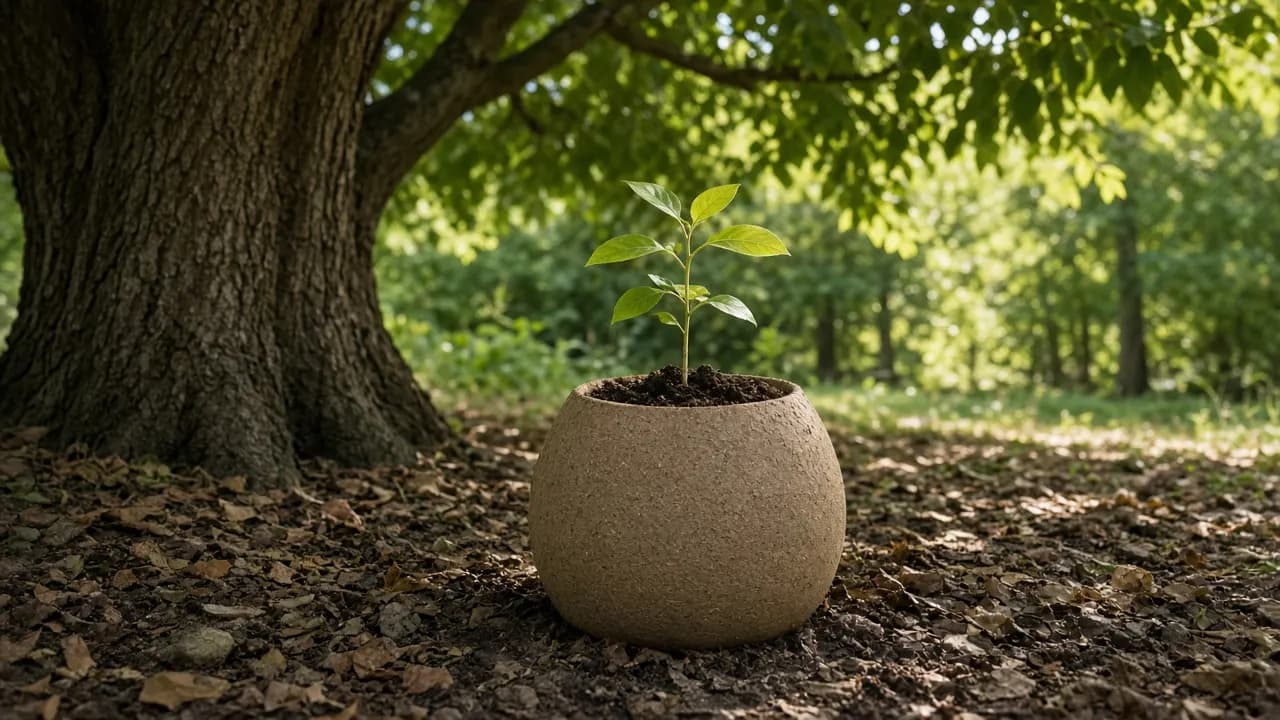
Families in Dixon often have the space for a garden memorial: a stone at the end of a row of roses, a bench under a shade tree, or a young walnut or olive planted over the ashes. If you choose a tree urn, plant it in autumn or winter, so the roots can settle before the summer heat. Water it regularly through its first dry season.
For households that commute up and down I-80 and may relocate, a memorial that fits on a mantel makes sense. Options include a small engraved box, a glass keepsake with a trace of ashes, a framed clay impression and a pendant. Ask each maker how long production takes and whether you need to send ashes by mail or can drop them off.
Horses, cattle, goats and sheep often share the land in the country around Dixon, and some trees are dangerous to them. Wilted red maple leaves are toxic to horses, and yew is poisonous to most livestock. If the memorial will stand near a pasture or fence line, ask a vet or the local extension office which species are safe for the animals that graze nearby.
Dixon is home to about 21,116 people, the 258th-largest of the 307 California communities we cover. Sacramento, roughly 20 miles off, is the closest larger centre, and a share of the providers who cover Dixon run from there.
For a second opinion on price, Davis (8 miles, a larger centre), Vacaville (11 miles, a larger centre) and Woodland (16 miles, a larger centre) are close enough that their providers cover Dixon routinely. Two written quotes tell you more than any price list.
Our estimate
7,750
Dixon: dog- or cat-owning households, our estimate
How we calculated this
21,116 ÷ 2.5 = 8,446 households; × 53% (dog) + 39% (cat) = 7,750. Homes are counted once however many pets they keep.
Our estimate
650
dog and cat deaths per year in Dixon, our estimate
How we calculated this
7,750 dog/cat-owning homes ÷ average lifespan (dog: 12.69 yrs + cat: 11.18 yrs) ≈ 650 a year. Treat it as a minimum.
53%[1]
53% of US households own a dog, which is about 71 million households.
12.69 years[2]
US dogs have an average life expectancy at birth of 12.69 years.
39%[3]
39% of US households own a cat, which is about 53 million households.
11.18 years[4]
US cats seen at Banfield hospitals have an average life expectancy at birth of 11.18 years.
None of the figures on this this page are ours alone: they rest on American Pet Products Association (APPA) 2025 State of the Industry and Montoya et al. 2023, Frontiers in Veterinary Science.

How California feels about cremation
Cremation accounts for roughly 70.5%[5] of human deaths in California, and a lot of those ashes end up waiting on a shelf. That's true of pets as well. If you already have an urn at home from an earlier pet, a bio urn can be a way to finish that story: the older ashes and the new can go into one planting, or two trees side by side, whenever you feel ready.
NFDA 2024 Cremation & Burial Report state projections (via Occasional Sage) (2024) is where the California figure comes from. It counts people; we use it because attitudes to cremating a pet in Dixon tend to follow attitudes to cremation generally.
Choosing the right month to plant in Dixon
In Dixon's heat, containers dry out fast. If you're planting a memorial in a pot on a patio or balcony, choose a large, light-colored container, which heats up less than a small dark one, and place it where it gets afternoon shade in June, July, August and September. Use only a small share of the ashes in the pot, water until it drains freely so salts flush out, and check the soil every day in the hottest weeks.
Hot weather in Dixon changes the plan for a planting ceremony too. With July highs near 95°F, an outdoor gathering at midday is uncomfortable and stressful for the new plant. Choose an early morning or evening in a cooler month, set out shade and water for guests, and water the tree in well straight after planting. A light, pale mulch helps keep the root zone cool.
Eco memorial prices, from urn to tree
It helps to compare a planted memorial with the alternatives. A pet cemetery burial for a dog averages about $831[6] in the US, which by our estimate is around 3.2 times the national average for private cremation[7]. Private cremation plus a bio urn and a sapling in your own Dixon garden usually comes in far below a cemetery plot, and there are no yearly maintenance fees.
The full price table by product is on our California page, and the services page explains what each option includes.

Free tool
Memorial budget planner
Add up cremation, urn, keepsakes and a farewell so the total holds no surprises.
What California allows for ashes, in general terms
What you plant can matter as much as where. Parks and nature reserves in California often forbid planting anything at all, and even on private land some trees and shrubs are listed as invasive in parts of the region. A local nursery or native plant society can steer you toward a species that won't spread into wild land.
The official California local government directory lists every county and city office, which is the quickest way to find who to ask in Dixon.
Home burial and scattering are governed at the California level first; our California rules summary has the detail. Then check whether Dixon or your HOA adds anything.
Planting a memorial in Dixon, step by step
- Confirm the ashes will come back. With a communal cremation there's normally nothing to collect afterwards, which leaves you with nothing to put in an urn.
- Pick the type of bio urn: one that grows a tree, a simple biodegradable urn to bury in a quiet bed, or a floating urn meant for a lake, river or the coast.
- Ask permission from the landowner, landlord or park manager for anywhere that isn't yours.
- Plan for the weather. Around Dixon, skip days when the soil is rock-hard, frozen or sodden, and wait for still, gentle conditions to plant or release.
- Release gently on water. Rest the urn on the surface, leave it to drift and go under in its own time, and scatter only a few loose petals.
- Come back in a year. Top up the mulch, see how much the tree has put on, and photograph it to record the first anniversary.
Remembering your pet, in Dixon and wherever you go next
Some Dixon families mark a pet's life with something from the farm itself: a piece of old barn wood carved with a name, a horseshoe on the fence, or a stone taken from a creek bed. Others keep the ashes and scatter them in a field the animal loved. If the land belongs to someone else, ask permission before you scatter.
go deeper with the guides or catch up on recent articles, Our services overview lays out every option side by side, run the numbers with the free planning tools, or see what other families chose in the poll results. More local pages: San Francisco, San Jose, San Diego and Los Angeles, the California overview and every city in the United States.

Reader polls
What would you choose?
Vote anonymously and see how other readers answered. The results are live counts from people who visit this site, so they show real opinions, not a scientific sample.
If you rent or might move, how would you handle a memorial planting?
Tap an answer to vote and see how others answered. Anonymous.
If water cremation (aquamation) were offered near you, would you choose it?
Tap an answer to vote and see how others answered. Anonymous.
If you had to decide today, which aftercare would you choose for your pet?
Tap an answer to vote and see how others answered. Anonymous.

Free tools to help you plan
Memorial budget planner
Add up cremation, urn, keepsakes and a farewell so the total holds no surprises.

Memorial tree finder
Pick a tree for a planting urn that suits your climate, space and pet.

Aftercare options compared
Compare private, communal and water cremation with burial on cost, timing and what comes home.
Questions people ask
Is Dixon big enough to have several pet aftercare providers?
Probably, on the numbers. By our estimate about 7,750 Dixon households keep a dog or cat and around 650 lose one each year, which is enough steady demand to support more than one provider. We derive that from population (about 21,116), household size and national ownership and lifespan figures.
Which nearby towns can I compare with Dixon?
The closest communities we cover are Davis (about 8 miles), Vacaville (about 11 miles) and Woodland (about 16 miles). Providers based in those places often serve Dixon too. Ask each one for a written total that includes collection, so the distance is priced in.
Where are the providers that serve Dixon actually based?
Some are local, and some run from Sacramento, about 20 miles away. That is normal for a town this size. What matters is the collection time they quote for Dixon and whether the drive is priced into the total, so ask both up front.
How do California attitudes to cremation compare?
NFDA 2024 Cremation & Burial Report state projections (via Occasional Sage) (2024) puts the California human cremation rate at about 70.5%[5]. We show it on the Dixon page because pet aftercare choices tend to track it: where cremation is normal for people, communal and private pet cremation are both easy to find.
Where can I buy a native tree for a pet memorial in Dixon?
A local nursery or garden center is the best place, because staff know what survives local heat, cold and soil. Some county extension offices and native plant societies run plant sales too. Ask for a two-year-old sapling of a species that tolerates slightly alkaline soil, and ask how much water it needs in its first summer.
How do I keep a memorial tree alive in the Dixon heat?
Choose a drought-tolerant species that already grows well locally, plant in the cooler months, and water deeply and slowly rather than little and often, so salts from the ashes move down past the roots. A wide ring of mulch keeps the soil cooler. Expect to water through the first two summers.


Sources and our estimates
- [1] 53% of US households own a dog, which is about 71 million households. American Pet Products Association (APPA) 2025 State of the Industry, 2025.
- [2] US dogs have an average life expectancy at birth of 12.69 years. Montoya et al. 2023, Frontiers in Veterinary Science - Banfield Pet Hospital life expectancy tables (13.3 million dogs, 2.4 million cats, 2013-2019), 2023.
- [3] 39% of US households own a cat, which is about 53 million households. American Pet Products Association (APPA) 2025 State of the Industry, 2025.
- [4] US cats seen at Banfield hospitals have an average life expectancy at birth of 11.18 years. Montoya et al. 2023, Frontiers in Veterinary Science - Banfield Pet Hospital life expectancy tables (13.3 million dogs, 2.4 million cats, 2013-2019), 2023.
- [5] The NFDA projected California's cremation rate at 70.5% for 2024. NFDA 2024 Cremation & Burial Report state projections (via Occasional Sage), 2024.
- [6] CareCredit's 2025 cost study put the US national average for pet cemetery burial of a dog at $831 (range $659-$1,513). CareCredit (Synchrony) - How Much Does It Cost To Euthanize a Dog? (2025 ASQ360 procedural cost study), 2025.
- [7] US pet cemetery burial for a dog costs about 3.2x a private cremation ($831 vs $260 national averages). Our estimate: 831 / 260 = 3.20. How we calculate.
- [8] Switching one human-scale cremation to alkaline hydrolysis saves about 112 kg CO2e under TNO's accounting. Our estimate: 79.9 - (-31.8) kg CO2e. How we calculate.
Plan a living memorial in Dixon
Tell us what you need and where you are. We'll reply by email with clear options and prices so you can decide in your own time.