Greener pet aftercare in Gilroy, California
Gilroy has an estimated 22,500 dog- or cat-owning households. When a planting or water memorial feels right for yours, here's what works in the local climate and what to ask before you buy.
- A memorial that moves with you
- Why pure ashes harm young roots
- Written prices you can compare

Gilroy, California
What an eco memorial looks like in Gilroy
Gilroy gardens and acreage lend themselves to outdoor memorials: a fieldstone set under a valley oak, a plaque on a fence post by the pasture, or a young tree planted over the ashes. Summers here are dry and hot while winter storms can soak the ground, so granite, bronze or glazed ceramic will outlast painted wood. Inside, an urn on the mantel keeps your pet near the room where evenings were spent.
Some Gilroy families want the ashes to go back to the land their pet roamed, whether that is the family's own ranch, the edge of a vineyard row or a corner of an orchard. On private ground, the owner's permission is what counts; parks and reservoirs in the hills have their own rules. Setting aside a spoonful in a pendant or tiny urn gives you something to keep if the property ever changes hands.
In a smaller place like Gilroy, a living memorial often starts with more space than city families have: a larger yard, family land or a farm. That makes a memorial tree in the ground realistic. The services, though, may be further away. Pet water cremation is rarely based in small towns, so if it matters to you, ask your vet whether they work with a provider in a larger centre such as San Jose, and how the ashes come back.
Gilroy's population is around 60,764, the 138th-largest of the 307 California communities we cover. Some of the providers who serve Gilroy are based about 29 miles away in San Jose, the nearest larger centre, so collection times reflect that drive.
Families in Gilroy often end up using a provider from Morgan Hill (10 miles), Watsonville (12 miles) and Hollister (14 miles). That is normal: crematories serve a radius, not a single town, and the drive is priced into collection.
Our estimate
22,500
Gilroy: dog- or cat-owning households, our estimate
How we calculated this
60,764 ÷ 2.5 = 24,306 households; × 53% (dog) + 39% (cat) = 22,500. A household with several pets counts once.
Our estimate
1,850
dog and cat deaths per year in Gilroy, our estimate
How we calculated this
22,500 dog/cat-owning homes ÷ average lifespan (dog: 12.69 yrs + cat: 11.18 yrs) ≈ 1,850 a year. The real figure is unlikely to be lower.
53%[1]
53% of US households own a dog, which is about 71 million households.
12.69 years[2]
US dogs have an average life expectancy at birth of 12.69 years.
39%[3]
39% of US households own a cat, which is about 53 million households.
11.18 years[4]
US cats seen at Banfield hospitals have an average life expectancy at birth of 11.18 years.
None of the figures on this this page are ours alone: they rest on Montoya et al. 2023, Frontiers in Veterinary Science and American Pet Products Association (APPA) 2025 State of the Industry.

How California feels about cremation
Cremation is the usual choice for people in California: about 70.5%[5] of those who die there are cremated. That figure is about people, not pets, but it tells you something useful. Where cremation is ordinary, families already think about what to do with ashes, and planting or scattering is a familiar next step. You're less likely to have to explain a bio urn to relatives, and more likely to find a crematory nearby that returns ashes promptly.
NFDA 2024 Cremation & Burial Report state projections (via Occasional Sage) (2024) is where the California figure comes from. It counts people; we use it because attitudes to cremating a pet in Gilroy tend to follow attitudes to cremation generally.
What Gilroy's climate means for a living memorial
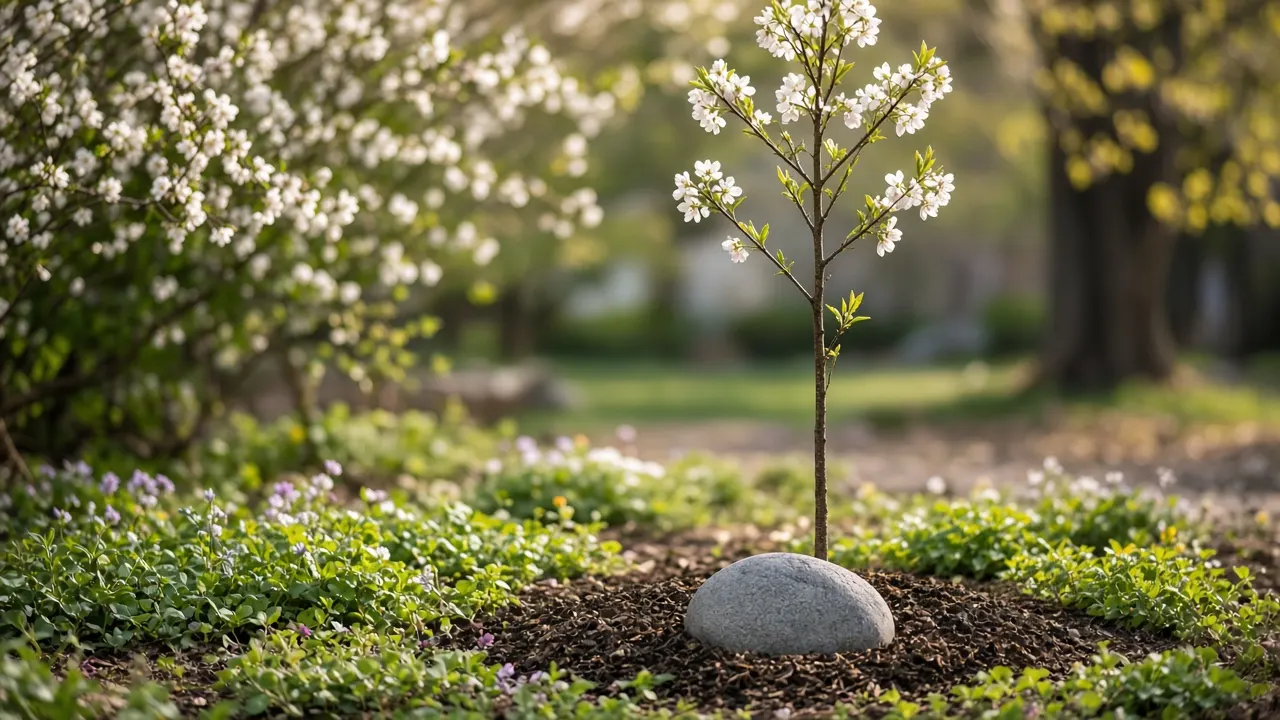
A mild climate like Gilroy's gives you a wide choice of trees and shrubs, and that's where the risk lies: it's tempting to choose something that looks lovely but is short-lived or grows too big. Think about the spot in twenty years. A small flowering tree, a fruit tree on a dwarfing rootstock or a native shrub suits most yards far better than a forest tree planted beside the house.
Rain is your friend with a planting urn. In a place like Gilroy, with regular rainfall and few hard frosts, water gradually carries salts from the ashes down and away from the root zone. You still need to mix the ashes through plenty of compost and soil first, but a mild, damp climate makes the soil chemistry more forgiving than in a desert or a cold, dry region.
What bio urns and aquamation cost in Gilroy
Add up every part before you commit. Beyond the cremation, a living memorial in Gilroy can include the bio urn, compost and bark, a pH kit, the tree or shrub, a guard against deer or rabbits, and perhaps a marker. Our memorial budget planner lists each line so nothing surprises you. Most families find the tree is the cheapest part and the cremation the most expensive.
Rather than repeat the price table on every city page, we keep one for California: California costs. What each service includes is on the services page.

Free tool
Memorial budget planner
Add up cremation, urn, keepsakes and a farewell so the total holds no surprises.
Scattering and planting rules in California
If you live under a homeowners' association, a co-op board or a tenancy agreement in California, its rules can matter more than any public law. Many restrict new trees, digging near shared pipes or heavy pots on balconies. A quick read of the rules, or one email to the manager, tells you whether a tree, a shrub bed or a container memorial is the right fit.
To find your county or city office in California, start with the official California local government directory.
Home burial and scattering are governed at the California level first; our California rules summary has the detail. Then check whether Gilroy or your HOA adds anything.
Planting a memorial in Gilroy, step by step
- If the ashes have been on a shelf for years, planting is still an option. Ashes don't degrade with age, so nothing has been missed.
- Open the container carefully somewhere sheltered from wind, and check whether the ashes are in a sealed bag inside.
- Weigh or measure what you have, then use our urn size calculator to see which planting urn or water urn fits.
- Decide whether to keep any back. After years at home, some families like to plant most of the ashes and keep a spoonful.
- Pick a date that carries meaning, perhaps the day they died or the day they were born, and ask the people who loved them to come.
- Treat the old urn kindly afterwards. Many people reuse a wooden or ceramic urn as a plant pot or keepsake box.
Remembering your pet, in Gilroy and wherever you go next
Gilroy has been a garlic and farm town for generations, and many families here have relatives across the South Bay, Hollister and the Central Coast. When several households loved the same pet, a set of small matching keepsakes avoids the question of who keeps the ashes. Engraving the pet's name alongside the ranch or street where it lived can make each piece feel rooted in Gilroy.
or compare your instinct with the poll results, read our guides and latest articles, try the free planning tools, Every option Gilroy families choose between is on the services page. Close to Gilroy we also cover San Jose, Fresno, Sacramento and San Diego; the full list for California and for the United States is a click away.

Reader polls
What would you choose?
Vote anonymously and see how other readers answered. The results are live counts from people who visit this site, so they show real opinions, not a scientific sample.
If water cremation (aquamation) were offered near you, would you choose it?
Tap an answer to vote and see how others answered. Anonymous.
If you rent or might move, how would you handle a memorial planting?
Tap an answer to vote and see how others answered. Anonymous.
If you had to decide today, which aftercare would you choose for your pet?
Tap an answer to vote and see how others answered. Anonymous.

Free tools to help you plan
Memorial budget planner
Add up cremation, urn, keepsakes and a farewell so the total holds no surprises.

Memorial tree finder
Pick a tree for a planting urn that suits your climate, space and pet.

Aftercare options compared
Compare private, communal and water cremation with burial on cost, timing and what comes home.
Questions people ask
Is cremation common in California?
For people, yes: about 70.5%[5] of California deaths end in cremation, according to NFDA 2024 Cremation & Burial Report state projections (via Occasional Sage) (2024). Nobody publishes the same figure for pets, but in our experience pet choices in Gilroy follow the human pattern closely, so cremation is the default most families here start from.
Roughly how many pets die in Gilroy each year?
Our estimate is around 1,850. It comes from Gilroy's population (about 60,764), the average household size, the share of homes with a dog or cat (about 22,500 households here) and the average lifespan. It is arithmetic, not a count, so read it as a rough floor.
Will I have to travel to San Jose to arrange things?
Not usually. Providers based in San Jose (roughly 29 miles from Gilroy) collect from here as a matter of routine, and the paperwork is done by email or phone. If you want to be present for a witnessed cremation, that is when the drive matters.
Which nearby towns can I compare with Gilroy?
The closest communities we cover are Morgan Hill (about 10 miles), Watsonville (about 12 miles) and Hollister (about 14 miles). Providers based in those places often serve Gilroy too. Ask each one for a written total that includes collection, so the distance is priced in.
Can I scatter my pet's ashes in a park in Gilroy?
Usually only with permission, and some parks don't allow it at all. Parks are managed by a city, county, state or national agency, each with its own policy, and many were written for human ashes. Contact the park office, explain it's a small amount of pet ash, and ask whether there's a preferred spot.
Can I plant a tree directly on my pet's ashes in Gilroy?
It's better not to. Cremated remains have a very high pH, around 11.7[7], and they're high in sodium, so a solid layer of ash under the roots can yellow or kill a young tree. Mix the ashes through plenty of compost and soil across a wider area, test the pH, and plant once it has come down. There's no single mixing ratio that suits every pet and every soil.


Sources and our estimates
- [1] 53% of US households own a dog, which is about 71 million households. American Pet Products Association (APPA) 2025 State of the Industry, 2025.
- [2] US dogs have an average life expectancy at birth of 12.69 years. Montoya et al. 2023, Frontiers in Veterinary Science - Banfield Pet Hospital life expectancy tables (13.3 million dogs, 2.4 million cats, 2013-2019), 2023.
- [3] 39% of US households own a cat, which is about 53 million households. American Pet Products Association (APPA) 2025 State of the Industry, 2025.
- [4] US cats seen at Banfield hospitals have an average life expectancy at birth of 11.18 years. Montoya et al. 2023, Frontiers in Veterinary Science - Banfield Pet Hospital life expectancy tables (13.3 million dogs, 2.4 million cats, 2013-2019), 2023.
- [5] The NFDA projected California's cremation rate at 70.5% for 2024. NFDA 2024 Cremation & Burial Report state projections (via Occasional Sage), 2024.
- [6] If just 10% of U.S. pet cremations moved to aquamation, about 4,200 t CO2e a year would be avoided. Our estimate: 1.5M x 10% x 31.3 kg x 90% reduction. How we calculate.
- [7] Cremated remains have a very high pH of approximately 11.7, which is toxic to plants without amendment. Larkspur Conservation — Giving Cremated Remains a New Life Through Science, 2024.
Ask about aquamation near Gilroy
Tell us what you need and where you are. We'll reply by email with clear options and prices so you can decide in your own time.