Greener pet aftercare in Pomona, California
About 4,550 dogs and cats are lost in Pomona each year, by our estimate. If you'd like your pet's ashes to grow into a tree or return to the water, this page covers the soil, the season and the cost.
- A memorial that moves with you
- Why pure ashes harm young roots
- Written prices you can compare
Pomona, California
What an eco memorial looks like in Pomona
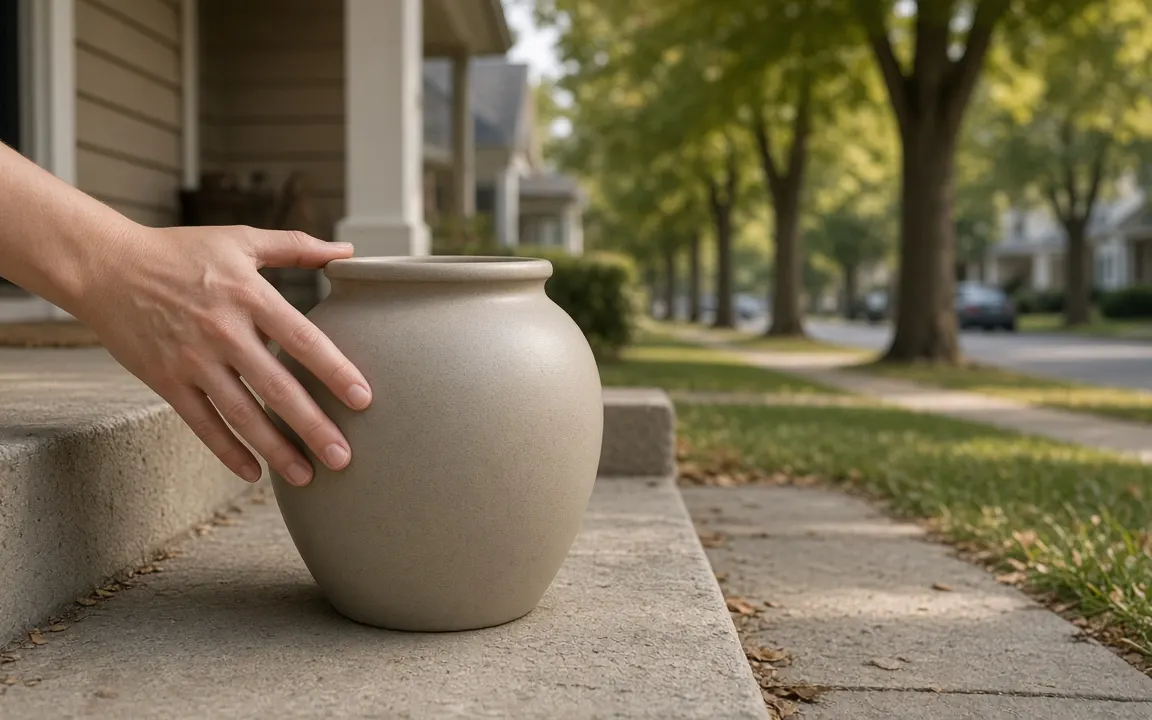
The San Gabriel Mountains to the north and the hills around the Pomona Valley give many families a place they associate with open land. If you're thinking of scattering ashes in the foothills or a regional park, check the rules for that place first and avoid days with fire warnings. A biodegradable urn planted with a drought-tolerant native plant in your yard is another option.
Choosing a lasting memorial is not an urgent job. Many Pomona families bring ashes home in a simple container and decide later, once the first weeks have passed. That pause helps you think about whether you want one urn or several small keepsakes for relatives across Southern California or further away, and lets you compare prices without feeling rushed. Ask for a written total.
Families in Pomona often combine a private cremation arranged through their vet with a planting at home a few weeks or months later. That gap is normal and useful. It gives you time to choose a species, prepare the soil mix and wait for the right planting season. Ask the crematory for the ashes in a simple container rather than paying for a decorative urn you won't keep, and put that money toward a good tree.
With roughly 147,807 residents, Pomona is the 37th-largest of the 307 California communities we cover. Anaheim, roughly 18 miles off, is the closest larger centre, and a share of the providers who cover Pomona run from there.
Pomona sits within easy reach of Montclair (3 miles), La Verne (5 miles) and San Dimas (5 miles). A provider based in any of them will usually collect from Pomona; ask what the mileage adds to the bill.
Our estimate
54,500
How many dog- or cat-owning households Pomona has (estimate)
How we calculated this
147,807 ÷ 2.5 = 59,123 households; × 53% (dog) + 39% (cat) = 54,500. Multi-pet homes count once.
Our estimate
4,550
Estimated dog and cat losses in Pomona each year
How we calculated this
54,500 dog/cat-owning homes ÷ average lifespan (dog: 12.69 yrs + cat: 11.18 yrs) ≈ 4,550 a year. Treat it as a minimum.
53%[1]
53% of US households own a dog, which is about 71 million households.
12.69 years[2]
US dogs have an average life expectancy at birth of 12.69 years.
39%[3]
39% of US households own a cat, which is about 53 million households.
11.18 years[4]
US cats seen at Banfield hospitals have an average life expectancy at birth of 11.18 years.
The numbers above come from Montoya et al. 2023, Frontiers in Veterinary Science and American Pet Products Association (APPA) 2025 State of the Industry, if you'd like to read the original sources.
The local attitude to ashes and memorials
About 70.5%[5] of people in California are cremated, so ashes are part of everyday life here in a way they aren't everywhere. Many families have already scattered or planted a grandparent's ashes and know how it felt. If you did, you'll recognise much of the process for a pet, with one difference worth knowing: a pet's ashes are a much smaller amount, which makes mixing them safely into soil far easier.
That California rate is a human one, published by NFDA 2024 Cremation & Burial Report state projections (via Occasional Sage) (2024). We quote it for Pomona only as a pointer to how families here already think about cremation.
When to plant in Pomona's climate
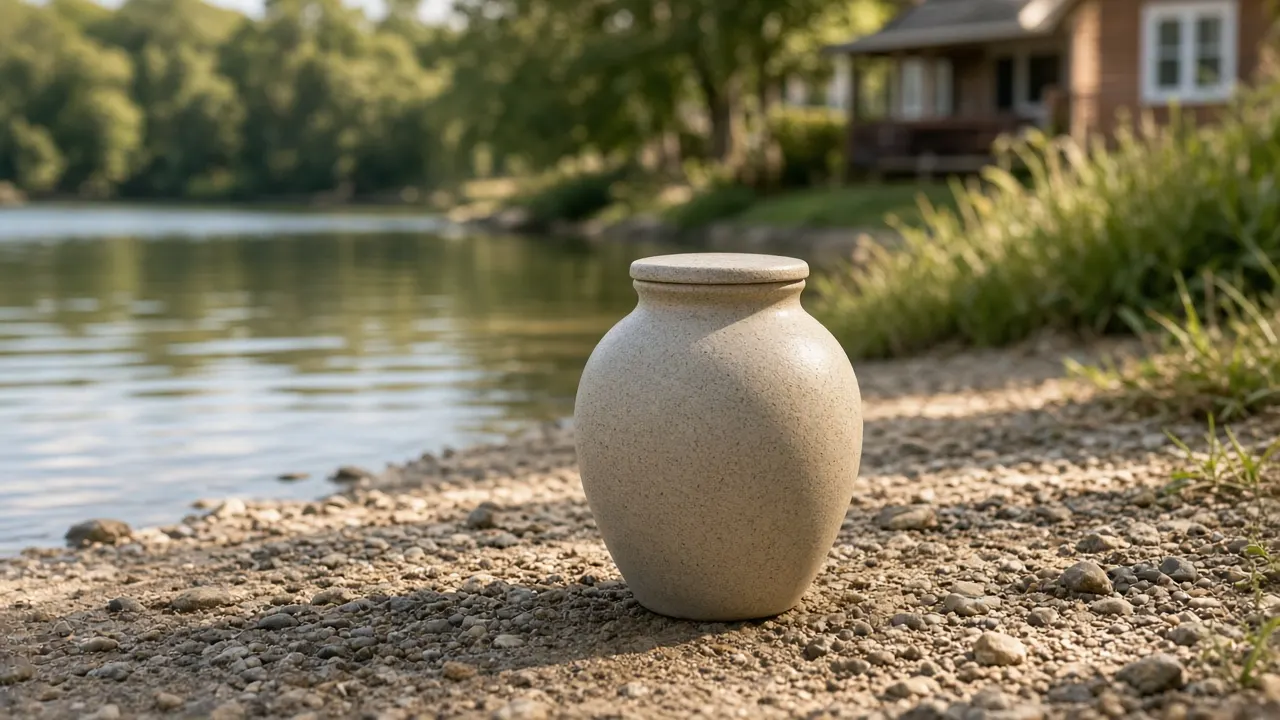
Mild weather in Pomona makes almost any month workable for a planting ceremony or a water release, so choose a date that means something: a birthday, the anniversary of adoption, the first warm weekend of spring. If you're releasing on water, check the forecast for wind; a calm morning lets a water urn float for a moment before it sinks, which is the part many families remember.
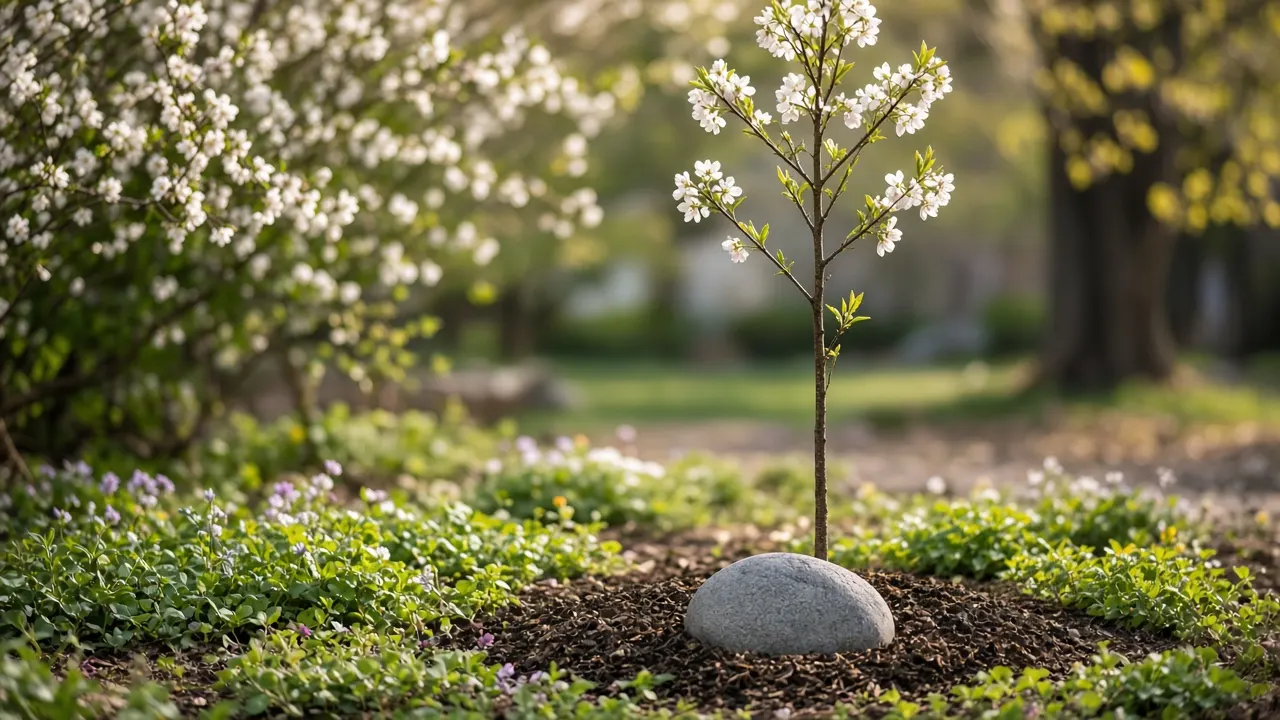
A mild climate like Pomona's gives you a wide choice of trees and shrubs, and that's where the risk lies: it's tempting to choose something that looks lovely but is short-lived or grows too big. Think about the spot in twenty years. A small flowering tree, a fruit tree on a dwarfing rootstock or a native shrub suits most yards far better than a forest tree planted beside the house.
Price ranges for planting and water urns
Add up every part before you commit. Beyond the cremation, a living memorial in Pomona can include the bio urn, compost and bark, a pH kit, the tree or shrub, a guard against deer or rabbits, and perhaps a marker. Our memorial budget planner lists each line so nothing surprises you. Most families find the tree is the cheapest part and the cremation the most expensive.
The full price table by product is on our California page, and the services page explains what each option includes.

Free tool
Memorial budget planner
Add up cremation, urn, keepsakes and a farewell so the total holds no surprises.
Rules worth knowing in California before you scatter
Cremated remains aren't a health hazard in the way a body is, which is why planting ashes in your own garden is rarely restricted. Public places are different. Parks, nature reserves, beaches and waterways in California each have a manager with their own policy, and some don't allow scattering or planting at all. A short email before the day saves an awkward conversation.
California keeps an official directory of local governments; use it to reach the county or city office that covers Pomona.
For California's rules on burying a pet at home or scattering ashes, see the California guide. Local rules in Pomona can be stricter than the state's, especially in homeowners' associations and rentals.
Planting a memorial in Pomona, step by step
- If your pet dies while you're away from Pomona, have a vet close to where you are set up individual cremation locally. Transporting a body a long way home almost never works out.
- Ask how the ashes can reach you: you might collect them yourself, have them shipped by tracked courier, or have them delivered to your vet.
- Flying home with the ashes? Keep them in your carry-on, inside a container security can scan, and pack the crematory's paperwork alongside them.
- Don't buy the bio urn on the road. Wait until you're home and know the spot, so the urn matches the place.
- Plant somewhere that links both places if the idea appeals: perhaps a species native to the area your pet died in, or one already growing at home, provided it can cope with the climate in Pomona.
- Write down the date and place where your pet died and where it was cremated. Those details fade faster than you'd expect.
Keeping your pet's memory growing in Pomona
Pomona's bungalows and tract homes often have yards suited to a small outdoor memorial, such as an engraved stone under a citrus tree or a planter by the porch. Choose materials that stand up to strong sun and heat; granite and sealed stone last well. If you rent or might move, a small urn, a paw print impression or cremation jewelry is easier to keep and carry.
run the numbers with the free planning tools, there are guides for the big decisions and articles for the details, For a plain comparison of the choices, open services, or look at how readers voted in our polls. You can also browse every city in the United States. Nearby, we also cover San Francisco, Sacramento, Los Angeles and San Jose, and every city in California.

Reader polls
What would you choose?
Vote anonymously and see how other readers answered. The results are live counts from people who visit this site, so they show real opinions, not a scientific sample.
If you rent or might move, how would you handle a memorial planting?
Tap an answer to vote and see how others answered. Anonymous.
Would you consider releasing your pet's ashes in water?
Tap an answer to vote and see how others answered. Anonymous.
If you had to decide today, which aftercare would you choose for your pet?
Tap an answer to vote and see how others answered. Anonymous.

Free tools to help you plan
Memorial budget planner
Add up cremation, urn, keepsakes and a farewell so the total holds no surprises.

Memorial tree finder
Pick a tree for a planting urn that suits your climate, space and pet.

Aftercare options compared
Compare private, communal and water cremation with burial on cost, timing and what comes home.
Questions people ask
Can a provider from a neighbouring town collect from Pomona?
Usually yes. Montclair is about 3 miles away, La Verne is about 5 miles away and San Dimas is about 5 miles away, all inside a normal collection radius. Get the mileage written into the quote so there is no surprise on the day.
How many pet owners live in Pomona?
By our estimate, about 54,500 households in Pomona have at least one dog or cat, and around 4,550 are lost each year. We calculate this from the city's population of about 147,807, the average household size and national ownership and lifespan figures, so treat it as a floor rather than an exact count.
How do California attitudes to cremation compare?
NFDA 2024 Cremation & Burial Report state projections (via Occasional Sage) (2024) puts the California human cremation rate at about 70.5%[5]. We show it on the Pomona page because pet aftercare choices tend to track it: where cremation is normal for people, communal and private pet cremation are both easy to find.
Does the Pomona climate change what I should do first?
Only the timing. In August, with highs near 85°F, cool the body and book collection the same day. Winters here are mild enough that burial or scattering is possible in any month.
Can I plant my pet's ashes in a community garden in Pomona?
Only with the garden's permission, and many don't allow it because members grow food and share the soil. Ask the coordinator first. If burying isn't allowed, a potted plant beside your plot, a flowering perennial grown in your pet's name without ashes, or a small marker stone are gentler ways to make the space meaningful.
What happens to the memorial tree if I move away from Pomona?
It stays with the land, and ashes mixed into soil can't be recovered. If a move is possible, plant in a large container, plant at a relative's home, or keep a small portion of the ashes back for a future garden. Cuttings from many shrubs root easily, so you can take a piece of the plant with you.


Sources and our estimates
- [1] 53% of US households own a dog, which is about 71 million households. American Pet Products Association (APPA) 2025 State of the Industry, 2025.
- [2] US dogs have an average life expectancy at birth of 12.69 years. Montoya et al. 2023, Frontiers in Veterinary Science - Banfield Pet Hospital life expectancy tables (13.3 million dogs, 2.4 million cats, 2013-2019), 2023.
- [3] 39% of US households own a cat, which is about 53 million households. American Pet Products Association (APPA) 2025 State of the Industry, 2025.
- [4] US cats seen at Banfield hospitals have an average life expectancy at birth of 11.18 years. Montoya et al. 2023, Frontiers in Veterinary Science - Banfield Pet Hospital life expectancy tables (13.3 million dogs, 2.4 million cats, 2013-2019), 2023.
- [5] The NFDA projected California's cremation rate at 70.5% for 2024. NFDA 2024 Cremation & Burial Report state projections (via Occasional Sage), 2024.
- [6] If just 10% of U.S. pet cremations moved to aquamation, about 4,200 t CO2e a year would be avoided. Our estimate: 1.5M x 10% x 31.3 kg x 90% reduction. How we calculate.
Ask about aquamation near Pomona
Tell us what you need and where you are. We'll reply by email with clear options and prices so you can decide in your own time.