A living memorial for your pet in Sanger
About 830 dogs and cats are lost in Sanger each year, by our estimate. If you'd like your pet's ashes to grow into a tree or return to the water, this page covers the soil, the season and the cost.
- Planting, garden and water urns compared
- Honest notes on local rules
- Help choosing a native species
Sanger, California
Your living memorial options around Sanger
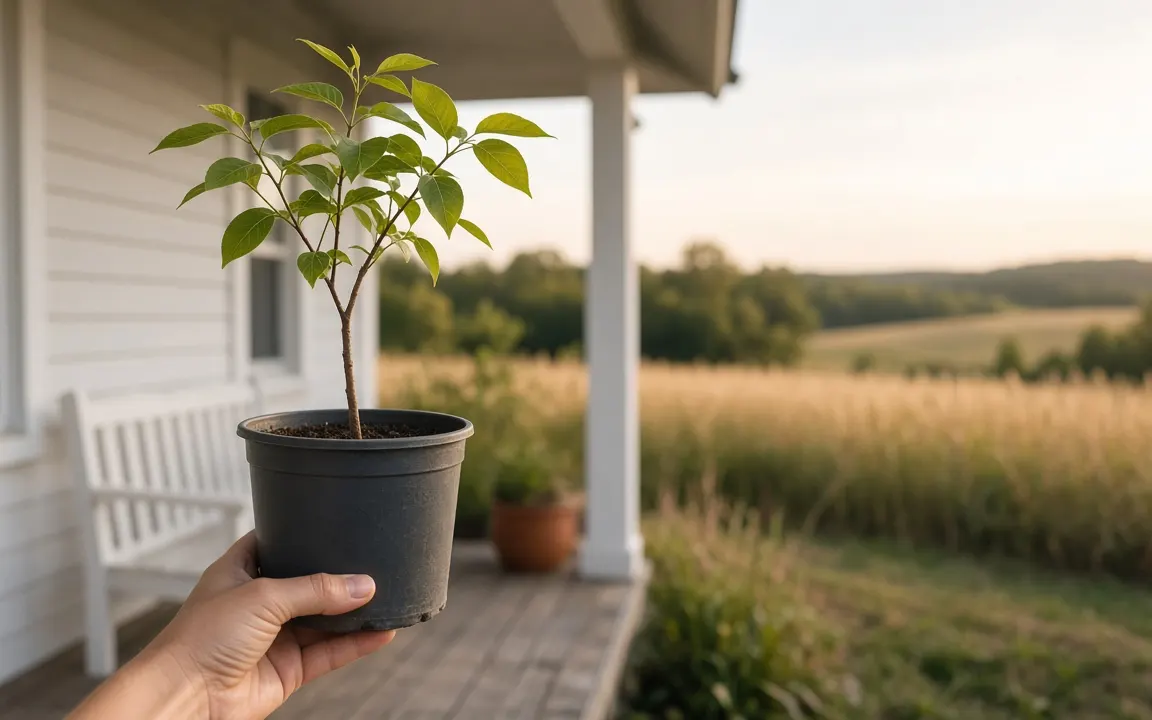
With the Kings Canyon sequoias only a drive away, some Sanger families look for memorials that echo the mountains: wood urns, stone markers or a small vial to carry on a trip into the high country. Others choose something rooted at home, like a planting in the garden. Either way, ask the provider to set a little aside before the rest is sealed, so both ideas stay open.
Anything placed outdoors in Sanger has to handle long, dry summers with intense sun, plus damp foggy stretches in December and January. Granite and sealed stone cope with both, while painted resin tends to fade. If you are considering a tree urn, a citrus or ornamental tree set in the ground in October or November has time to root before the heat. Indoor castings of a nose or paw avoid the elements altogether.
Deliveries can take longer to reach a place like Sanger, and bio urns, water urns and mail-order saplings are no exception. Order the urn soon after you decide, rather than the week before the planting. If a nursery nearby carries hardy local trees, buy there instead, and check the root ball: a healthy tree has firm, pale roots that aren't circling tightly in the pot.
Sanger is home to about 27,228 people, the 227th-largest of the 307 California communities we cover. The nearest larger centre is Fresno, about 13 miles (21 km) away, which is where some providers serving Sanger are based.
The closest communities we cover are Reedley (9 miles), Selma (9 miles) and Clovis (11 miles, a larger centre). Providers serving those towns often travel to Sanger too, so it can be worth asking them for a quote.
Our estimate
10,000
Sanger: dog- or cat-owning households, our estimate
How we calculated this
27,228 ÷ 2.5 = 10,891 households; × 53% (dog) + 39% (cat) = 10,000. Multi-pet homes count once.
Our estimate
830
Sanger families who lose a dog or cat each year (estimate)
How we calculated this
10,000 dog/cat-owning homes ÷ average lifespan (dog: 12.69 yrs + cat: 11.18 yrs) ≈ 830 a year. Treat it as a minimum.
53%[1]
53% of US households own a dog, which is about 71 million households.
12.69 years[2]
US dogs have an average life expectancy at birth of 12.69 years.
39%[3]
39% of US households own a cat, which is about 53 million households.
11.18 years[4]
US cats seen at Banfield hospitals have an average life expectancy at birth of 11.18 years.
The published sources behind those figures are Montoya et al. 2023, Frontiers in Veterinary Science and American Pet Products Association (APPA) 2025 State of the Industry.
The local attitude to ashes and memorials
In California, about 70.5%[5] of people are cremated, one of the higher rates around. When most human funerals end with ashes, the question "what shall we do with them?" comes up in nearly every family, and a tree, a garden bed or a lake release is a common answer. That familiarity carries over to pets. It also means more crematories to choose from, and more chance that one of them offers water cremation.
For the California figure we rely on NFDA 2024 Cremation & Burial Report state projections (via Occasional Sage) (2024). Read it as a picture of local custom around death and remembrance in Sanger rather than as pet data.
When to plant in Sanger's climate
Heat narrows the tree list in Sanger. Months like June, July, August and September bring sustained highs, so choose species that already cope locally: drought-tolerant natives, or trees a local nursery recommends for full sun. A seed from a planting kit, bred somewhere cooler, is a gamble here. Plant a sturdy nursery sapling instead, mulch a wide ring around it and plan to water it through its first two summers.
Biodegradable urns are made to break down, and heat and humidity can start that early. In Sanger, where July highs average about 98°F, keep a paper, cornstarch or coconut-fiber urn indoors, somewhere cool and dry, until the planting day. Don't leave it in a car, a hot shed or a garage through June, July, August and September, or it may soften or split before it reaches the ground.
Eco memorial prices, from urn to tree
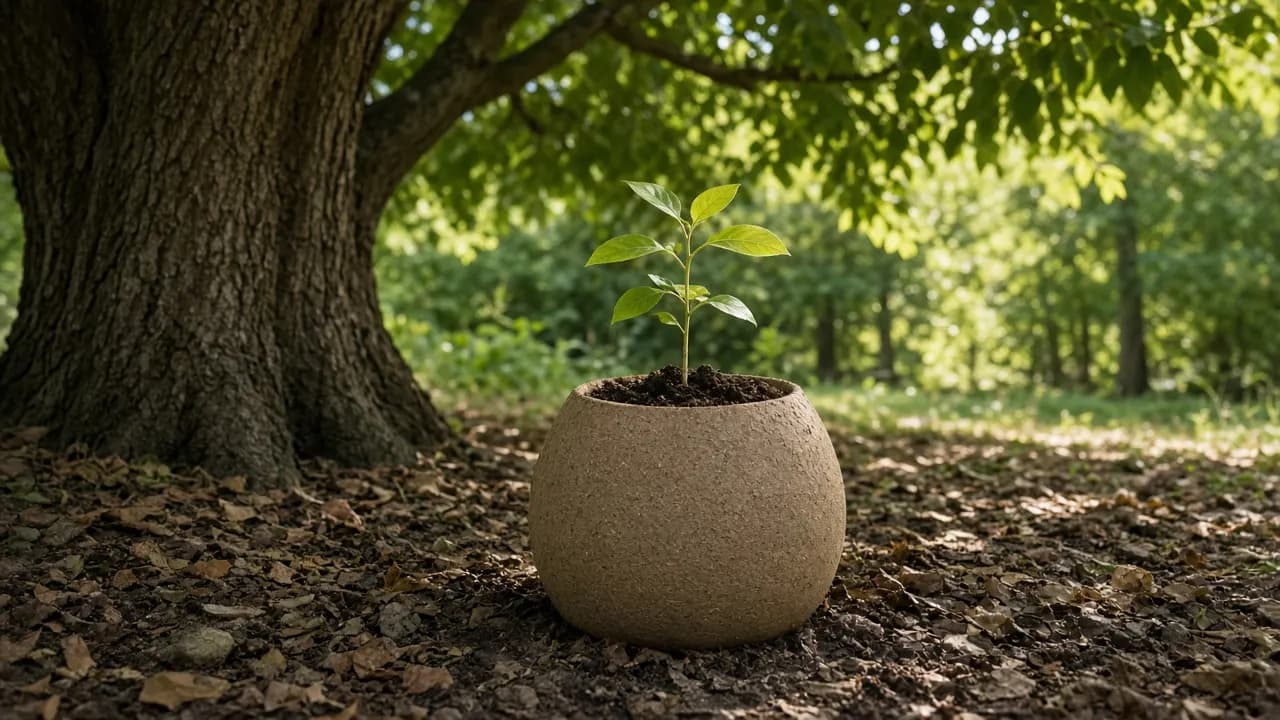
Add up every part before you commit. Beyond the cremation, a living memorial in Sanger can include the bio urn, compost and bark, a pH kit, the tree or shrub, a guard against deer or rabbits, and perhaps a marker. Our memorial budget planner lists each line so nothing surprises you. Most families find the tree is the cheapest part and the cremation the most expensive.
Rather than repeat the price table on every city page, we keep one for California: California costs. What each service includes is on the services page.

Free tool
Memorial budget planner
Add up cremation, urn, keepsakes and a farewell so the total holds no surprises.
Where you can plant or release ashes in California
Water releases need a little more care than a garden planting. Rivers, lakes, reservoirs and coastal waters in California are managed by different bodies, and drinking-water sources are often off-limits. Wherever you release, use only a water-soluble urn or loose ashes, add nothing but loose flower petals, and let no plastic, ribbon or wreath wire float away.
To find your county or city office in California, start with the official California local government directory.
The California page sets out who oversees pet cremation and what the state says about burial and scattering. Sanger's own bylaws can sit on top of that, so ask before you dig.
What to do first, and what can wait for the right season
- If you're remembering more than one animal, settle at the start on one shared planting or separate ones. Either works, but once the ashes are combined there's no undoing it.
- Label each container clearly with the name and date as it comes back, especially if the ashes return months or years apart.
- Choose a bigger planting area for several sets of ashes: a hedge, a group of shrubs or a small orchard spreads the mineral load across more soil.
- Keep a spoonful of each in its own keepsake, so a family member who was closest to one particular pet has something just for them.
- Plan for the pets still living with you. Fresh soil with the scent of bone in it invites digging, so fence or cover the spot until it has settled.
- Add a marker for each name, or one stone that lists them all, so visitors know who the planting is for.
Remembering your pet, in Sanger and wherever you go next
Sanger homes range from older bungalows near the historic downtown to newer tract houses and farmhouses on larger lots, and that affects which memorial makes sense. Rural families sometimes want a stone for a spot under a walnut or fig tree, while others prefer an urn on a shelf or a pendant that travels with them. Picture the room or garden corner first, then choose size and material to suit it.
or see what other families chose in the poll results, browse in-depth guides or recent articles, For a plain comparison of the choices, open services, try the free planning tools. You can also browse every city in the United States. Nearby, we also cover Los Angeles, Sacramento, San Francisco and San Jose, and every city in California.

Reader polls
What would you choose?
Vote anonymously and see how other readers answered. The results are live counts from people who visit this site, so they show real opinions, not a scientific sample.
If you rent or might move, how would you handle a memorial planting?
Tap an answer to vote and see how others answered. Anonymous.
Would you consider releasing your pet's ashes in water?
Tap an answer to vote and see how others answered. Anonymous.
If you had to decide today, which aftercare would you choose for your pet?
Tap an answer to vote and see how others answered. Anonymous.

Free tools to help you plan
Memorial budget planner
Add up cremation, urn, keepsakes and a farewell so the total holds no surprises.

Memorial tree finder
Pick a tree for a planting urn that suits your climate, space and pet.

Aftercare options compared
Compare private, communal and water cremation with burial on cost, timing and what comes home.
Questions people ask
When is the hardest time of year to arrange a burial in Sanger?
There is no frozen-ground season here; average lows stay above freezing all year. The other pressure point is July, when highs around 98°F mean a body needs cooling and collecting quickly.
Roughly how many pets die in Sanger each year?
Our estimate is around 830. It comes from Sanger's population (about 27,228), the average household size, the share of homes with a dog or cat (about 10,000 households here) and the average lifespan. It is arithmetic, not a count, so read it as a rough floor.
Which nearby towns can I compare with Sanger?
The closest communities we cover are Reedley (about 9 miles), Selma (about 9 miles) and Clovis (about 11 miles). Providers based in those places often serve Sanger too. Ask each one for a written total that includes collection, so the distance is priced in.
How do California attitudes to cremation compare?
NFDA 2024 Cremation & Burial Report state projections (via Occasional Sage) (2024) puts the California human cremation rate at about 70.5%[5]. We show it on the Sanger page because pet aftercare choices tend to track it: where cremation is normal for people, communal and private pet cremation are both easy to find.
How many dogs and cats are there in Sanger?
By our estimate, about 10,000 households in Sanger have a dog or a cat, and around 830 of those pets die each year. We calculate this from the city's population, average household size and national pet ownership and lifespan figures. The method is shown on this page, and the real number of animals is higher.
Can I scatter my pet's ashes in a park in Sanger?
Usually only with permission, and some parks don't allow it at all. Parks are managed by a city, county, state or national agency, each with its own policy, and many were written for human ashes. Contact the park office, explain it's a small amount of pet ash, and ask whether there's a preferred spot.


Sources and our estimates
- [1] 53% of US households own a dog, which is about 71 million households. American Pet Products Association (APPA) 2025 State of the Industry, 2025.
- [2] US dogs have an average life expectancy at birth of 12.69 years. Montoya et al. 2023, Frontiers in Veterinary Science - Banfield Pet Hospital life expectancy tables (13.3 million dogs, 2.4 million cats, 2013-2019), 2023.
- [3] 39% of US households own a cat, which is about 53 million households. American Pet Products Association (APPA) 2025 State of the Industry, 2025.
- [4] US cats seen at Banfield hospitals have an average life expectancy at birth of 11.18 years. Montoya et al. 2023, Frontiers in Veterinary Science - Banfield Pet Hospital life expectancy tables (13.3 million dogs, 2.4 million cats, 2013-2019), 2023.
- [5] The NFDA projected California's cremation rate at 70.5% for 2024. NFDA 2024 Cremation & Burial Report state projections (via Occasional Sage), 2024.
- [6] If just 10% of U.S. pet cremations moved to aquamation, about 4,200 t CO2e a year would be avoided. Our estimate: 1.5M x 10% x 31.3 kg x 90% reduction. How we calculate.
Plan a living memorial in Sanger
Tell us what you need and where you are. We'll reply by email with clear options and prices so you can decide in your own time.