Growing something from the goodbye in Kissimmee
About 2,600 dogs and cats are lost in Kissimmee each year, by our estimate. If you'd like your pet's ashes to grow into a tree or return to the water, this page covers the soil, the season and the cost.
- When to plant in your season
- How much ash your urn must hold
- Aquamation providers in your area
Kissimmee, Florida
Your living memorial options around Kissimmee
In a town surrounded by ranch land and orange groves of the past, some families like memorials with a natural feel: a carved wooden box, a planted citrus or oak over a biodegradable urn, or a clay paw print hung near the door. Whatever you choose, get the maker to confirm size, finish and delivery before you pay, and ask how the ashes should be sent.
Kissimmee's lakefront park along Lake Toho, with its long walkway and views across the water, is one of the places families here go to remember. Scattering in public waters or parks may need permission, so check first. A lakeside memorial can also be private: a small stone engraved with a name, set in the garden bed where your pet liked to lie in the shade.
Many people near Kissimmee have a lake, pond or river they walked with their dog every day. A water-soluble urn released there can feel exactly right. Before you do it, check who owns or manages the water: a private pond needs the owner's say-so, a public lake is usually managed by a state or county agency, and some reservoirs supply drinking water and don't allow anything to be released. Choose a quiet time and let nothing float away.
About 85,591 people live in Kissimmee, which makes it the 35th-largest of the 235 Florida communities we cover. The nearest larger centre is Orlando, about 17 miles (28 km) away, which is where some providers serving Kissimmee are based.
Families in Kissimmee often end up using a provider from Campbell (4 miles), Hunters Creek (4 miles) and Buenaventura Lakes (4 miles). That is normal: crematories serve a radius, not a single town, and the drive is priced into collection.
Our estimate
31,500
Kissimmee: dog- or cat-owning households, our estimate
How we calculated this
85,591 ÷ 2.5 = 34,236 households; × 53% (dog) + 39% (cat) = 31,500. Multi-pet homes count once.
Our estimate
2,600
Estimated dog and cat losses in Kissimmee each year
How we calculated this
31,500 dog/cat-owning homes ÷ average lifespan (dog: 12.69 yrs + cat: 11.18 yrs) ≈ 2,600 a year. The real figure is unlikely to be lower.
53%[1]
53% of US households own a dog, which is about 71 million households.
12.69 years[2]
US dogs have an average life expectancy at birth of 12.69 years.
39%[3]
39% of US households own a cat, which is about 53 million households.
11.18 years[4]
US cats seen at Banfield hospitals have an average life expectancy at birth of 11.18 years.
We built the this numbers from Montoya et al. 2023, Frontiers in Veterinary Science and American Pet Products Association (APPA) 2025 State of the Industry, and both are worth a look if you want the detail.
How Florida feels about cremation
In Florida, about 72.5%[5] of people are cremated, one of the higher rates around. When most human funerals end with ashes, the question "what shall we do with them?" comes up in nearly every family, and a tree, a garden bed or a lake release is a common answer. That familiarity carries over to pets. It also means more crematories to choose from, and more chance that one of them offers water cremation.
For the Florida figure we rely on NFDA 2024 Cremation & Burial Report state projections (via Occasional Sage) (2024). Read it as a picture of local custom around death and remembrance in Kissimmee rather than as pet data.
Seasons, soil and weather for a memorial in Kissimmee
Hot weather in Kissimmee changes the plan for a planting ceremony too. With July highs near 92°F, an outdoor gathering at midday is uncomfortable and stressful for the new plant. Choose an early morning or evening in a cooler month, set out shade and water for guests, and water the tree in well straight after planting. A light, pale mulch helps keep the root zone cool.
Summer water can be busy or unsafe in hot places. Around Kissimmee, shorelines are crowded in July, and some lakes close for algae blooms in the heat. For a lake or river goodbye, pick a cooler month or go at first light, check for any water-quality notices, and choose a spot where you can reach the water easily without slipping.
Eco memorial prices, from urn to tree
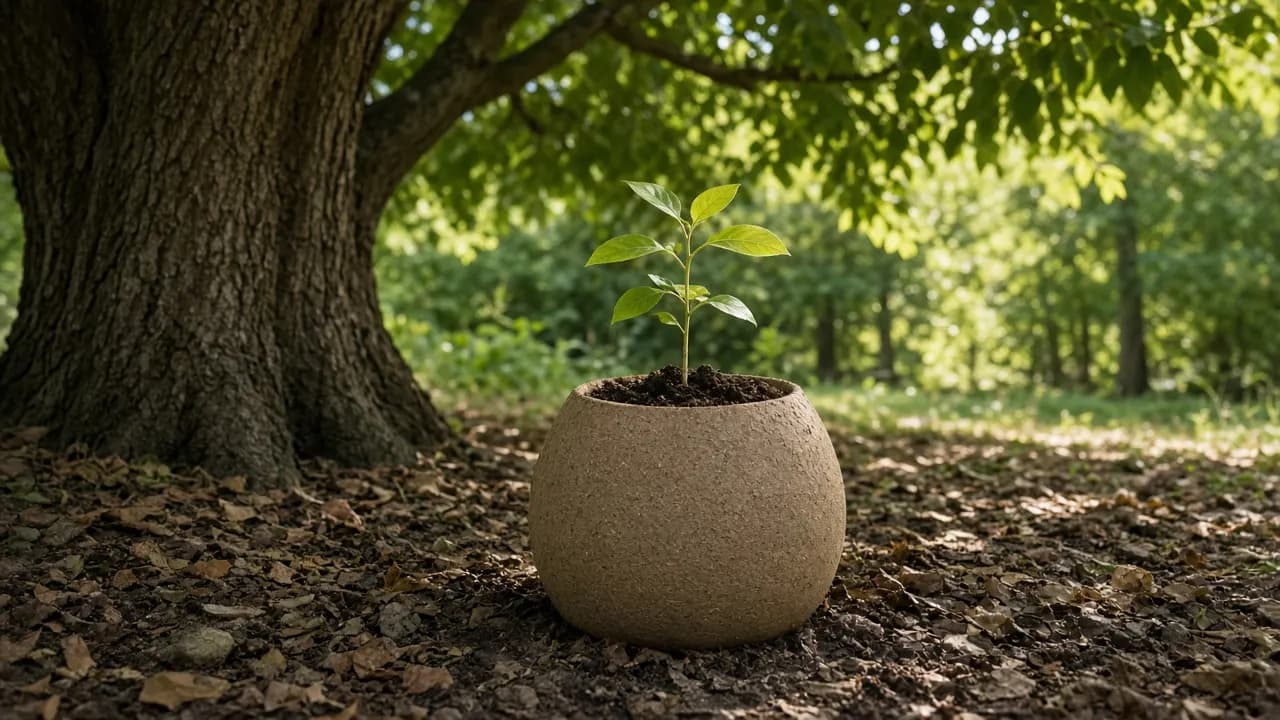
A living memorial in Kissimmee has two costs: the cremation and the urn. Biodegradable pet urns are among the cheaper urns you can buy, listed at about $15–$80[6] in one national price guide, and a sapling from a local nursery often costs less than a decorative display urn. If you'd like water cremation, one pet insurer's guide lists aquamation at $80 to $450 depending on size[7]. The table shows published examples.
The full price table by product is on our Florida page, and the services page explains what each option includes.

Free tool
Memorial budget planner
Add up cremation, urn, keepsakes and a farewell so the total holds no surprises.
What Florida allows for ashes, in general terms
Rules change more often than most people realise, and many local policies about ashes were never written down at all. Treat any general guide for Florida, including ours, as a starting point. Whoever looks after that particular field, park or shoreline is the one whose answer counts, so it's worth getting it by email where you can.
The official Florida local government directory lists every county and city office, which is the quickest way to find who to ask in Kissimmee.
The rules that apply across Florida (home burial, scattering and who oversees pet cremation) are summarized on our Florida page. Kissimmee may add its own conditions, so check with the city or county before digging.
How to plan a living memorial, in order
- Talk it through with your household first, especially if anyone would rather keep the ashes at home.
- Measure your space. A tree needs room to grow; a shrub, a pot or a flower bed may suit your garden better.
- Test the soil where you plan to plant. If it's already alkaline, choose a lime-tolerant species and add extra compost or composted bark.
- Spread the ashes through a wide planting area, never as a single layer under the roots.
- Water well for two summers. It's drought in the early years, not cold, that kills the majority of memorial trees that don't make it.
- Keep a record noting which species you planted, when, and how the soil was mixed, so future care or taking a cutting is straightforward.
Living memorials beyond the backyard
For families with relatives in Puerto Rico or other countries, dividing the ashes lets everyone take part. Small keepsake vessels, a bracelet with a sealed chamber, or a pendant can hold a tiny amount each. Airlines generally allow cremated remains in carry-on luggage if the container can pass through X-ray, so choose wood, plastic or thin metal rather than thick stone for travel.
the guides answer the longer questions and the blog the newer ones, or see how other readers answered in our polls, try the free planning tools, Compare every option on our services page. More local pages: Jacksonville, Tampa, Orlando and Miami, the Florida overview and every city in the United States.

Reader polls
What would you choose?
Vote anonymously and see how other readers answered. The results are live counts from people who visit this site, so they show real opinions, not a scientific sample.
If you rent or might move, how would you handle a memorial planting?
Tap an answer to vote and see how others answered. Anonymous.
If water cremation (aquamation) were offered near you, would you choose it?
Tap an answer to vote and see how others answered. Anonymous.
If you had to decide today, which aftercare would you choose for your pet?
Tap an answer to vote and see how others answered. Anonymous.

Free tools to help you plan
Memorial budget planner
Add up cremation, urn, keepsakes and a farewell so the total holds no surprises.

Memorial tree finder
Pick a tree for a planting urn that suits your climate, space and pet.

Aftercare options compared
Compare private, communal and water cremation with burial on cost, timing and what comes home.
Questions people ask
Where are the providers that serve Kissimmee actually based?
Some are local, and some run from Orlando, about 17 miles away. That is normal for a town this size. What matters is the collection time they quote for Kissimmee and whether the drive is priced into the total, so ask both up front.
Can a provider from a neighbouring town collect from Kissimmee?
Usually yes. Campbell is about 4 miles away, Hunters Creek is about 4 miles away and Buenaventura Lakes is about 4 miles away, all inside a normal collection radius. Get the mileage written into the quote so there is no surprise on the day.
Why does the Kissimmee page quote a human cremation rate?
Because it is the best local signal we have. NFDA 2024 Cremation & Burial Report state projections (via Occasional Sage) (2024) reports about 72.5%[5] of Florida residents are cremated. There is no official pet equivalent, and inventing one would be worse than quoting a real, clearly labelled number.
Roughly how many pets die in Kissimmee each year?
Our estimate is around 2,600. It comes from Kissimmee's population (about 85,591), the average household size, the share of homes with a dog or cat (about 31,500 households here) and the average lifespan. It is arithmetic, not a count, so read it as a rough floor.
How many families in Kissimmee might want a planting memorial?
We don't know the exact number, but the scale is real: by our estimate, around 2,600 dogs and cats die in Kissimmee each year. Interest in greener goodbyes is growing too; 61.4%[9] of US consumers say they'd like to explore green funeral options. If you're one of them, you're far from alone.
How long does it take to get ashes back for planting?
Most private cremations return ashes within one to two weeks, and water cremation cycles themselves take 12–20 hours[10], so allow a similar time. In a smaller place, if the cremation happens in a larger centre such as Orlando, it may take a little longer. Planting can wait, so there's no need to rush.


Sources and our estimates
- [1] 53% of US households own a dog, which is about 71 million households. American Pet Products Association (APPA) 2025 State of the Industry, 2025.
- [2] US dogs have an average life expectancy at birth of 12.69 years. Montoya et al. 2023, Frontiers in Veterinary Science - Banfield Pet Hospital life expectancy tables (13.3 million dogs, 2.4 million cats, 2013-2019), 2023.
- [3] 39% of US households own a cat, which is about 53 million households. American Pet Products Association (APPA) 2025 State of the Industry, 2025.
- [4] US cats seen at Banfield hospitals have an average life expectancy at birth of 11.18 years. Montoya et al. 2023, Frontiers in Veterinary Science - Banfield Pet Hospital life expectancy tables (13.3 million dogs, 2.4 million cats, 2013-2019), 2023.
- [5] The NFDA projected Florida's cremation rate at 72.5% for 2024. NFDA 2024 Cremation & Burial Report state projections (via Occasional Sage), 2024.
- [6] Memorials.com's pet urn cost guide puts biodegradable pet urns at $15–$80. Memorials.com – Pet Urn Cost Guide, 2025.
- [7] Embrace Pet Insurance lists US communal cremation at $30-$200, partitioned at $50-$250, private at $100-$500+ and aquamation at $80-$450. Embrace Pet Insurance - Bury or Cremate Your Dog? Costs, Pros & Cons, 2025.
- [8] Switching one human-scale cremation to alkaline hydrolysis saves about 112 kg CO2e under TNO's accounting. Our estimate: 79.9 - (-31.8) kg CO2e. How we calculate.
- [9] 61.4% of US consumers say they are interested in exploring green funeral options. NFDA 2025 Cremation & Burial Report (press release), 2025.
- [10] A PET-550 aquamation cycle takes 12–20 hours for a single pet and 14–20 hours for segregated or communal cycles, with up to 14 compartments. Bio-Response Solutions — PET-550 Aquamation System product page, 2026.
Tell us about your pet and your garden
Tell us what you need and where you are. We'll reply by email with clear options and prices so you can decide in your own time.