A living memorial for your pet in Lancaster
By our estimate, around 15,000 households in Lancaster share their home with a dog or cat, and roughly 1,250 of those pets die each year. More of those families now ask about planting or water memorials. Here's how to do it well.
- A memorial that moves with you
- Why pure ashes harm young roots
- Written prices you can compare

Lancaster, Texas
Living memorials in Lancaster: the local picture
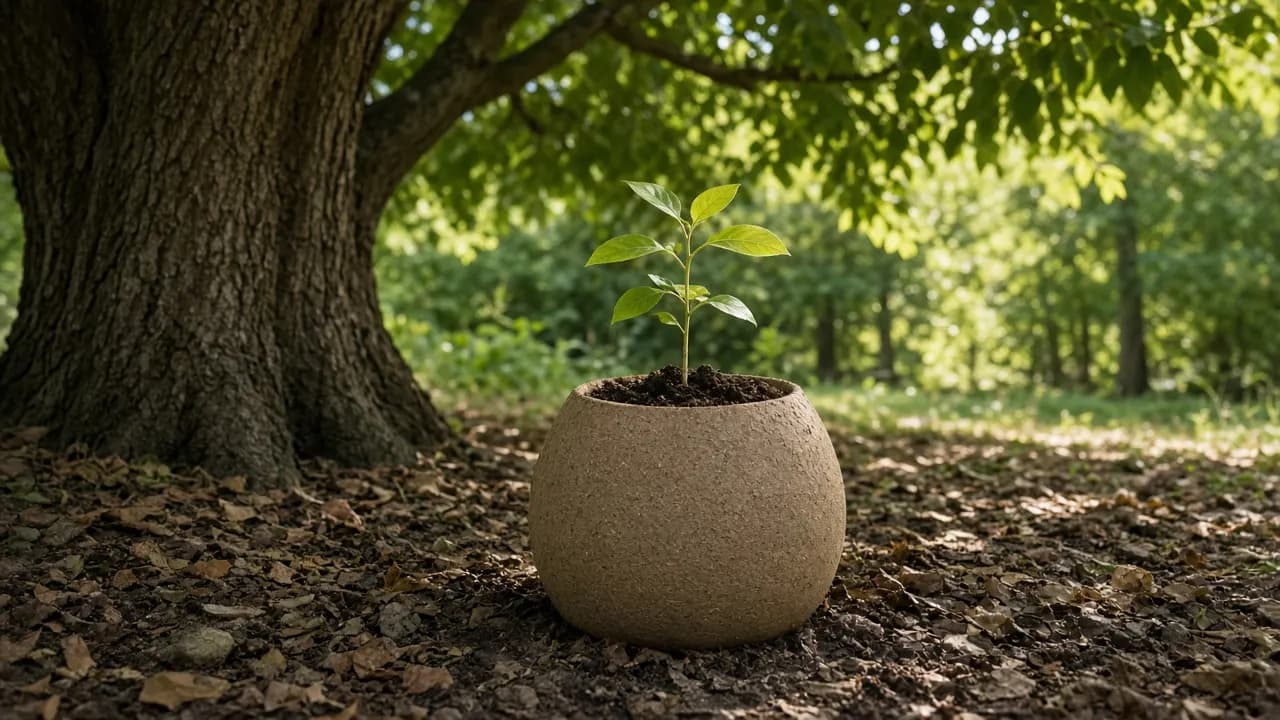
Outdoor markers need to withstand North Texas extremes, from triple-digit heat to hail. Granite and cast bronze are the most durable choices; painted concrete and resin fade faster. If you'd like to plant part of the ashes, a biodegradable urn under a crepe myrtle or other hardy shrub works well in local soil, and blooms through the hottest months.
Lancaster's historic town square, with its old storefronts, gives the community a sense of continuity, and many families here favor classic memorials: a carved stone in the garden, a wooden urn on the mantel, a portrait with the pet's name engraved below. Traditional pieces like these rarely go out of style and can pass to the next generation along with the stories.
In rural areas around Lancaster, family pets are sometimes buried whole on the property rather than cremated. If you'd prefer that, check local rules on depth and distance from water. If you'd like a tree above the grave, plant it beside the grave, not directly on it, so the roots aren't disturbed and the ground can settle. For cremated pets, a planting urn gives you the tree without a large grave, and it can be placed exactly where you want.
Lancaster's population is around 40,526, the 92nd-largest of the 325 Texas communities we cover. Some of the providers who serve Lancaster are based about 12 miles away in Dallas, the nearest larger centre, so collection times reflect that drive.
Our pages for DeSoto (5 miles), Glenn Heights (6 miles) and Red Oak (6 miles) describe the same choices from those towns' point of view, and the providers overlap, so a quote from one often covers Lancaster as well.
Our estimate
15,000
Estimated dog- or cat-owning households in Lancaster
How we calculated this
40,526 ÷ 2.5 = 16,210 households; × 53% (dog) + 39% (cat) = 15,000. Multi-pet homes count once.
Our estimate
1,250
dog and cat deaths per year in Lancaster, our estimate
How we calculated this
15,000 dog/cat-owning homes ÷ average lifespan (dog: 12.69 yrs + cat: 11.18 yrs) ≈ 1,250 a year. Treat it as a minimum.
53%[1]
53% of US households own a dog, which is about 71 million households.
12.69 years[2]
US dogs have an average life expectancy at birth of 12.69 years.
39%[3]
39% of US households own a cat, which is about 53 million households.
11.18 years[4]
US cats seen at Banfield hospitals have an average life expectancy at birth of 11.18 years.
We built the this numbers from Montoya et al. 2023, Frontiers in Veterinary Science and American Pet Products Association (APPA) 2025 State of the Industry, and both are worth a look if you want the detail.

Cremation habits in Texas, and what they mean for a bio urn
The human cremation rate in Texas sits around 55.7%[5], so many families have a foot in both camps, and generations can disagree. Grandparents may expect a grave in the yard; younger relatives may want ashes they can take with them. Talking it through before the vet asks you to choose saves a hard conversation on a hard day. A tree over buried ashes often satisfies both sides.
We take the Texas rate from NFDA 2024 Cremation & Burial Report state projections (via Occasional Sage) (2024). It is a human statistic; there is no equivalent pet figure for Lancaster, and we would rather show a real number than invent one.
Choosing the right month to plant in Lancaster
Lancaster summers are hard on young trees: August averages highs around 97°F. Don't plant a memorial tree in the hottest months. Aim for the cooler part of the year, when roots can grow before the next summer arrives. Ashes don't need to go into the ground quickly, so keeping them safely at home for a few months is completely fine.
Summer water can be busy or unsafe in hot places. Around Lancaster, shorelines are crowded in August, and some lakes close for algae blooms in the heat. For a lake or river goodbye, pick a cooler month or go at first light, check for any water-quality notices, and choose a spot where you can reach the water easily without slipping.
What bio urns and aquamation cost in Lancaster
It helps to compare a planted memorial with the alternatives. A pet cemetery burial for a dog averages about $831[6] in the US, which by our estimate is around 3.2 times the national average for private cremation[7]. Private cremation plus a bio urn and a sapling in your own Lancaster garden usually comes in far below a cemetery plot, and there are no yearly maintenance fees.
We keep the detailed Texas price table on one page so it stays current: see Texas prices.

Free tool
Memorial budget planner
Add up cremation, urn, keepsakes and a farewell so the total holds no surprises.
What Texas allows for ashes, in general terms
Carrying ashes from one place to another is usually simple, but keep the paperwork. The certificate or letter from the crematory shows what's in the container, which helps if you're crossing borders, flying out of Texas or handing the ashes to a cemetery. Keep a copy with the ashes and another somewhere safe at home.
Texas keeps an official directory of local governments; use it to reach the county or city office that covers Lancaster.
Home burial and scattering are governed at the Texas level first; our Texas rules summary has the detail. Then check whether Lancaster or your HOA adds anything.
Your next steps, whatever your situation
- Decide what the memorial is for. Wanting somewhere to sit, a living plant, a release on water or simply the gentlest footprint each leads you toward a different kind of urn.
- If a greener cremation matters, ask about aquamation before anything else; it's the step with the biggest environmental difference.
- Keep a small portion back in a keepsake in case a house move or a second memorial is on the cards down the line.
- Buy the tree locally. A young native tree from a grower around Lancaster tends to outgrow anything sprouted from a packet seed.
- Prepare the soil a season ahead where you can, and the mixture of compost and ash will have settled by the time you dig the hole.
- Plant with the people who loved your pet; hand everyone a task of their own, whether blending, backfilling or watering.
Keeping the memorial alive in Lancaster
Jewelry, small keepsake urns and glass pieces let relatives across the Dallas area each keep a share, and a portion can travel to family in other states. It's easier to have the provider divide ashes into separate containers than to do it yourself at home. Clay paw prints, fur clippings and nose prints are only possible before cremation, so decide on those first.
read our guides and latest articles, or see how other readers answered in our polls, The services page is the place to compare what is included, the planning tools turn your pet's details into figures. You can also browse every city in the United States. Nearby, we also cover Houston, Austin, Fort Worth and Dallas, and every city in Texas.

Reader polls
What would you choose?
Vote anonymously and see how other readers answered. The results are live counts from people who visit this site, so they show real opinions, not a scientific sample.
If you rent or might move, how would you handle a memorial planting?
Tap an answer to vote and see how others answered. Anonymous.
What kind of tree or plant would you choose?
Tap an answer to vote and see how others answered. Anonymous.
If you had to decide today, which aftercare would you choose for your pet?
Tap an answer to vote and see how others answered. Anonymous.

Free tools to help you plan
Memorial budget planner
Add up cremation, urn, keepsakes and a farewell so the total holds no surprises.

Memorial tree finder
Pick a tree for a planting urn that suits your climate, space and pet.

Aftercare options compared
Compare private, communal and water cremation with burial on cost, timing and what comes home.
Questions people ask
When is the hardest time of year to arrange a burial in Lancaster?
There is no frozen-ground season here; average lows stay above freezing all year. The other pressure point is August, when highs around 97°F mean a body needs cooling and collecting quickly.
Where are the providers that serve Lancaster actually based?
Some are local, and some run from Dallas, about 12 miles away. That is normal for a town this size. What matters is the collection time they quote for Lancaster and whether the drive is priced into the total, so ask both up front.
Why does the Lancaster page quote a human cremation rate?
Because it is the best local signal we have. NFDA 2024 Cremation & Burial Report state projections (via Occasional Sage) (2024) reports about 55.7%[5] of Texas residents are cremated. There is no official pet equivalent, and inventing one would be worse than quoting a real, clearly labelled number.
Can a provider from a neighbouring town collect from Lancaster?
Usually yes. DeSoto is about 5 miles away, Glenn Heights is about 6 miles away and Red Oak is about 6 miles away, all inside a normal collection radius. Get the mileage written into the quote so there is no surprise on the day.
Where can I buy a native tree for a pet memorial in Lancaster?
A local nursery or garden center is the best place, because staff know what survives local heat, cold and soil. Some county extension offices and native plant societies run plant sales too. Ask for a two-year-old sapling of a species that tolerates slightly alkaline soil, and ask how much water it needs in its first summer.
Is water cremation better for the environment?
It uses much less energy: pet aquamation is claimed to use about 90%[9] less energy than flame cremation, and it uses about as much water as 1–3 pet baths[10] per pet. The strongest carbon figures come from studies of human funerals, not pets, so treat them as a direction rather than a promise. You still get ashes back for a bio urn.


Sources and our estimates
- [1] 53% of US households own a dog, which is about 71 million households. American Pet Products Association (APPA) 2025 State of the Industry, 2025.
- [2] US dogs have an average life expectancy at birth of 12.69 years. Montoya et al. 2023, Frontiers in Veterinary Science - Banfield Pet Hospital life expectancy tables (13.3 million dogs, 2.4 million cats, 2013-2019), 2023.
- [3] 39% of US households own a cat, which is about 53 million households. American Pet Products Association (APPA) 2025 State of the Industry, 2025.
- [4] US cats seen at Banfield hospitals have an average life expectancy at birth of 11.18 years. Montoya et al. 2023, Frontiers in Veterinary Science - Banfield Pet Hospital life expectancy tables (13.3 million dogs, 2.4 million cats, 2013-2019), 2023.
- [5] The NFDA projected Texas's cremation rate at 55.7% for 2024. NFDA 2024 Cremation & Burial Report state projections (via Occasional Sage), 2024.
- [6] CareCredit's 2025 cost study put the US national average for pet cemetery burial of a dog at $831 (range $659-$1,513). CareCredit (Synchrony) - How Much Does It Cost To Euthanize a Dog? (2025 ASQ360 procedural cost study), 2025.
- [7] US pet cemetery burial for a dog costs about 3.2x a private cremation ($831 vs $260 national averages). Our estimate: 831 / 260 = 3.20. How we calculate.
- [8] Each shelter-animal flame cremation emits about 31 kg CO2e on average. Our estimate: 19,000 t CO2e / 607,000 animals. How we calculate.
- [9] Pet aquamation is described as available across all 50 US states, and is claimed to use about 90% less energy than flame cremation. Be a Tree Cremation pet aquamation guide, 2025.
- [10] Aquamation uses about the same water per pet as 1–3 pet baths. Veterinary Sustainability Alliance — Aquamation, 2024.
Tell us about your pet and your garden
Tell us what you need and where you are. We'll reply by email with clear options and prices so you can decide in your own time.