Greener pet aftercare in Mount Vernon, Washington
About 1,100 dogs and cats are lost in Mount Vernon each year, by our estimate. If you'd like your pet's ashes to grow into a tree or return to the water, this page covers the soil, the season and the cost.
- Planting, garden and water urns compared
- Honest notes on local rules
- Help choosing a native species

Mount Vernon, Washington
Bio urns, trees and water in Mount Vernon
Farm families in the valley often have several generations within a few miles, so more than one household may hope for a portion. Grandparents might keep the main urn while grandchildren each receive a keepsake or pendant. Decide on the number of portions before cremation, write names and dates on each container, and consider framing a bit of old barn wood as a display shelf.
The lower Skagit's rain, fog and river damp wear hard on outdoor markers. Granite and bronze last for decades; untreated wood, plaster and cheap resin do not. Setting a stone slightly raised on gravel helps it drain and resist tilting in soft soil. Inside, a sealed container of wood, ceramic or metal will serve for generations if it stays away from a sunny sill.
Getting a bio urn in Mount Vernon is mostly a matter of ordering online, but getting the soil right is a local job. Ask a nursery or your county extension office whether the ground is chalky, clay or sandy. Clay holds salts near the roots and drains poorly, so dig a wider hole and mix in more compost. Sandy soil drains well but holds little, so water the young tree more often in its first summers.
About 35,193 people live in Mount Vernon, which makes it the 36th-largest of the 67 Washington communities we cover. Some of the providers who serve Mount Vernon are based about 56 miles away in Seattle, the nearest larger centre, so collection times reflect that drive.
Mount Vernon sits within easy reach of Anacortes (15 miles), Oak Harbor (17 miles) and Arlington (19 miles). A provider based in any of them will usually collect from Mount Vernon; ask what the mileage adds to the bill.
Our estimate
13,000
Estimated dog- or cat-owning households in Mount Vernon
How we calculated this
35,193 ÷ 2.5 = 14,077 households; × 53% (dog) + 39% (cat) = 13,000. Homes are counted once however many pets they keep.
Our estimate
1,100
dog and cat deaths per year in Mount Vernon, our estimate
How we calculated this
13,000 dog/cat-owning homes ÷ average lifespan (dog: 12.69 yrs + cat: 11.18 yrs) ≈ 1,100 a year. The real figure is unlikely to be lower.
53%[1]
53% of US households own a dog, which is about 71 million households.
12.69 years[2]
US dogs have an average life expectancy at birth of 12.69 years.
39%[3]
39% of US households own a cat, which is about 53 million households.
11.18 years[4]
US cats seen at Banfield hospitals have an average life expectancy at birth of 11.18 years.
The published sources behind those figures are Montoya et al. 2023, Frontiers in Veterinary Science and American Pet Products Association (APPA) 2025 State of the Industry.

What local attitudes to cremation mean in Washington
Cremation accounts for roughly 79.1%[5] of human deaths in Washington, and a lot of those ashes end up waiting on a shelf. That's true of pets as well. If you already have an urn at home from an earlier pet, a bio urn can be a way to finish that story: the older ashes and the new can go into one planting, or two trees side by side, whenever you feel ready.
The Washington figure comes from Direct Cremate (citing CANA) (2024). It describes people, not pets, so read it as a sign of local attitudes rather than a pet statistic.
Weather, soil and planting windows in Mount Vernon
A mild climate like Mount Vernon's gives you a wide choice of trees and shrubs, and that's where the risk lies: it's tempting to choose something that looks lovely but is short-lived or grows too big. Think about the spot in twenty years. A small flowering tree, a fruit tree on a dwarfing rootstock or a native shrub suits most yards far better than a forest tree planted beside the house.
In a gentle climate like Mount Vernon's, grass and weeds grow nearly all year, and they compete hard with a young tree for water. Keep a clear circle of bare, mulched soil around the base, at least an arm's length across, for the first three years. It also stops mowers and strimmers from nicking the bark, which is how many young trees are lost.
What a greener goodbye costs in Mount Vernon
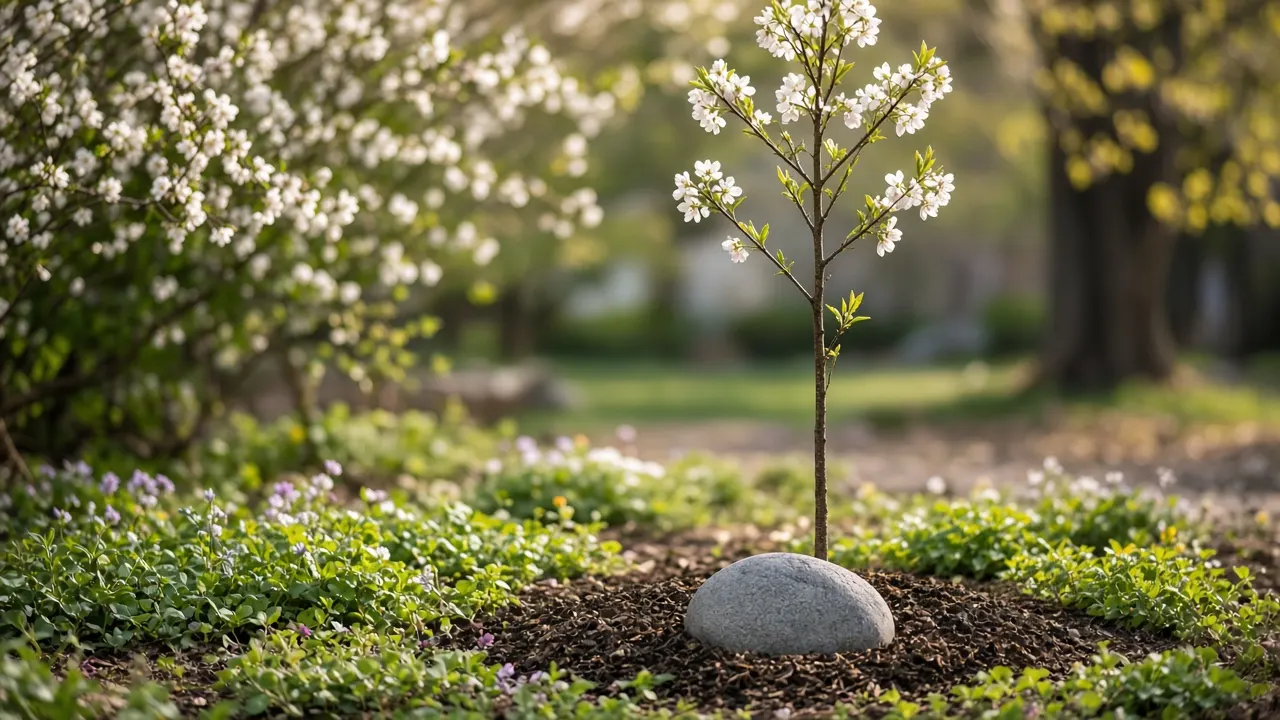
Add up every part before you commit. Beyond the cremation, a living memorial in Mount Vernon can include the bio urn, compost and bark, a pH kit, the tree or shrub, a guard against deer or rabbits, and perhaps a marker. Our memorial budget planner lists each line so nothing surprises you. Most families find the tree is the cheapest part and the cremation the most expensive.
We keep the detailed Washington price table on one page so it stays current: see Washington prices.

Free tool
Memorial budget planner
Add up cremation, urn, keepsakes and a farewell so the total holds no surprises.
Who to ask before you plant or scatter in Washington
Natural burial grounds and some pet cemeteries in Washington accept ashes in biodegradable urns, and a few ask for nothing else: no plastic, no metal, no varnish. If you're considering one, ask what the urn may be made of, whether a tree or marker is allowed above it, and whether the fee includes looking after the plot.
The official Washington local government directory lists every county and city office, which is the quickest way to find who to ask in Mount Vernon.
We keep Washington's burial and scattering rules in one place: the Washington rules summary. Before a home burial in Mount Vernon, also ask the city whether local ordinances add anything.
How to plan a living memorial, in order
- If euthanasia is planned, find out from the practice beforehand which crematory handles their aftercare and whether aquamation is available through them.
- Book the aftercare before the appointment, which leaves the day free for nothing but sitting with your pet.
- Ask for a paw print or nose print ahead of the cremation if you want one; once it's done there's no way to make one.
- Choose the plant in advance when that feels easier. Knowing the exact spot their pet is headed for brings some families real comfort.
- Skip the display urn. A simple box or tube from the crematory is all a planting needs, and the saving can go toward the tree or shrub.
- Prepare the soil blend while you wait for the crematory to return the ashes, and the planting can happen within a few months instead of slipping year after year.
Living memorials beyond the backyard
In a valley known for tulips and daffodils, many Mount Vernon families plant bulbs or a flowering shrub over a garden memorial. A biodegradable urn buried in a bed you own, or a stone set among the flowers, can become a place to visit each spring. Renters and people planning a move may prefer an indoor urn, a framed print or a piece of jewelry.
there are guides for the big decisions and articles for the details, The services page is the place to compare what is included, run the numbers with the free planning tools, or compare your instinct with the poll results. If you live between Mount Vernon and Bellevue, Spokane, Seattle and Vancouver, either page applies. Every other community in Washington, and all of the United States, is listed too.

Reader polls
What would you choose?
Vote anonymously and see how other readers answered. The results are live counts from people who visit this site, so they show real opinions, not a scientific sample.
What kind of tree or plant would you choose?
Tap an answer to vote and see how others answered. Anonymous.
If you rent or might move, how would you handle a memorial planting?
Tap an answer to vote and see how others answered. Anonymous.
If you had to decide today, which aftercare would you choose for your pet?
Tap an answer to vote and see how others answered. Anonymous.

Free tools to help you plan
Memorial budget planner
Add up cremation, urn, keepsakes and a farewell so the total holds no surprises.

Memorial tree finder
Pick a tree for a planting urn that suits your climate, space and pet.

Aftercare options compared
Compare private, communal and water cremation with burial on cost, timing and what comes home.
Questions people ask
How do Washington attitudes to cremation compare?
Direct Cremate (citing CANA) (2024) puts the Washington human cremation rate at about 79.1%[5]. We show it on the Mount Vernon page because pet aftercare choices tend to track it: where cremation is normal for people, communal and private pet cremation are both easy to find.
Which nearby towns can I compare with Mount Vernon?
The closest communities we cover are Anacortes (about 15 miles), Oak Harbor (about 17 miles) and Arlington (about 19 miles). Providers based in those places often serve Mount Vernon too. Ask each one for a written total that includes collection, so the distance is priced in.
How does Mount Vernon's weather affect pet aftercare?
July is the hottest month in Mount Vernon, with average highs around 75°F, so prompt collection matters most then. Winters are mild, with average lows staying above freezing, so outdoor burial or scattering is usually possible year round.
Roughly how many pets die in Mount Vernon each year?
Our estimate is around 1,100. It comes from Mount Vernon's population (about 35,193), the average household size, the share of homes with a dog or cat (about 13,000 households here) and the average lifespan. It is arithmetic, not a count, so read it as a rough floor.
Can I scatter my pet's ashes in a park in Mount Vernon?
Usually only with permission, and some parks don't allow it at all. Parks are managed by a city, county, state or national agency, each with its own policy, and many were written for human ashes. Contact the park office, explain it's a small amount of pet ash, and ask whether there's a preferred spot.
Where can I buy a native tree for a pet memorial in Mount Vernon?
A local nursery or garden center is the best place, because staff know what survives local heat, cold and soil. Some county extension offices and native plant societies run plant sales too. Ask for a two-year-old sapling of a species that tolerates slightly alkaline soil, and ask how much water it needs in its first summer.


Sources and our estimates
- [1] 53% of US households own a dog, which is about 71 million households. American Pet Products Association (APPA) 2025 State of the Industry, 2025.
- [2] US dogs have an average life expectancy at birth of 12.69 years. Montoya et al. 2023, Frontiers in Veterinary Science - Banfield Pet Hospital life expectancy tables (13.3 million dogs, 2.4 million cats, 2013-2019), 2023.
- [3] 39% of US households own a cat, which is about 53 million households. American Pet Products Association (APPA) 2025 State of the Industry, 2025.
- [4] US cats seen at Banfield hospitals have an average life expectancy at birth of 11.18 years. Montoya et al. 2023, Frontiers in Veterinary Science - Banfield Pet Hospital life expectancy tables (13.3 million dogs, 2.4 million cats, 2013-2019), 2023.
- [5] Washington had a 79.1% cremation rate in 2024, among the highest in the US. Direct Cremate (citing CANA), 2024.
- [6] U.S. pet flame cremations emit on the order of 47,000 t CO2e a year. Our estimate: 1.5M pet cremations x 31.3 kg CO2e. How we calculate.
Tell us about your pet and your garden
Tell us what you need and where you are. We'll reply by email with clear options and prices so you can decide in your own time.