Greener pet aftercare in Seattle, Washington
Seattle has an estimated 290,000 dog- or cat-owning households. When a planting or water memorial feels right for yours, here's what works in the local climate and what to ask before you buy.
- Planting, garden and water urns compared
- Honest notes on local rules
- Help choosing a native species
Seattle, Washington
Your living memorial options around Seattle
Anything left outdoors in Seattle will be rained on for months, so garden memorials need to be made of stone, metal or glazed ceramic rather than painted wood. Moss will creep over a flat granite marker within a few seasons, which many people find beautiful rather than untidy. On a covered porch or balcony, a planter of ferns with a small engraved stake works well for renters.
Seattle has a strong glass-art tradition, and ash-infused glass pieces, from small orbs to pendants, are a popular way to keep a pet close in a compact apartment. Wooden urns made from Northwest woods such as cedar or maple, engraved river stones and framed nose or paw prints are other local favorites. Whatever you choose, find out from your provider the likely amount of ash, since a large animal returns many times more than a small one.
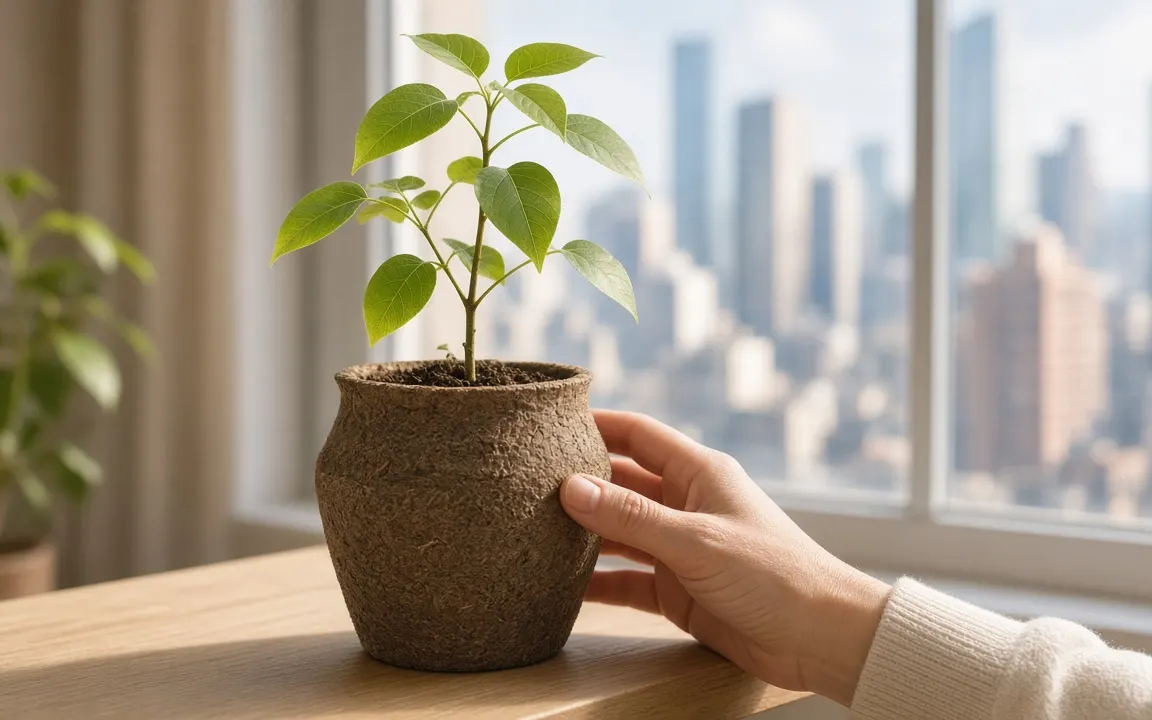
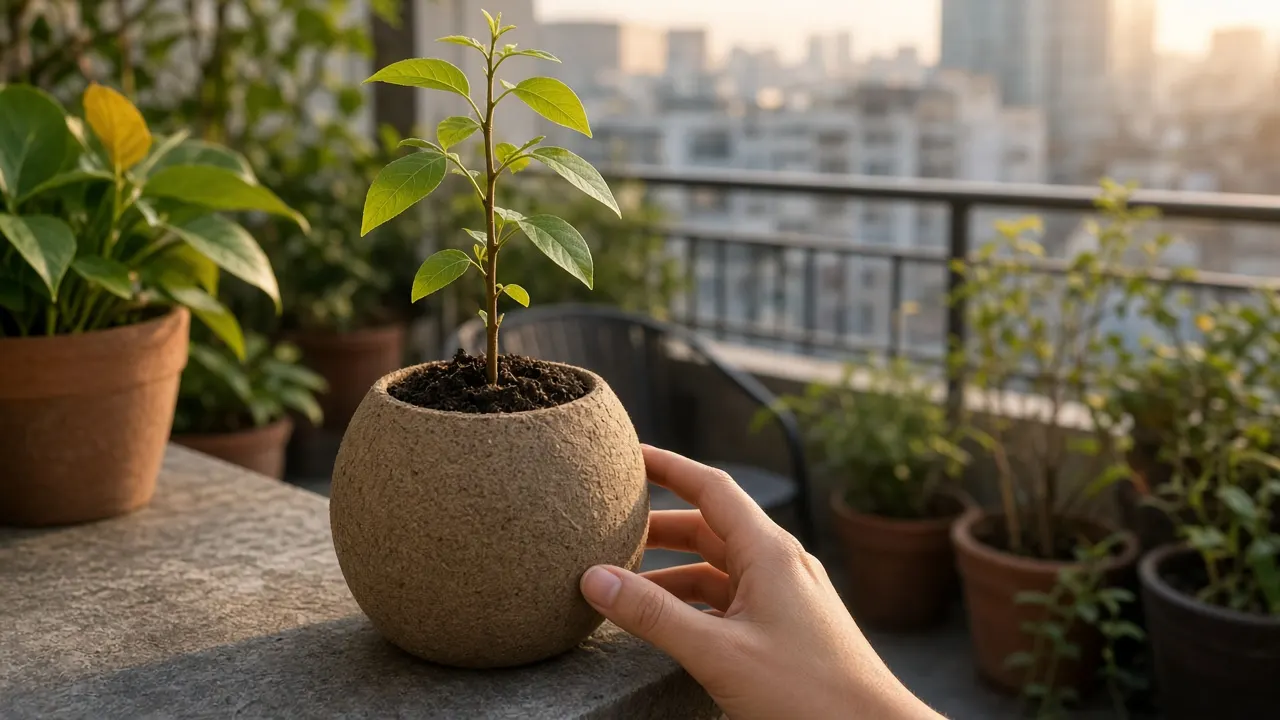
In a city the size of Seattle, the question is rarely whether you can find a bio urn. It's where the memorial will live. Many people here rent, share a yard or live several floors up, so the most useful living memorial is often a large container: a dwarf tree or flowering shrub in a half-barrel on a patio or balcony, which comes with you when you move. Garden centers in big metros usually stock a wide range of natives, which makes matching the plant to your climate much easier than ordering a seed from a kit.
With roughly 784,777 residents, Seattle is the largest of the 67 Washington communities we cover.
If you want to compare providers, look at Mercer Island (6 miles), Bellevue (6 miles) and Kirkland (8 miles). Distance matters because pickup fees and the time until the ashes come back both grow with the drive.
Our estimate
290,000
Estimated dog- or cat-owning households in Seattle
How we calculated this
784,777 ÷ 2.5 = 313,911 households; × 53% (dog) + 39% (cat) = 290,000. A household with several pets counts once.
Our estimate
24,000
Seattle families who lose a dog or cat each year (estimate)
How we calculated this
290,000 dog/cat-owning homes ÷ average lifespan (dog: 12.69 yrs + cat: 11.18 yrs) ≈ 24,000 a year. Treat it as a minimum.
53%[1]
53% of US households own a dog, which is about 71 million households.
12.69 years[2]
US dogs have an average life expectancy at birth of 12.69 years.
39%[3]
39% of US households own a cat, which is about 53 million households.
11.18 years[4]
US cats seen at Banfield hospitals have an average life expectancy at birth of 11.18 years.
Where these figures come from: Montoya et al. 2023, Frontiers in Veterinary Science and American Pet Products Association (APPA) 2025 State of the Industry.
The local attitude to ashes and memorials
Cremation accounts for roughly 79.1%[5] of human deaths in Washington, and a lot of those ashes end up waiting on a shelf. That's true of pets as well. If you already have an urn at home from an earlier pet, a bio urn can be a way to finish that story: the older ashes and the new can go into one planting, or two trees side by side, whenever you feel ready.
Direct Cremate (citing CANA) (2024) is where the Washington figure comes from. It counts people; we use it because attitudes to cremating a pet in Seattle tend to follow attitudes to cremation generally.
What Seattle's climate means for a living memorial
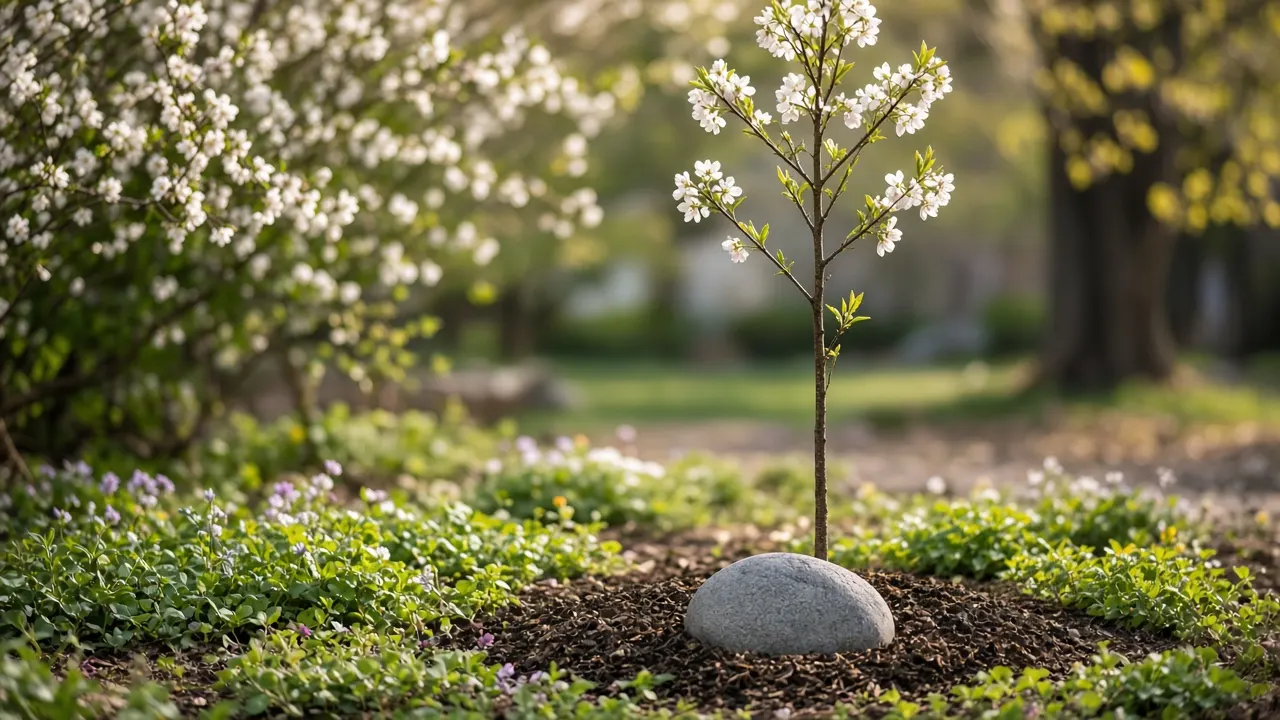
Wet winters are the main hazard for a memorial planting in Seattle. Around November, heavy soils can stay waterlogged for weeks, and roots sitting in cold, salty water rot easily. If your ground drains slowly, plant on a low mound, raised a little above the surrounding soil, so excess water runs away from the ash blend rather than pooling in it.
In a gentle climate like Seattle's, grass and weeds grow nearly all year, and they compete hard with a young tree for water. Keep a clear circle of bare, mulched soil around the base, at least an arm's length across, for the first three years. It also stops mowers and strimmers from nicking the bark, which is how many young trees are lost.
Price ranges for planting and water urns
It helps to compare a planted memorial with the alternatives. A pet cemetery burial for a dog averages about $831[6] in the US, which by our estimate is around 3.2 times the national average for private cremation[7]. Private cremation plus a bio urn and a sapling in your own Seattle garden usually comes in far below a cemetery plot, and there are no yearly maintenance fees.
The Washington price table breaks costs down by product; our services page explains what sits behind each line.

Free tool
Memorial budget planner
Add up cremation, urn, keepsakes and a farewell so the total holds no surprises.
Rules worth knowing in Washington before you scatter
If you live under a homeowners' association, a co-op board or a tenancy agreement in Washington, its rules can matter more than any public law. Many restrict new trees, digging near shared pipes or heavy pots on balconies. A quick read of the rules, or one email to the manager, tells you whether a tree, a shrub bed or a container memorial is the right fit.
Seattle Animal Shelter publishes Seattle's official guidance. Note that it deals with public collection, not with booking a private cremation. Not sure which office covers Seattle? The Washington local government directory is the official list.
Start with the Washington rules, which cover burial, scattering and oversight for the whole state, and treat Seattle's local ordinances as a possible extra layer.
A simple plan for your pet's eco memorial
- If you find your pet has died at home, lift them carefully onto a blanket or towel and lay them in the coolest part of the house, then phone the vet or a nearby pet crematory. Most can either pick them up or point you to a drop-off place.
- Say you want individual cremation and that you plan to plant the ashes. That one sentence steers the provider away from communal options that return nothing.
- Keep the collar, a tag and a little fur while your pet is still with you at home. Later on they can be buried alongside the urn or tucked away in a keepsake box.
- Leave the memorial decisions for another week. Choosing a tree the same night is too much to ask of anyone.
- When the ashes arrive, open the box once to see the amount and the inner bag, then close it and store it somewhere dry.
- Use our [memorial tree finder](/tools/memorial-tree-finder) once you feel ready, and plan the planting for a calm weekend in the right season.
Keeping your pet's memory growing in Seattle
Many Seattle owners picture Puget Sound, the Cascades or the slopes below Mount Rainier when they imagine scattering ashes. Parks, beaches and national forest land each have their own rules, so look them up before you set out and choose a quiet moment away from swimmers and busy trailheads. A water-soluble urn lowered from a kayak or a shoreline you have permission to use is a common Northwest choice.
See what each option includes on our services page, run the numbers with the free planning tools, go deeper with the guides or catch up on recent articles, or compare your instinct with the poll results. More local pages: Spokane, Vancouver, Tacoma and Bellevue, the Washington overview and every city in the United States.

Reader polls
What would you choose?
Vote anonymously and see how other readers answered. The results are live counts from people who visit this site, so they show real opinions, not a scientific sample.
If water cremation (aquamation) were offered near you, would you choose it?
Tap an answer to vote and see how others answered. Anonymous.
What kind of tree or plant would you choose?
Tap an answer to vote and see how others answered. Anonymous.
If you had to decide today, which aftercare would you choose for your pet?
Tap an answer to vote and see how others answered. Anonymous.

Free tools to help you plan
Memorial budget planner
Add up cremation, urn, keepsakes and a farewell so the total holds no surprises.

Memorial tree finder
Pick a tree for a planting urn that suits your climate, space and pet.

Aftercare options compared
Compare private, communal and water cremation with burial on cost, timing and what comes home.
Questions people ask
Roughly how many pets die in Seattle each year?
Our estimate is around 24,000. It comes from Seattle's population (about 784,777), the average household size, the share of homes with a dog or cat (about 290,000 households here) and the average lifespan. It is arithmetic, not a count, so read it as a rough floor.
Which nearby towns can I compare with Seattle?
The closest communities we cover are Mercer Island (about 6 miles), Bellevue (about 6 miles) and Kirkland (about 8 miles). Providers based in those places often serve Seattle too. Ask each one for a written total that includes collection, so the distance is priced in.
Is cremation common in Washington?
For people, yes: about 79.1%[5] of Washington deaths end in cremation, according to Direct Cremate (citing CANA) (2024). Nobody publishes the same figure for pets, but in our experience pet choices in Seattle follow the human pattern closely, so cremation is the default most families here start from.
Does the Seattle climate change what I should do first?
Only the timing. In August, with highs near 77°F, cool the body and book collection the same day. Winters here are mild enough that burial or scattering is possible in any month.
Can I take my pet's ashes on a plane to plant them somewhere else?
Usually, yes. Most airlines let you carry cremated remains in hand luggage, but security staff need to be able to X-ray the container, so a wooden, plastic or cardboard container is easier than a metal urn. Keep the certificate from the crematory with you. Leave any seed pod at home if you're crossing a border that restricts plant material.
Can I plant my pet's ashes if I live in an apartment in Seattle?
Yes, in a container. A small tree, herb or flowering shrub in a large pot on a balcony can hold a small, well-mixed share of the ashes. Because salts can't drain away as they would in the ground, use only a spoonful or two, water until it drains freely and keep the rest in a keepsake or plant it later.


Sources and our estimates
- [1] 53% of US households own a dog, which is about 71 million households. American Pet Products Association (APPA) 2025 State of the Industry, 2025.
- [2] US dogs have an average life expectancy at birth of 12.69 years. Montoya et al. 2023, Frontiers in Veterinary Science - Banfield Pet Hospital life expectancy tables (13.3 million dogs, 2.4 million cats, 2013-2019), 2023.
- [3] 39% of US households own a cat, which is about 53 million households. American Pet Products Association (APPA) 2025 State of the Industry, 2025.
- [4] US cats seen at Banfield hospitals have an average life expectancy at birth of 11.18 years. Montoya et al. 2023, Frontiers in Veterinary Science - Banfield Pet Hospital life expectancy tables (13.3 million dogs, 2.4 million cats, 2013-2019), 2023.
- [5] Washington had a 79.1% cremation rate in 2024, among the highest in the US. Direct Cremate (citing CANA), 2024.
- [6] CareCredit's 2025 cost study put the US national average for pet cemetery burial of a dog at $831 (range $659-$1,513). CareCredit (Synchrony) - How Much Does It Cost To Euthanize a Dog? (2025 ASQ360 procedural cost study), 2025.
- [7] US pet cemetery burial for a dog costs about 3.2x a private cremation ($831 vs $260 national averages). Our estimate: 831 / 260 = 3.20. How we calculate.
- [8] Switching one human-scale cremation to alkaline hydrolysis saves about 112 kg CO2e under TNO's accounting. Our estimate: 79.9 - (-31.8) kg CO2e. How we calculate.
Get eco memorial ideas by email
Tell us what you need and where you are. We'll reply by email with clear options and prices so you can decide in your own time.