Greener pet aftercare in Yakima, Washington
Roughly 3,000 Yakima families say goodbye to a dog or cat each year, by our count. A living memorial is one way to mark it. This guide explains how to make one that actually grows.
- Options for renters and apartments
- Water release rules in plain words
- No obligation, we reply by email
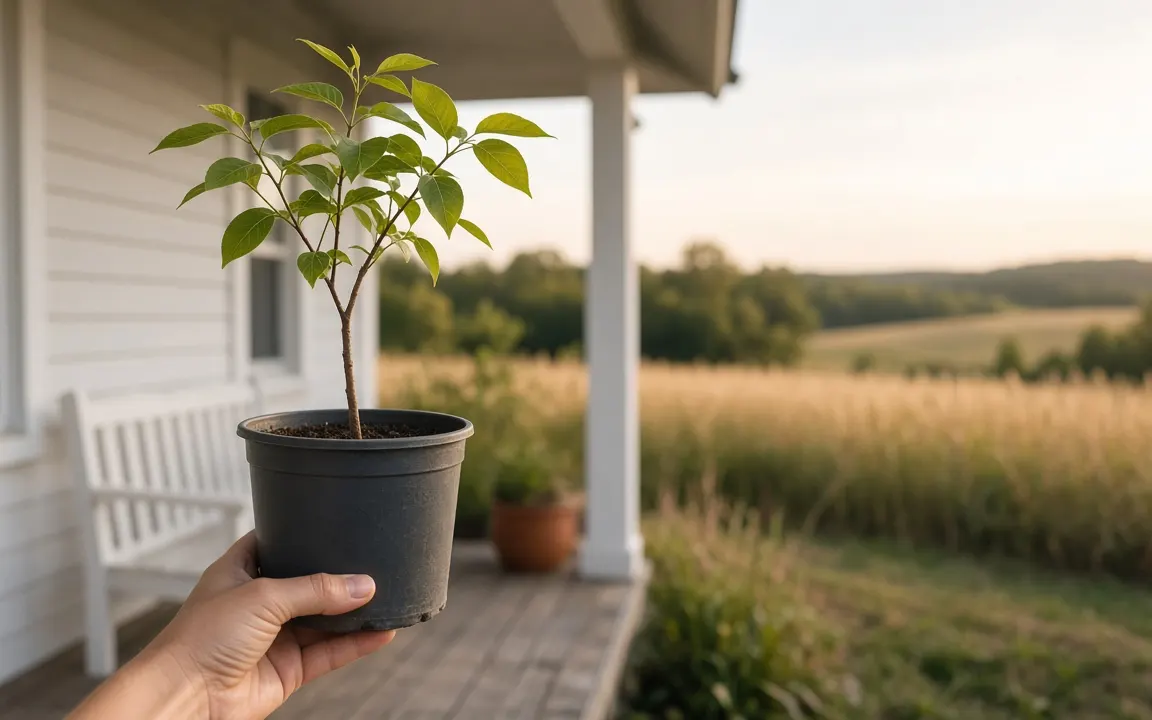
Yakima, Washington
Where a living memorial fits in Yakima
Blazing, dry summers and freezing winters punish anything left outside here. Granite, basalt and bronze endure for decades; resin fades and thin concrete splits. Set a marker on gravel to protect it from frost heave, and keep it clear of where irrigation water pools or sprinklers soak it daily. Indoors, a closed ceramic or wooden urn suits most households perfectly well.
In a valley known for its apples, cherries and hops, some families choose memorials rooted in the land: a young fruit tree planted over a portion of the ashes, a basalt boulder with a carved name, or a box made from reclaimed orchard wood. Others prefer a small blown-glass piece or a pendant to keep close every day, or a framed photo from harvest time.
Getting a bio urn in Yakima is mostly a matter of ordering online, but getting the soil right is a local job. Ask a nursery or your county extension office whether the ground is chalky, clay or sandy. Clay holds salts near the roots and drains poorly, so dig a wider hole and mix in more compost. Sandy soil drains well but holds little, so water the young tree more often in its first summers.
Yakima's population is around 97,458, the 11th-largest of the 67 Washington communities we cover.
Our pages for Ellensburg (28 miles), West Richland (59 miles) and Wenatchee (59 miles) describe the same choices from those towns' point of view, and the providers overlap, so a quote from one often covers Yakima as well.
Our estimate
36,000
Yakima: dog- or cat-owning households, our estimate
How we calculated this
97,458 ÷ 2.5 = 38,983 households; × 53% (dog) + 39% (cat) = 36,000. Homes are counted once however many pets they keep.
Our estimate
3,000
Yakima families who lose a dog or cat each year (estimate)
How we calculated this
36,000 dog/cat-owning homes ÷ average lifespan (dog: 12.69 yrs + cat: 11.18 yrs) ≈ 3,000 a year. A floor, not a ceiling.
53%[1]
53% of US households own a dog, which is about 71 million households.
12.69 years[2]
US dogs have an average life expectancy at birth of 12.69 years.
39%[3]
39% of US households own a cat, which is about 53 million households.
11.18 years[4]
US cats seen at Banfield hospitals have an average life expectancy at birth of 11.18 years.
Where these figures come from: American Pet Products Association (APPA) 2025 State of the Industry and Montoya et al. 2023, Frontiers in Veterinary Science.
Why cremation culture in Washington shapes your options
Cremation is the usual choice for people in Washington: about 79.1%[5] of those who die there are cremated. That figure is about people, not pets, but it tells you something useful. Where cremation is ordinary, families already think about what to do with ashes, and planting or scattering is a familiar next step. You're less likely to have to explain a bio urn to relatives, and more likely to find a crematory nearby that returns ashes promptly.
For the Washington figure we rely on Direct Cremate (citing CANA) (2024). Read it as a picture of local custom around death and remembrance in Yakima rather than as pet data.
Yakima seasons and your memorial tree
In places like Yakima, driveways and sidewalks are often salted in January, February, March, November and December. Ashes already add sodium to the soil, and road salt splashed onto the same bed doubles the load. Keep a memorial planting well back from salted paths and the edge of the road, and away from where snow gets piled. A spot uphill from the drive is better than one downhill of it.
In Yakima, average lows fall below freezing in January, February, March, November and December, and frozen ground makes digging hard or impossible. That's no reason to rush. Ashes keep safely indoors for as long as you like, so many families wait for spring, once the soil has thawed and drained. Early autumn works too, as long as the tree has about six weeks of open ground to root in before the hard frosts.
Eco memorial prices, from urn to tree
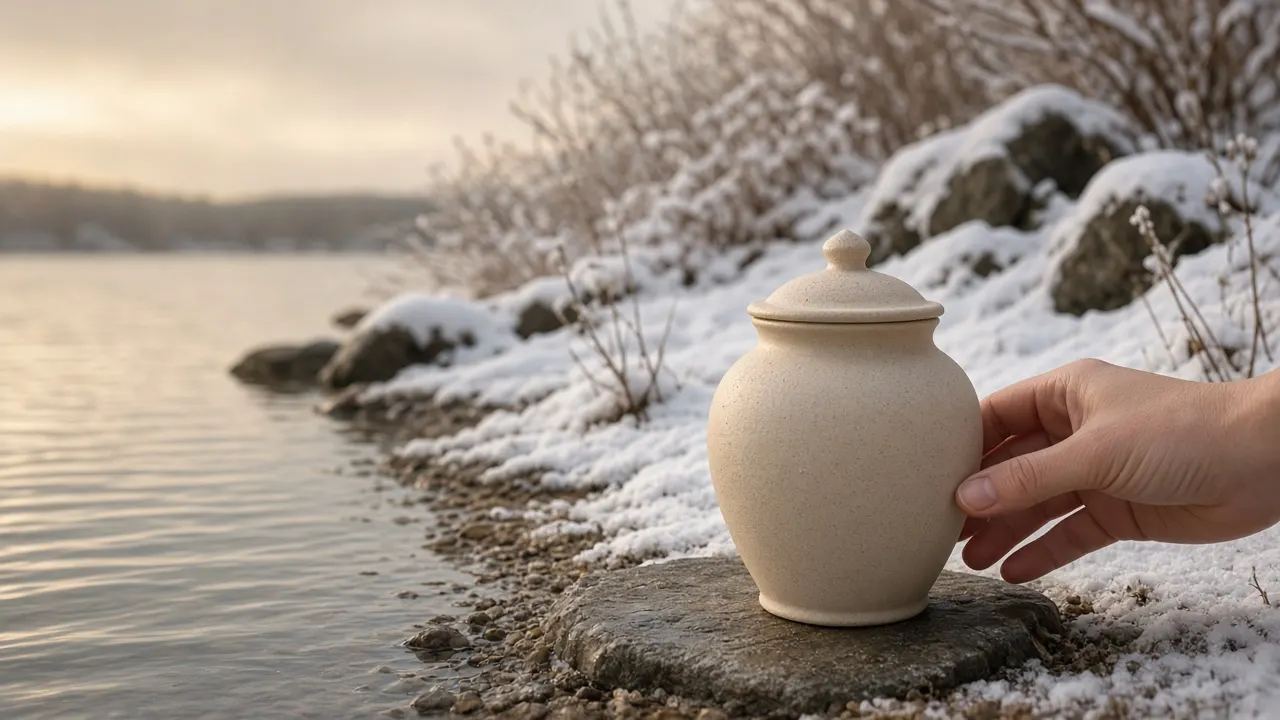
A living memorial in Yakima has two costs: the cremation and the urn. Biodegradable pet urns are among the cheaper urns you can buy, listed at about $15–$80[6] in one national price guide, and a sapling from a local nursery often costs less than a decorative display urn. If you'd like water cremation, one pet insurer's guide lists aquamation at $80 to $450 depending on size[7]. The table shows published examples.
Rather than repeat the price table on every city page, we keep one for Washington: Washington costs. What each service includes is on the services page.

Free tool
Memorial budget planner
Add up cremation, urn, keepsakes and a farewell so the total holds no surprises.
Who to ask before you plant or scatter in Washington
If you live under a homeowners' association, a co-op board or a tenancy agreement in Washington, its rules can matter more than any public law. Many restrict new trees, digging near shared pipes or heavy pots on balconies. A quick read of the rules, or one email to the manager, tells you whether a tree, a shrub bed or a container memorial is the right fit.
Not sure which office covers Yakima? The Washington local government directory is the official list.
The rules that apply across Washington (home burial, scattering and who oversees pet cremation) are summarized on our Washington page. Yakima may add its own conditions, so check with the city or county before digging.
Your next steps, whatever your situation
- Talk it through with your household before deciding anything, since someone may quietly prefer the ashes to stay indoors.
- Measure your space. A tree needs room to grow; a shrub, a pot or a flower bed may suit your garden better.
- Test the soil where you plan to plant. If it's already alkaline, choose a lime-tolerant species and add extra compost or composted bark.
- Spread the ashes through a wide planting area, not in one band directly beneath the root ball.
- Water well for two summers. It's drought in the early years, not cold, that kills the majority of memorial trees that don't make it.
- Keep a record noting which species you planted, when, and how the soil was mixed, so future care or taking a cutting is straightforward.
Keeping your pet's memory growing in Yakima
Yakima families often have relatives spread from Sunnyside to Ellensburg and beyond, and some bilingual households want engraving, paperwork or conversations in Spanish as well as English. Ask the provider about that at the start. Mention too if several people would like part of the remains, so the crematory can divide them into separate vessels before anything comes back to you.
For a plain comparison of the choices, open services, the planning tools turn your pet's details into figures, there are guides for the big decisions and articles for the details, or look at how readers voted in our polls. Close to Yakima we also cover Spokane, Tacoma, Kent and Vancouver; the full list for Washington and for the United States is a click away.

Reader polls
What would you choose?
Vote anonymously and see how other readers answered. The results are live counts from people who visit this site, so they show real opinions, not a scientific sample.
Would you consider releasing your pet's ashes in water?
Tap an answer to vote and see how others answered. Anonymous.
If water cremation (aquamation) were offered near you, would you choose it?
Tap an answer to vote and see how others answered. Anonymous.
If you had to decide today, which aftercare would you choose for your pet?
Tap an answer to vote and see how others answered. Anonymous.

Free tools to help you plan
Memorial budget planner
Add up cremation, urn, keepsakes and a farewell so the total holds no surprises.

Memorial tree finder
Pick a tree for a planting urn that suits your climate, space and pet.

Aftercare options compared
Compare private, communal and water cremation with burial on cost, timing and what comes home.
Questions people ask
How do Washington attitudes to cremation compare?
Direct Cremate (citing CANA) (2024) puts the Washington human cremation rate at about 79.1%[5]. We show it on the Yakima page because pet aftercare choices tend to track it: where cremation is normal for people, communal and private pet cremation are both easy to find.
When is the hardest time of year to arrange a burial in Yakima?
January, February, March, November and December: average lows are below freezing then, and frozen ground makes a home grave slow or impossible until it thaws. The other pressure point is July, when highs around 90°F mean a body needs cooling and collecting quickly.
Which nearby towns can I compare with Yakima?
The closest communities we cover are Ellensburg (about 28 miles), West Richland (about 59 miles) and Wenatchee (about 59 miles). Providers based in those places often serve Yakima too. Ask each one for a written total that includes collection, so the distance is priced in.
Roughly how many pets die in Yakima each year?
Our estimate is around 3,000. It comes from Yakima's population (about 97,458), the average household size, the share of homes with a dog or cat (about 36,000 households here) and the average lifespan. It is arithmetic, not a count, so read it as a rough floor.
I rent in Yakima. Can I still have a living memorial?
Yes. Plant in a large container, such as a half-barrel or a big pot with a dwarf tree or flowering shrub, and it moves with you. Use only a small share of the ashes in the pot, well mixed with compost. If you'd like to plant in a rented yard, get the landlord's permission in writing, and remember the tree stays when you leave.
How long does it take to get ashes back for planting?
Most private cremations return ashes within one to two weeks, and water cremation cycles themselves take 12–20 hours[9], so allow a similar time. In a smaller place, if the cremation happens in a larger centre such as Yakima, it may take a little longer. Planting can wait, so there's no need to rush.


Sources and our estimates
- [1] 53% of US households own a dog, which is about 71 million households. American Pet Products Association (APPA) 2025 State of the Industry, 2025.
- [2] US dogs have an average life expectancy at birth of 12.69 years. Montoya et al. 2023, Frontiers in Veterinary Science - Banfield Pet Hospital life expectancy tables (13.3 million dogs, 2.4 million cats, 2013-2019), 2023.
- [3] 39% of US households own a cat, which is about 53 million households. American Pet Products Association (APPA) 2025 State of the Industry, 2025.
- [4] US cats seen at Banfield hospitals have an average life expectancy at birth of 11.18 years. Montoya et al. 2023, Frontiers in Veterinary Science - Banfield Pet Hospital life expectancy tables (13.3 million dogs, 2.4 million cats, 2013-2019), 2023.
- [5] Washington had a 79.1% cremation rate in 2024, among the highest in the US. Direct Cremate (citing CANA), 2024.
- [6] Memorials.com's pet urn cost guide puts biodegradable pet urns at $15–$80. Memorials.com – Pet Urn Cost Guide, 2025.
- [7] Embrace Pet Insurance lists US communal cremation at $30-$200, partitioned at $50-$250, private at $100-$500+ and aquamation at $80-$450. Embrace Pet Insurance - Bury or Cremate Your Dog? Costs, Pros & Cons, 2025.
- [8] If just 10% of U.S. pet cremations moved to aquamation, about 4,200 t CO2e a year would be avoided. Our estimate: 1.5M x 10% x 31.3 kg x 90% reduction. How we calculate.
- [9] A PET-550 aquamation cycle takes 12–20 hours for a single pet and 14–20 hours for segregated or communal cycles, with up to 14 compartments. Bio-Response Solutions — PET-550 Aquamation System product page, 2026.
Tell us about your pet and your garden
Tell us what you need and where you are. We'll reply by email with clear options and prices so you can decide in your own time.