A living memorial for your pet in Milwaukee
By our estimate, around 205,000 households in Milwaukee share their home with a dog or cat, and roughly 17,000 of those pets die each year. More of those families now ask about planting or water memorials. Here's how to do it well.
- Planting, garden and water urns compared
- Honest notes on local rules
- Help choosing a native species
Milwaukee, Wisconsin
Your living memorial options around Milwaukee
If a pet dies in the depths of a Milwaukee winter, there is no need to decide on a permanent memorial right away. Ashes keep indefinitely in the container they are returned in. Many families wait for spring to plant a tree urn, set a garden stone or commission a handmade piece from one of the city's many local makers, when the ground and the mood have both softened.
Many Milwaukee families feel a pet's memory belongs by the lake, and some take a little of the ashes to a quiet stretch of shore in summer. If you plan to, check the rules for that park or beach and choose an early morning. The rest can stay home in an urn or keepsake, or be divided among family, some of whom may have moved away from Wisconsin.
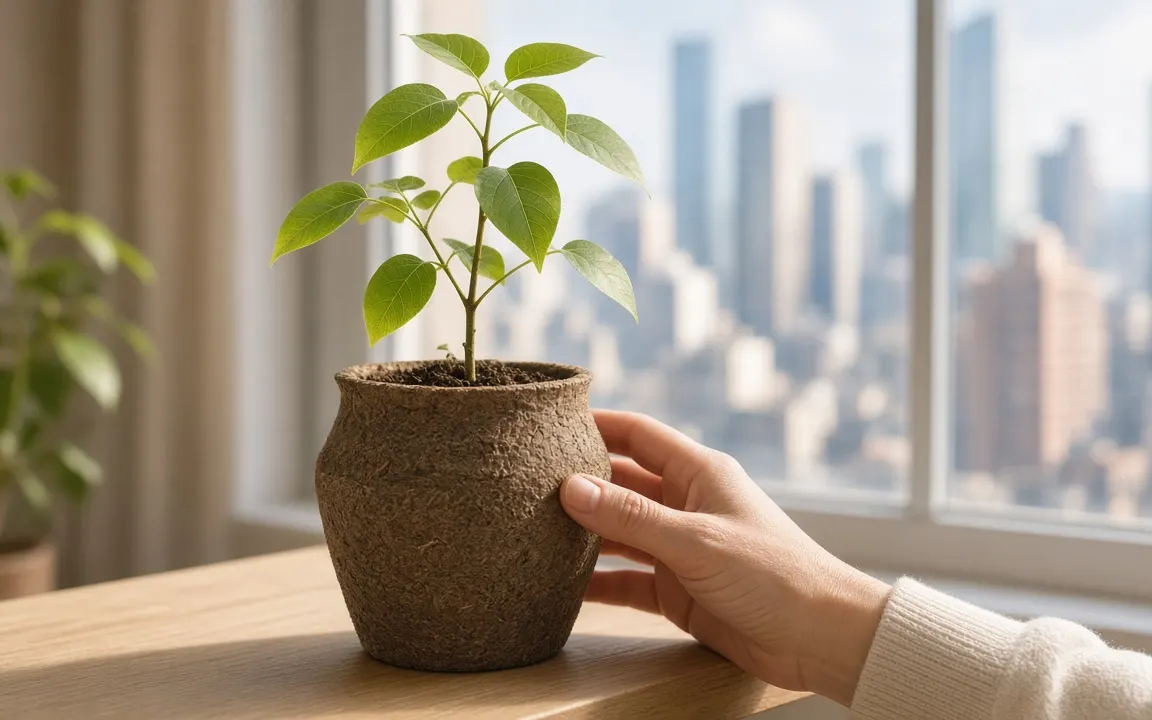
Plenty of people in Milwaukee don't drive, and a living memorial can still work. Many nurseries deliver saplings and bags of compost, bio urns arrive by post, and a small pot on a windowsill needs no transport at all. For a water release, a light water-soluble urn fits in a tote bag on a train or bus. Pick a quieter time of day and a stop near the shore.
Milwaukee's population is around 562,407, the largest of the 50 Wisconsin communities we cover.
Families in Milwaukee often end up using a provider from West Allis (7 miles), Cudahy (7 miles) and Wauwatosa (7 miles). That is normal: crematories serve a radius, not a single town, and the drive is priced into collection.
Our estimate
205,000
Estimated dog- or cat-owning households in Milwaukee
How we calculated this
562,407 ÷ 2.5 = 224,963 households; × 53% (dog) + 39% (cat) = 205,000. A household with several pets counts once.
Our estimate
17,000
Milwaukee families who lose a dog or cat each year (estimate)
How we calculated this
205,000 dog/cat-owning homes ÷ average lifespan (dog: 12.69 yrs + cat: 11.18 yrs) ≈ 17,000 a year. The real figure is unlikely to be lower.
53%[1]
53% of US households own a dog, which is about 71 million households.
12.69 years[2]
US dogs have an average life expectancy at birth of 12.69 years.
39%[3]
39% of US households own a cat, which is about 53 million households.
11.18 years[4]
US cats seen at Banfield hospitals have an average life expectancy at birth of 11.18 years.
The published sources behind those figures are Montoya et al. 2023, Frontiers in Veterinary Science and American Pet Products Association (APPA) 2025 State of the Industry.
Cremation, burial and green choices in Wisconsin
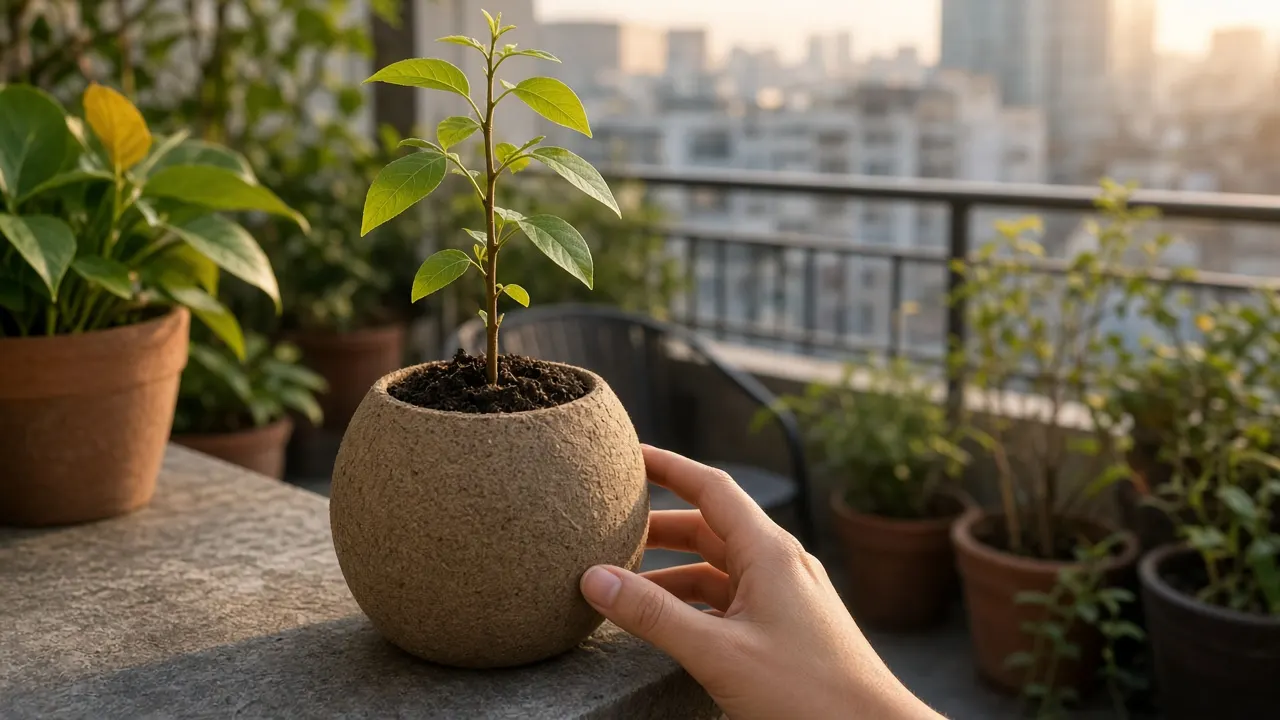
Cremation accounts for roughly 70.7%[5] of human deaths in Wisconsin, and a lot of those ashes end up waiting on a shelf. That's true of pets as well. If you already have an urn at home from an earlier pet, a bio urn can be a way to finish that story: the older ashes and the new can go into one planting, or two trees side by side, whenever you feel ready.
For the Wisconsin figure we rely on NFDA 2024 Cremation & Burial Report state projections (via Occasional Sage) (2024). Read it as a picture of local custom around death and remembrance in Milwaukee rather than as pet data.
Milwaukee seasons and your memorial tree
Snow can hide a young memorial tree and the damage done around it. In Milwaukee, where lows average about 17°F in January, voles and rabbits chew bark under the snow line, and snowplows or shovels can snap a sapling. Put a tall stake beside the planting so you can find it, and fit a loose guard around the trunk before the first snow.
A Milwaukee winter is a useful waiting room. With 4 months of freezing lows, you can mix the ashes with compost in a covered bin or tub in a garage or shed during the cold months and let the mix rest. One gardening guide suggests at least 90–120 days[6] before planting, which fits neatly between a winter loss and spring planting. Test the pH before the tree goes in.
What a greener goodbye costs in Milwaukee
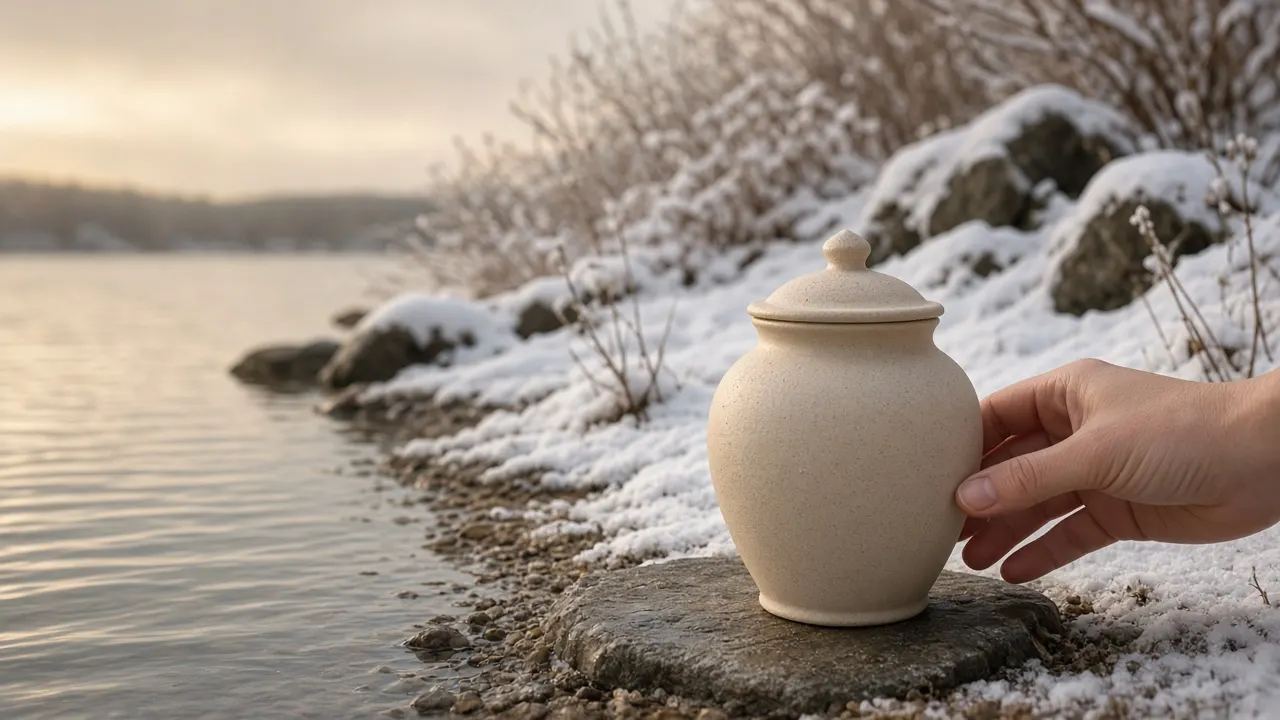
Bio urns vary more in price than you might expect. A national guide puts biodegradable urns at $70–$260[7], depending on material, size and whether a seed or tree system is included. For a lake or sea release, one water urn designed to float briefly and dissolve sells for $149[8]. In Milwaukee, the tree and the soil amendments are usually the cheapest part of the whole memorial.
We keep the detailed Wisconsin price table on one page so it stays current: see Wisconsin prices.

Free tool
Memorial budget planner
Add up cremation, urn, keepsakes and a farewell so the total holds no surprises.
Who to ask before you plant or scatter in Wisconsin
Rules about ashes were mostly written for people, and pet ashes often sit in a grey area. That's a reason to ask, not a reason to assume. On land you own, planting or burying ashes is generally fine. Anywhere else in Wisconsin, from parks to beaches to a friend's field, the land manager or owner decides, so ask first.
To find your county or city office in Wisconsin, start with the official Wisconsin local government directory.
The Wisconsin page sets out who oversees pet cremation and what the state says about burial and scattering. Milwaukee's own bylaws can sit on top of that, so ask before you dig.
From ashes to a growing tree: the steps
- If the ashes have been on a shelf for years, you can still plant them. Cremated remains don't spoil, so there's no deadline.
- Open the container carefully somewhere sheltered from wind, and check whether the ashes are in a sealed bag inside.
- Weigh or measure what you have, and put the figure into our urn size calculator to find a planting or water urn of the right capacity.
- Decide whether to keep any back. After years at home, some families like to plant most of the ashes and keep a spoonful.
- Pick a date that carries meaning, perhaps the day they died or the day they were born, and ask the people who loved them to come.
- Treat the old urn kindly afterwards. A ceramic or wooden urn often finds a second life holding a houseplant or small mementos.
Living memorials beyond the backyard
Milwaukee's German and Polish roots show up in how families remember: carved wood, engraved stone, a photo in a heavy frame, a candle lit on an anniversary. For a pet, that might mean an oak urn on the mantel, a slate marker in the garden bed, a paw print cast or a small pendant. Anything placed outdoors needs to handle hard freeze-thaw cycles, so choose granite or metal over soft stone.
run the numbers with the free planning tools, or see what other families chose in the poll results, Our services overview lays out every option side by side, go deeper with the guides or catch up on recent articles. You can also browse every city in the United States. Nearby, we also cover Eau Claire, Kenosha, Madison and Appleton, and every city in Wisconsin.

Reader polls
What would you choose?
Vote anonymously and see how other readers answered. The results are live counts from people who visit this site, so they show real opinions, not a scientific sample.
Would you consider releasing your pet's ashes in water?
Tap an answer to vote and see how others answered. Anonymous.
If you rent or might move, how would you handle a memorial planting?
Tap an answer to vote and see how others answered. Anonymous.
If you had to decide today, which aftercare would you choose for your pet?
Tap an answer to vote and see how others answered. Anonymous.

Free tools to help you plan
Memorial budget planner
Add up cremation, urn, keepsakes and a farewell so the total holds no surprises.

Memorial tree finder
Pick a tree for a planting urn that suits your climate, space and pet.

Aftercare options compared
Compare private, communal and water cremation with burial on cost, timing and what comes home.
Questions people ask
How many pet owners live in Milwaukee?
By our estimate, about 205,000 households in Milwaukee have at least one dog or cat, and around 17,000 are lost each year. We calculate this from the city's population of about 562,407, the average household size and national ownership and lifespan figures, so treat it as a floor rather than an exact count.
Which nearby towns can I compare with Milwaukee?
The closest communities we cover are West Allis (about 7 miles), Cudahy (about 7 miles) and Wauwatosa (about 7 miles). Providers based in those places often serve Milwaukee too. Ask each one for a written total that includes collection, so the distance is priced in.
Does the Milwaukee climate change what I should do first?
Only the timing. In July, with highs near 82°F, cool the body and book collection the same day. In January, February, March and December, when lows sit below freezing, a home burial may have to wait for a thaw, so cremation with ashes returned keeps your options open.
Is cremation common in Wisconsin?
For people, yes: about 70.7%[5] of Wisconsin deaths end in cremation, according to NFDA 2024 Cremation & Burial Report state projections (via Occasional Sage) (2024). Nobody publishes the same figure for pets, but in our experience pet choices in Milwaukee follow the human pattern closely, so cremation is the default most families here start from.
How long can I keep pet ashes before planting them?
As long as you like. Cremated remains don't break down or spoil in a sealed container, so a planting can happen next month, next year or after a move to a house with a garden. What does break down is a biodegradable urn, so keep the ashes in their original container and only transfer them into the bio urn shortly before planting.
Will the seed in a tree urn grow?
Not always. Seeds from kits can fail to sprout if they weren't stored or chilled correctly, and alkaline soil around them makes it harder. A young tree from a nursery near Milwaukee is far more reliable, and most planting urns work just as well with a sapling in the top chamber.


Sources and our estimates
- [1] 53% of US households own a dog, which is about 71 million households. American Pet Products Association (APPA) 2025 State of the Industry, 2025.
- [2] US dogs have an average life expectancy at birth of 12.69 years. Montoya et al. 2023, Frontiers in Veterinary Science - Banfield Pet Hospital life expectancy tables (13.3 million dogs, 2.4 million cats, 2013-2019), 2023.
- [3] 39% of US households own a cat, which is about 53 million households. American Pet Products Association (APPA) 2025 State of the Industry, 2025.
- [4] US cats seen at Banfield hospitals have an average life expectancy at birth of 11.18 years. Montoya et al. 2023, Frontiers in Veterinary Science - Banfield Pet Hospital life expectancy tables (13.3 million dogs, 2.4 million cats, 2013-2019), 2023.
- [5] The NFDA projected Wisconsin's cremation rate at 70.7% for 2024. NFDA 2024 Cremation & Burial Report state projections (via Occasional Sage), 2024.
- [6] Gardening Know How advises letting an ash/soil-amendment mixture sit for at least 90 to 120 days before planting. Gardening Know How — Planting With Cremains: Is There a Safe Way to Bury Ashes, 2024.
- [7] Funeral.com cites U.S. Funerals Online that biodegradable urns typically cost about $70–$260. Funeral.com – How Much Do Cremation Urns Cost in 2025, 2025.
- [8] The Living Urn's Eco Water Urn for water burial costs $149 and holds up to 225 cubic inches; it floats for several minutes before dissolving. The Living Urn – Eco Water Urn, 2026.
- [9] If just 10% of U.S. pet cremations moved to aquamation, about 4,200 t CO2e a year would be avoided. Our estimate: 1.5M x 10% x 31.3 kg x 90% reduction. How we calculate.
Ask about aquamation near Milwaukee
Tell us what you need and where you are. We'll reply by email with clear options and prices so you can decide in your own time.