How to plan a greener farewell for your pet, from the last day to the memorial
The choice that shapes a pet farewell's footprint most is the cremation itself: water cremation is claimed to use about 90%[1] less energy than flame. After that, small choices on the day, like natural-fiber blankets and plastic-free flowers, keep the goodbye simple and low-waste.
By the Bio Urns & Eco Memorials editorial team · Updated September 24, 2026 · 6 min read · Sources
- Where your choices actually make a difference
- Plastic-free ideas for the goodbye itself
- A memorial that returns to the soil

The short answer
What makes a pet farewell greener?
Three choices do most of the work: how your pet's body is cared for, what goes with them, and what kind of memorial you leave. Choosing water cremation or, where it's allowed, a simple home burial has far more effect than any urn or flower. The rest is about avoiding things that don't break down, such as plastic, wire, balloons and glitter.
You're not alone in caring about this. 40%[2] of consumers raise environmental concerns about pet aftercare, according to one market report, and 61.4%[3] of US consumers say they'd like to explore green funeral options. What's often missing is clear information about which choices actually matter, so here they are in the order you'll meet them.
What matters most to you in a greener goodbye?
Tap an answer to vote and see how others answered. Anonymous.
Before the goodbye
Can the last day itself be planned with less waste?
Most pet deaths are planned to some degree. In the Dog Aging Project's study of US dog deaths, 83.0%[4] of deaths were by euthanasia, which means many families have time to think about where and how. A vet visit at home removes a round trip and lets your pet stay on their own bed. The aftercare provider can then collect from the house, so there's one journey instead of two.
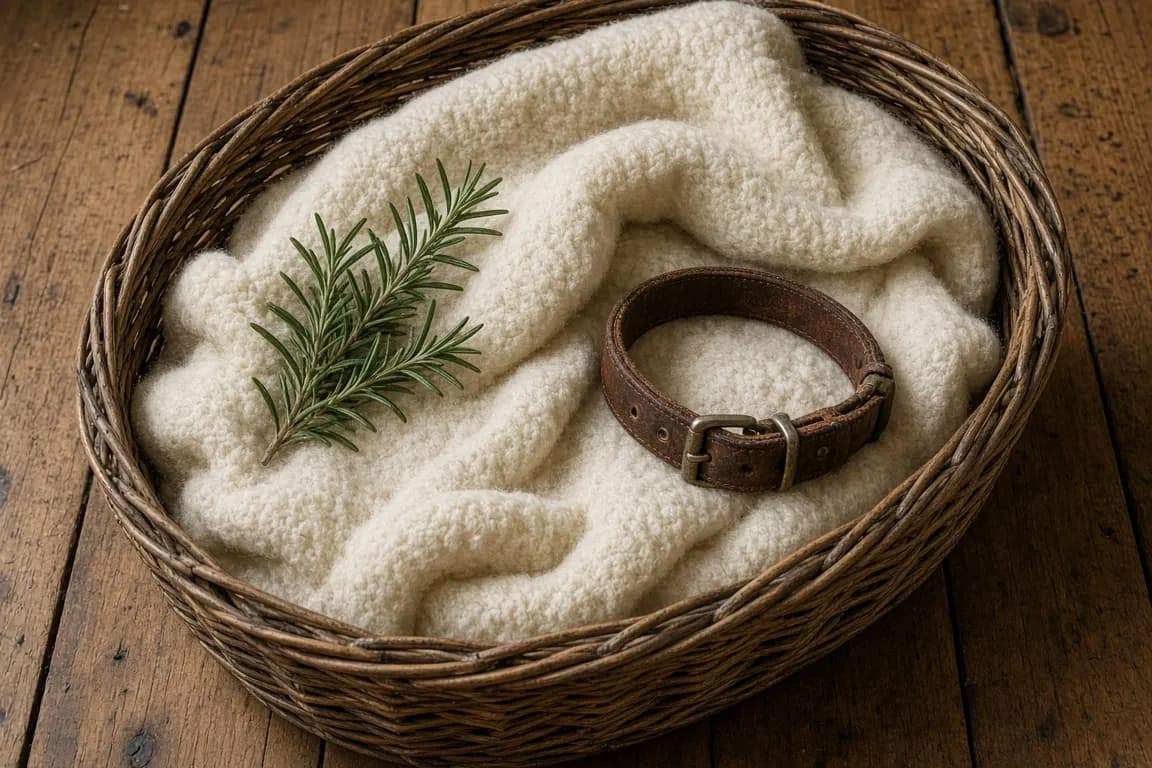
Think ahead about what your pet will be wrapped in. A cotton or wool blanket, a linen pillowcase or a wicker basket can go with them into water or flame cremation, or into the ground. Fleece and synthetic bedding are made from plastic, so keep those at home as keepsakes. If you'd like to send a letter, plain paper is fine; skip the laminated photo.
- Natural fibers only for anything that travels with your pet: cotton, wool, linen, jute.
- Remove the collar and any tags before collection, and keep them.
- Take a clay or ink paw print at home rather than ordering a resin cast later.
- Tell the provider you'd like no plastic wrapping, where their process allows it.
The biggest decision
Is water cremation the greener choice for a pet?
On the evidence available, usually yes. Water cremation, also called aquamation, dissolves soft tissue in warm water with an alkaline solution, leaving bone that's dried and ground into ashes like any other cremation. It uses around the same water as 1–3 pet baths[5], and carbon comparisons for human cremation commonly put it at about 1/10[6] of the footprint of flame. By our own rough estimate, an average flame-cremated shelter animal accounts for ~31 kg CO2e per animal[7].
Pet water cremation is more widespread than the human version, and prices overlap with flame. One Arizona provider charges $75–$349[8] for individual pet aquamation by weight, including an urn. If you'd like the full evidence, including where the numbers are weaker than the marketing suggests, read is aquamation better for the environment?.
Home burial avoids cremation altogether and is the lightest option where it's legal and practical, but it ties the grave to a property and has its own rules on depth and water. Our aftercare options comparison weighs flame, water cremation and burial against what matters most to you.

Free tool
Aftercare options compared
Compare private, communal and water cremation with burial on cost, timing and what comes home.
The farewell
How do you hold a goodbye without plastic or waste?
A small gathering, whether it's a scattering, a planting or simply sharing stories in the garden, leaves very little behind if you plan for it. The common culprits are well-meant: balloon releases, sky lanterns, cellophane-wrapped bouquets and floral foam, which is a plastic that crumbles into tiny pieces. None of them is needed for a moving goodbye. The EPA's burial-at-sea guidance makes the same point for human sea burials: only flowers and wreaths that readily decompose may go in the water.
| Instead of | Try | Why |
|---|---|---|
| Balloon or lantern release | Blowing bubbles, ringing a bell, releasing petals into running water | Balloons and lanterns land as litter, often in fields and water |
| Cut flowers in cellophane and foam | Garden flowers tied with twine, or a potted plant | Twine and pots can be reused or composted |
| Printed order of service | One handwritten card read aloud | Less paper, more personal |
| Plastic-wrapped treats for the dog guests | A bowl of your pet's favorite treats, loose | Nothing to throw away |
| Glitter or confetti | Dried petals or seeds of a native wildflower | Birds and soil can handle petals; glitter stays for years |
Invite people who can share a lift, keep it short, and ask each guest to bring one memory rather than one gift. The farewell planner helps you shape a simple running order, and our article on planting ceremonies with children has gentle roles for younger family members.
What you leave behind
Which memorials return to the earth rather than sitting in it?
A biodegradable urn is the obvious choice, and at $15–$80[9] for most pet sizes in one retailer's guide, it often costs less than a decorative display urn. Soil urns hold ashes beneath a plant or on their own; water urns float for a few minutes and then dissolve. Our article comparing soil and water bio urns explains which suits your place and plans.
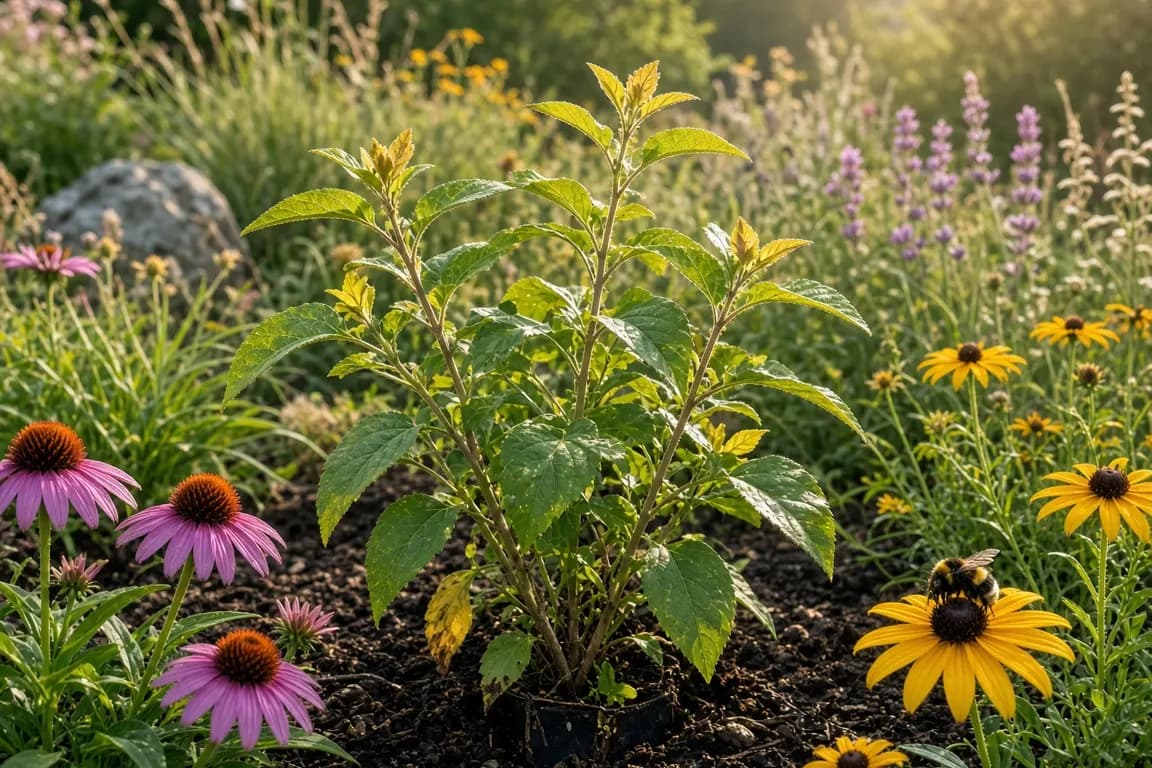
If you plant with the ashes, choose a native species that already thrives in your area. It needs less water and less fuss than an exotic seed from a kit, and it feeds local insects and birds. Because ashes are alkaline, blend them through compost and let the mix rest before planting; the soil-mix guide explains how.
For a marker, an unpolished fieldstone from your own land or a local quarry travels less and weathers naturally. If you want engraving, the memorial stone planner helps you keep the wording short enough for a small stone.
Checking the claims
How do you know a green claim is real?
Words like "eco", "natural" and "earth-friendly" have no fixed meaning. A product or service that means it will usually tell you exactly what's in it and what happens to it. Three questions sort most claims quickly:
- What is it made of? An urn should name every material, including glues, linings and decorations.
- Where does it break down, and how long does it take? Soil, sea and home compost are very different conditions.
- What's the evidence? For a cremation provider, ask what energy their equipment uses and how they handle the water or emissions.
Our guide to eco-friendly aftercare without greenwash goes deeper into testing claims, and biodegradable urns explained covers what each urn material really does in the ground.
Costs
Does a green farewell cost more?
Often it costs about the same or less. Water cremation prices overlap with flame, a bio urn is usually cheaper than a carved wooden or marble one, and a sapling from a nursery is modest compared with most memorial products. Leaving out balloons, printed programs and flower arrangements saves money as well as waste.
Where costs creep in is convenience: express return of ashes, a branded tree urn kit or delivery of a mature tree. The memorial budget planner adds up each piece so you can see where the money goes. If you'd like us to find water cremation and bio urn options near you, tell us a little about your pet. Our location pages note where water cremation is easier to find, and the poll results show which green choices other readers rank first.
Had you heard of water cremation (aquamation) before today?
Tap an answer to vote and see how others answered. Anonymous.

Reader polls
What would you choose?
Vote anonymously and see how other readers answered. The results are live counts from people who visit this site, so they show real opinions, not a scientific sample.
What matters most to you in a greener goodbye?
Tap an answer to vote and see how others answered. Anonymous.
Had you heard of water cremation (aquamation) before today?
Tap an answer to vote and see how others answered. Anonymous.
Where would you prefer your pet's final moments to happen?
Tap an answer to vote and see how others answered. Anonymous.

Free tools to help you plan
Aftercare options compared
Compare private, communal and water cremation with burial on cost, timing and what comes home.

Farewell & memorial service planner
Build a simple goodbye: who, where, readings, rituals and a checklist.

Memorial budget planner
Add up cremation, urn, keepsakes and a farewell so the total holds no surprises.
Questions people ask
Is home burial greener than any kind of cremation?
Usually, if it's legal where you live and done properly. A whole-body burial in a natural-fiber wrap uses no fuel at all. The trade-offs are practical: local rules on depth and distance from water, the risk to wildlife if a pet was euthanized with drugs, and leaving the grave behind if you move. Ask your vet whether burial is safe for your pet.
Can I send flowers with my pet for cremation?
Many providers accept a few fresh flowers or herbs laid with your pet, as long as there's no wire, foam or plastic wrap. Some ask you to keep items small. Check first, and consider keeping a single flower to press or plant instead if the provider prefers nothing extra in the chamber.
Are sky lanterns or balloon releases ever eco-friendly?
Not really. Even products labelled biodegradable can take months to break down and can be swallowed by animals or tangle livestock and wildlife in the meantime. Lanterns also carry a fire risk. Bubbles, a bell, a moment of silence or releasing petals on water create the same shared moment without the litter.
What should I do with my pet's bedding and toys afterwards?
Keep what you treasure and pass on the rest. Clean blankets, beds, leads and unopened food are often welcomed by local animal shelters and rescues. Worn toys can go in household waste, and natural-fiber items can be composted. Some people cut a square of their pet's blanket to keep in a memory box.
Does it matter how the ashes are returned?
A little. Many providers return ashes in a plastic bag inside a temporary container. If you're planting or scattering, ask whether they can use a paper bag or a biodegradable box instead, or collect in person to cut out shipping. It's a small change, but it means nothing plastic ends up in the ground with your pet.
Is a communal cremation more eco-friendly?
Communal cremation shares one cycle between several animals, which can use less energy per pet than a private cremation, but no ashes come back. If you want a living memorial with your pet's own ashes, choose a private cremation, and water cremation if it's offered near you.
Keep reading

Eco-friendly aftercare, in depth
How the main options compare, and how to test a green claim.
Compare aftercare options
Weigh flame, water cremation and burial by what matters to you.

Bio urns we help you find
Tree, garden and water urns, and who each suits.

Green aftercare near you
Local rules, prices and water cremation availability.
Sources and our estimates
- [1] Pet aquamation is described as available across all 50 US states, and is claimed to use about 90% less energy than flame cremation. Be a Tree Cremation pet aquamation guide, 2025.
- [2] Astute Analytica reports that 40% of consumers raise environmental concerns about pet aftercare choices. Astute Analytica via GlobeNewswire — Global Pet Preservation Services Market to Hit USD 112.7 Million by 2032 (Apr 2, 2024), 2024.
- [3] 61.4% of US consumers say they are interested in exploring green funeral options. NFDA 2025 Cremation & Burial Report (press release), 2025.
- [4] In the Dog Aging Project, 83.0% of 646 US dog deaths (Dec 2019-Mar 2021) were by euthanasia. Dog Aging Project End of Life Survey - Journal of the American Veterinary Medical Association (2026), via PubMed Central, 2026.
- [5] Aquamation uses about the same water per pet as 1–3 pet baths. Veterinary Sustainability Alliance — Aquamation, 2024.
- [6] Alkaline hydrolysis has about a tenth of the carbon footprint of conventional cremation, according to People's Memorial Association's Nora Menkin. National Geographic — The environmental toll of cremating the dead (2019), 2019.
- [7] Each shelter-animal flame cremation emits about 31 kg CO2e on average. Our estimate: 19,000 t CO2e / 607,000 animals. How we calculate.
- [8] A Greener Place in Mesa, Arizona, charges $75–$349 for individual pet aquamation by weight, including an urn, nameplate and ink paw print. A Greener Place Pet Aquamation – Pricing, 2026.
- [9] Memorials.com's pet urn cost guide puts biodegradable pet urns at $15–$80. Memorials.com – Pet Urn Cost Guide, 2025.
Plan a low-impact goodbye for your pet
Tell us what you need and where you are. We'll reply by email with clear options and prices so you can decide in your own time.