When should you plant a living memorial? A realistic timeline, week by week
Most families plant a memorial tree three to six months after their pet dies, not the week the ashes come home. The soil mix needs 90–120 days[1] to settle, and a sapling does far better when it goes in during spring or autumn.
By the Bio Urns & Eco Memorials editorial team · Updated September 24, 2026 · 7 min read · Sources
- A calm plan from the first day to the first year
- Why waiting a season keeps the tree alive
- Ideas for marking the date while you wait

The short answer
How long after a pet dies should you plant a memorial?
Give yourself at least a season. The ashes usually come back within a couple of weeks, but pet ashes are strongly alkaline, and a mix of ashes and compost is kinder to roots after it has rested for a few months. Planting in the next spring or autumn after that gives the tree its strongest start.
That can feel like a long wait when you want to do something now. The good news is that there's plenty to do in the meantime, and none of it is wasted: choosing the spot, choosing the plant, preparing the soil and deciding who you'd like there on the day. The timeline below breaks it into stages, so you only need to think about the next one.
Days 1 to 3
What needs deciding in the first few days?
Only two things are truly time-sensitive. The first is choosing a cremation where the ashes come back to you, because a communal cremation returns nothing to plant. If the environment matters to you, ask whether water cremation is available nearby; it still returns ashes suitable for a planting urn. The second is anything that has to happen before your pet leaves home, such as a paw print, a nose print or a clipping of fur.
Everything else can wait. You don't need to buy an urn, pick a tree or know where it will go. If you'd like help with the cremation side, send us a few details and we'll reply with providers near you that return ashes, including water cremation where it's offered.
When did you (or will you) decide on aftercare?
Tap an answer to vote and see how others answered. Anonymous.
Weeks 1 to 3
What happens while you wait for the ashes to come home?
For a private cremation in the US, 5-10 days[2] is a commonly quoted wait, and many families have the ashes within two weeks. They usually arrive in a simple sealed bag inside a temporary box or a basic urn. That's fine to keep for months. There's no need to transfer them into anything special until you're ready to plant. Looking across the markets we cover, our estimate of a typical window is 3 to 14 days[3], with paid express services faster and busy periods slower.
It helps to know roughly how much there will be. Cremated remains weigh about 3-5% of body weight[4], so a Labrador returns a couple of pounds and a cat a few ounces. That figure decides the size of planting urn you'll need and how much compost the mix calls for. The urn size calculator works it out from your pet's weight.
Use these weeks to walk around the garden, or wherever you're thinking of planting, at different times of day. Notice where the sun falls, where water pools after rain and where you'd naturally stop to sit. A memorial is visited far more often when it's somewhere you already pass.
Month 1
When should you choose the plant and the planting urn?
About a month in is a good time to make the two main choices, because the rawest days have usually passed and you still have plenty of time before planting season. Start with the plant, not the urn. A tree that suits your climate and the space will outlive any kit, and the memorial tree finder narrows the options by region, size and whether you'd like blossom, fruit or evergreen leaves.

Free tool
Memorial tree finder
Pick a tree for a planting urn that suits your climate, space and pet.
Then choose a container that fits your plan. Complete planting systems exist, such as a pet tree urn kit sold at $119[5] without the tree, or a biodegradable urn with a seed capsule at $99[6]. Plenty of families skip the kit and buy a plain biodegradable urn plus a sapling from a local nursery. Our bio urn buying checklist covers the questions to ask before you order.
If you'd like to keep a little back, now is the moment to decide. One retailer lists keepsake urns at around $15–$60[7]; they hold a spoonful or two, so part of your pet can stay with you if you ever move away from the tree.
Months 1 to 4
Why does the soil mix need months to rest?
Pet ashes test at a pH of about 11.7[8], several steps more alkaline than most garden soil, and they carry a lot of sodium. Mixed straight into a planting hole, they can scorch fine roots and leave a young tree yellow and struggling by midsummer. Blending the ashes through a generous amount of compost and acidic material, then letting that blend sit, gives the chemistry time to calm down.
Gardening advice commonly suggests a rest of 90–120 days[1]. Keep the mix in a lidded tub or a covered corner of the garden, turn it once or twice, and test the pH before planting day. There's no single ratio that suits every pet and every soil, so treat any amounts you read as a starting point. Our soil-mix guide gives general starting amounts by pet size and explains what to add if the reading is still high.
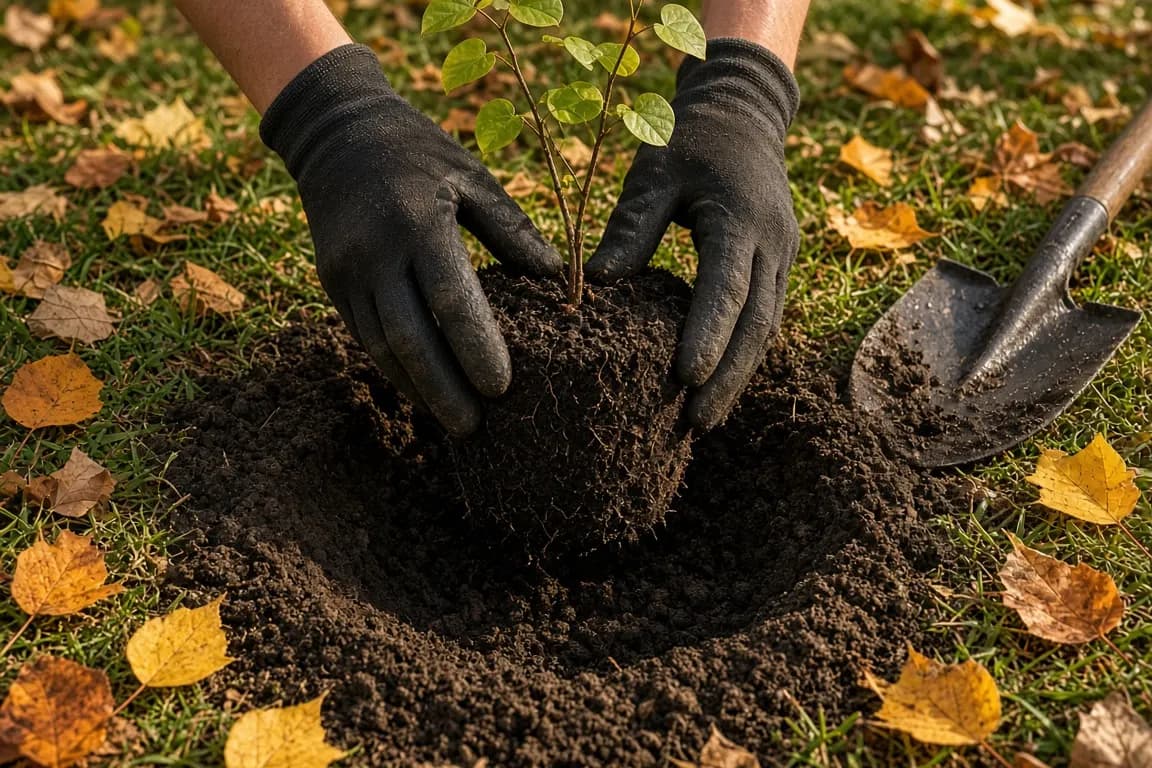
The waiting period also suits grief in a quiet way. By the time the mix is ready, many people find they want the planting to feel like a small celebration rather than another goodbye.
Months 3 to 6
Which season is kindest for planting a memorial tree?
Early autumn and early spring suit most trees and shrubs. In autumn, the soil is still warm while the air cools, so roots grow without the tree losing much water through its leaves. In spring, the whole growing season lies ahead. Midsummer planting is possible but asks for a lot of watering, and frozen or waterlogged ground in winter is worth avoiding altogether. The Arbor Day Foundation's planting guide has a clear diagram of how deep and wide the hole should be.
| When | What to do | What can wait |
|---|---|---|
| Days 1 to 3 | Choose a cremation that returns ashes; take paw or nose prints | The urn, the tree, the site |
| Weeks 1 to 3 | Receive the ashes; notice light and drainage in possible spots | Any purchase |
| Month 1 | Choose the plant, then the planting urn; set aside a keepsake portion | The exact planting date |
| Months 1 to 4 | Blend ashes with compost, rest the mix, test the pH | Inviting people |
| Months 3 to 6 | Plant in spring or autumn; hold a small ceremony if you'd like one | A permanent marker |
| Year 1 and 2 | Water deeply through dry spells; mulch; check growth | Pruning, apart from damage |
| Year 2 onward | Add a stone or plaque; mark anniversaries at the tree | Nothing, it's yours now |
Pick a date, then keep a back-up date a week or two later in case of heavy rain or frost. If you plan to gather people, the farewell planner helps you decide who's coming, what will be said and what everyone needs to bring.
Who would you want with you at a planting or release?
Tap an answer to vote and see how others answered. Anonymous.
Year 1 and 2
How do you care for the memorial in its first two summers?
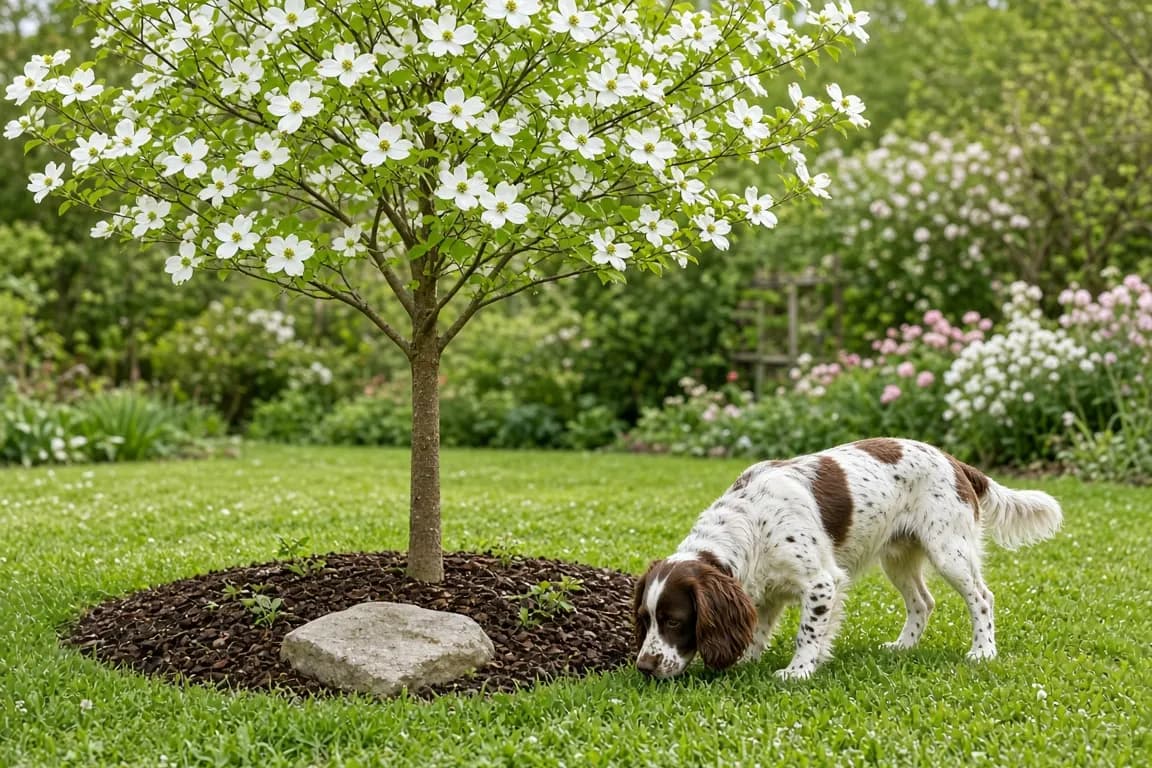
The first two summers decide whether a memorial tree becomes a fixture or a sad stick. A new tree hasn't yet grown roots beyond its planting hole, so it relies on you in dry weather. A slow, deep soak once or twice a week in hot spells does more good than a daily sprinkle, which keeps roots shallow.
- Mulch a wide ring of bark or leaf mould around the base, keeping it a hand's width from the trunk.
- Check the leaves in early summer. Pale yellow leaves with green veins can point to an alkaline patch; our article on planting memorials with ash covers what to do.
- Skip strong fertilizer in the first year. Compost in the mix is enough.
- Protect the trunk from mowers, strimmers and curious dogs with a simple guard.
Year 1 onward
How can you mark anniversaries at a living memorial?
Once the tree is settled, it becomes a natural place to return to. Some families tie a ribbon on the anniversary, some plant bulbs around the base each autumn, and some simply sit there with a coffee. A stone or plaque is often added in the second year, once you're sure the tree is thriving and you know where people naturally stand. The memorial stone planner helps you size the wording to the stone.
Grief doesn't follow a planting calendar, and it can surprise you on these dates. A UK study published in PLOS ONE found 7.5%[9] of people grieving a pet met criteria for prolonged grief, so if a year on it still feels as heavy as the first week, it's worth talking to someone. A growing tree can be a gentle marker of time passing, but it isn't a test of how well you're coping. Cornell's veterinary college keeps a list of pet loss support lines and resources if you'd like someone to talk to.
If you're planning more than a tree, our guide to designing a pet memorial garden adds layers such as bulbs, perennials and a bench, and the living memorial options page sets out each kind of urn we can help you source. Our location pages add local climate notes, and the poll results show when other readers chose to plant.

Reader polls
What would you choose?
Vote anonymously and see how other readers answered. The results are live counts from people who visit this site, so they show real opinions, not a scientific sample.
Who would you want with you at a planting or release?
Tap an answer to vote and see how others answered. Anonymous.
When did you (or will you) decide on aftercare?
Tap an answer to vote and see how others answered. Anonymous.
What helped you most in the first weeks?
Tap an answer to vote and see how others answered. Anonymous.

Free tools to help you plan
Memorial tree finder
Pick a tree for a planting urn that suits your climate, space and pet.

Farewell & memorial service planner
Build a simple goodbye: who, where, readings, rituals and a checklist.
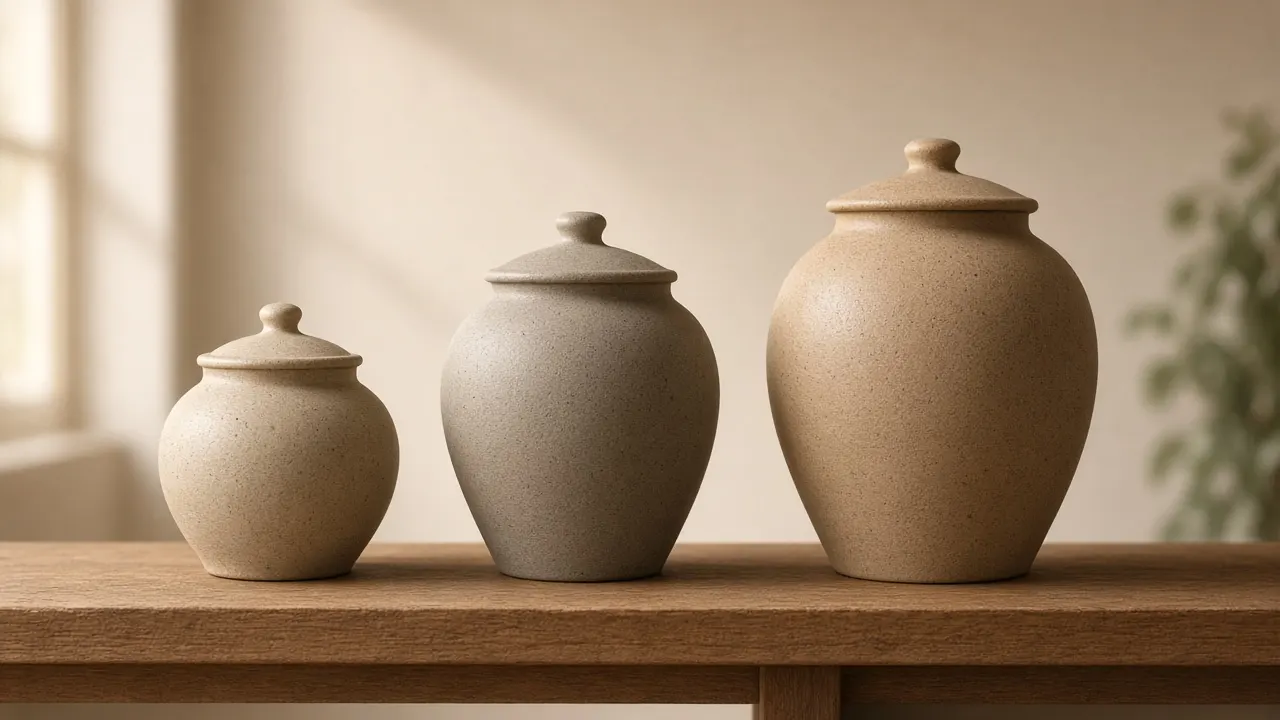
Urn size calculator
Find the urn volume you need from your pet's weight, plus keepsake and sharing options.
Questions people ask
Can I keep my pet's ashes at home for months before planting?
Yes. Cremated remains don't decay or change, so they're perfectly safe in their sealed bag and temporary container for months or even years. Keep them somewhere dry and out of reach of children and other pets. Plenty of people wait until the following spring, or until they've moved into a home they plan to stay in.
Is it too late to plant a memorial years after my pet died?
Not at all. Many people plant a memorial tree years later, often after moving house or when a family decision finally feels right. The steps are the same: choose the plant, blend the ashes through compost, let the mix rest and test the pH. If the ashes have been in a plastic bag, simply open it on planting preparation day.
Can I plant a memorial tree in winter?
It's usually better to wait. Frozen ground is hard to dig, and waterlogged soil can rot new roots. In mild climates with workable soil, bare-root trees are often planted in late winter while dormant. Elsewhere, use winter to prepare the ash mix so it has rested by early spring.
What if the tree dies in the first year?
It happens, and it isn't a sign that you did something wrong or that the memorial has failed. Dry summers, pests and alkaline patches all play a part. You can replant in the same spot after adding fresh compost and retesting the pH, or plant something more tolerant nearby. Some families take this as a chance to choose a hardier native species.
Should we hold the ceremony on the planting day?
Only if it suits you. A planting involves digging, mud and a bit of practical work, which some families love and others find distracting. You can hold a small gathering soon after the loss and plant quietly later, or do both on one day with the hole dug in advance so the ceremony itself takes a few calm minutes.
How long before a memorial tree looks established?
Most young trees spend their first year or two growing roots rather than height, so they can look unchanged for a while. By the third growing season, a healthy tree usually puts on visible new growth each year. Flowering trees may take a few years before they bloom reliably.


Sources and our estimates
- [1] Gardening Know How advises letting an ash/soil-amendment mixture sit for at least 90 to 120 days before planting. Gardening Know How — Planting With Cremains: Is There a Safe Way to Bury Ashes, 2024.
- [2] A US aftercare guide says many families receive private cremation ashes within about one to two weeks, with 5-10 days commonly quoted. Funeral.com - Pet Cremation Timelines: How Long Until Ashes Are Returned, 2026.
- [3] Published ashes-return times across the network's markets range from same-day (paid express) to about 4 weeks; a conservative typical window is 3-14 days. Our estimate: min/max across sources: Lambeth 3 days; US 5-10 days; RSPCA QLD within 14 days; AniCura Sweden 2-4 weeks. How we calculate.
- [4] Embrace notes cremated remains typically weigh about 3-5% of the pet's original body weight. Embrace Pet Insurance - Bury or Cremate Your Dog? Costs, Pros & Cons, 2025.
- [5] The Living Urn's pet bio-urn planting system (without a tree) costs $119. The Living Urn – Pet tree urn, 2026.
- [6] The Bios Urn for pets, a biodegradable urn with a seed capsule, costs $99. Bios Urn – Pets, 2026.
- [7] Keepsake or mini pet urns cost about $15–$60, versus $25–$100 for small and $40–$200 for medium urns (Memorials.com). Memorials.com – Pet Urn Cost Guide, 2025.
- [8] Cremated remains have a very high pH of approximately 11.7, which is toxic to plants without amendment. Larkspur Conservation — Giving Cremated Remains a New Life Through Science, 2024.
- [9] 7.5% of UK adults whose bereavement was the death of a pet met criteria for prolonged grief disorder (PGD). Hyland et al., 'No pets allowed: Evidence that prolonged grief disorder can occur following the death of a pet', PLOS ONE (2026), 2026.
Plan a living memorial on your own timeline
Tell us what you need and where you are. We'll reply by email with clear options and prices so you can decide in your own time.