Trees that suit a pet memorial, from small yards to open land
For most yards, a small flowering tree such as an eastern redbud, serviceberry or crabapple suits a pet memorial: it stays under about 30 feet, blooms in spring and copes with the alkaline soil that ashes create. Oaks suit big spaces and long horizons, and dwarf trees or Japanese maples suit pots and patios.
By the Bio Urns & Eco Memorials editorial team · Updated September 24, 2026 · 6 min read · Sources
- Mature size and root spread for each tree
- Which species cope with ash-raised pH
- Planting seasons and meaning behind each choice
The short answer
Which trees suit a pet memorial?
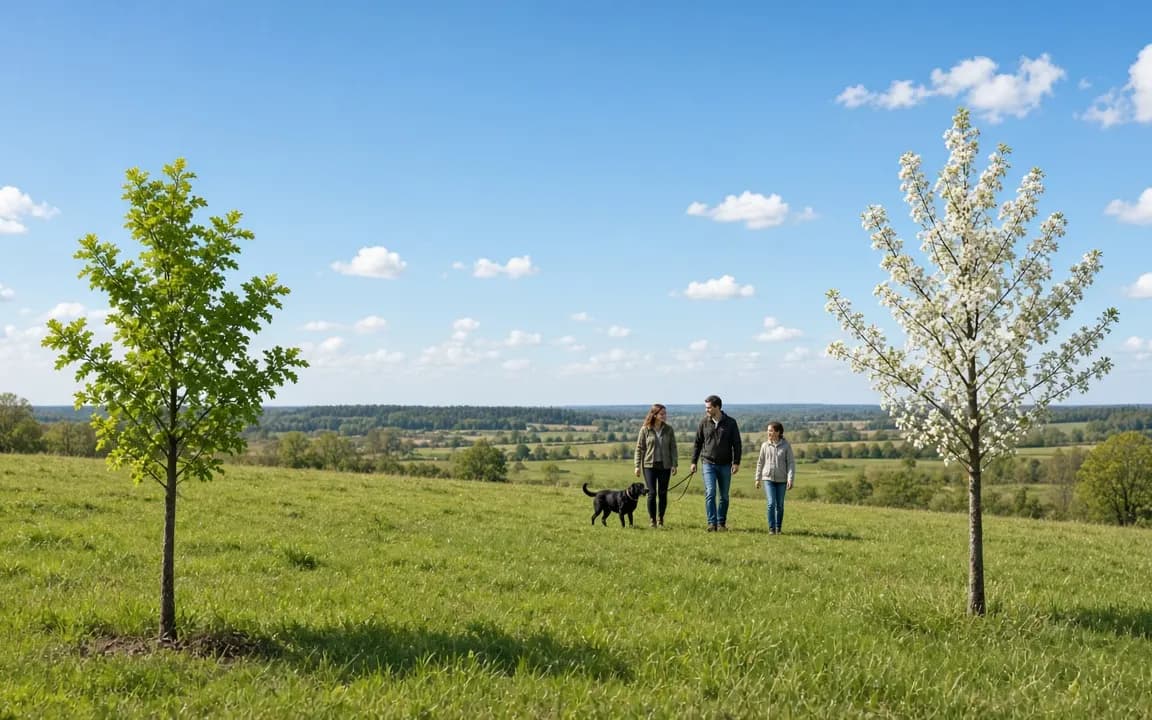
A pet memorial tree should fit the space when fully grown, handle your winters and summers, and tolerate slightly alkaline soil, since cremated remains raise pH. In an average yard, eastern redbud, serviceberry and flowering crabapple tick all three boxes. Choose a Japanese maple or dwarf fruit tree for a patio, and a bur oak if you have room and want something that outlives everyone. Check your zone on the USDA plant hardiness zone map before you shop.
Choice is wide: one bio urn maker alone offers 30+ species[1] for its planting system. The shortlist below narrows that down by the questions that decide whether a memorial tree thrives, and the memorial tree finder can match species to your climate, space and preferences.
What kind of tree or plant would you choose?
Tap an answer to vote and see how others answered. Anonymous.
Side by side
How do popular memorial trees compare?
| Tree | Mature height | USDA zones | Alkaline tolerance | Main season |
|---|---|---|---|---|
| Eastern redbud | 20 to 30 ft | 4 to 9 | Good | Early spring pink blooms; heart-shaped leaves |
| Serviceberry | 15 to 25 ft | 4 to 9 | Moderate | White spring flowers, June berries, orange fall color |
| Flowering crabapple | 15 to 25 ft | 4 to 8 | Good | Spring blossom, small fruit for birds |
| Flowering dogwood | 15 to 30 ft | 5 to 9 | Low; prefers acidic soil | Spring bracts, red fall leaves |
| Japanese maple | 6 to 25 ft | 5 to 8 | Low to moderate | Leaf color spring through fall |
| Bur oak | 60 to 80 ft | 3 to 8 | Very good | Broad shade, acorns, lives for centuries |
| Dwarf apple | 8 to 10 ft | 4 to 8 | Moderate | Blossom and fruit; usually needs a pollination partner |
Height matters more than it seems at the nursery. A redbud sold in a three-gallon pot is waist-high, but in fifteen years it can shade half a small yard. Read the mature size on the tag and picture it against your roofline.
Small flowering trees
What makes redbud, serviceberry and crabapple so popular?
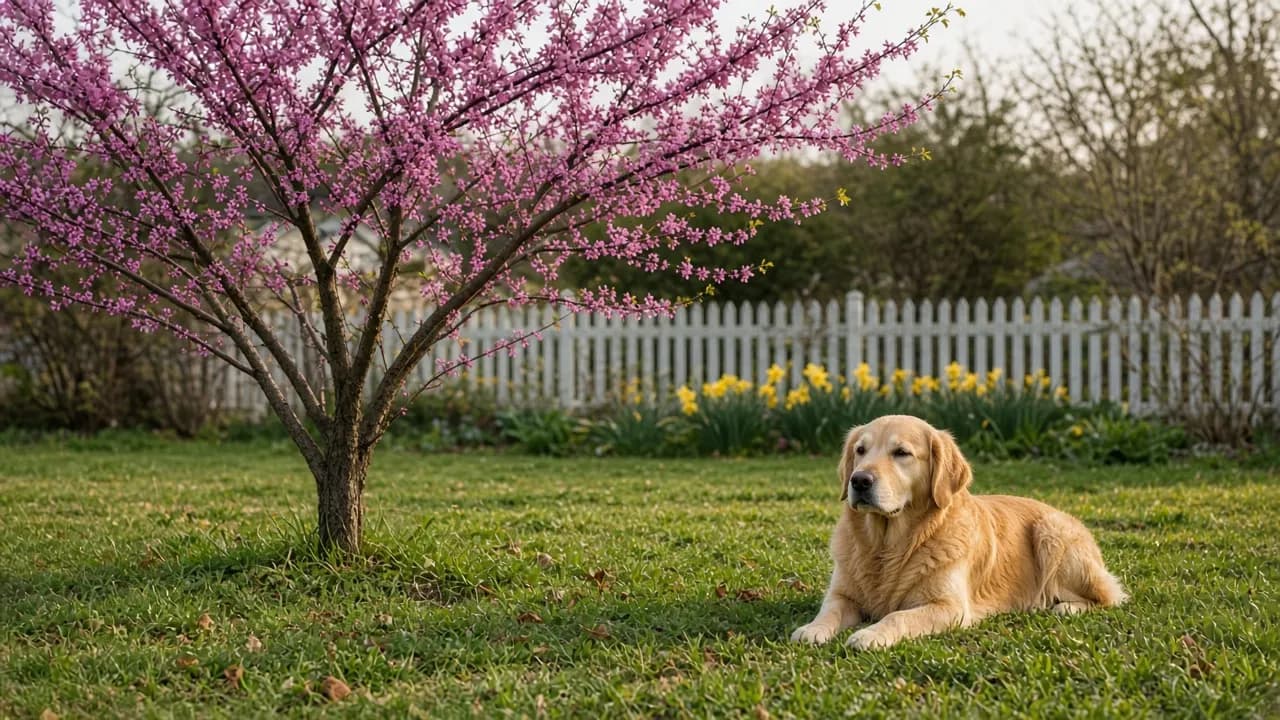
Eastern redbud flowers on bare branches in early spring, before most trees wake up, and its leaves are shaped like hearts, which many families find quietly fitting. It tolerates clay and alkaline soil well. Redbuds are not especially long-lived, often a few decades, so plant it knowing it's a tree for this chapter of your life.
Serviceberry is a North American native with something in every season: white blossom in spring, sweet berries in early summer that birds strip within days, and flaming fall color. Its old folk name, shadbush, comes from flowering when shad ran up eastern rivers. It grows as a small tree or multi-stemmed shrub.
Flowering crabapple is tough, cold-hardy and generous with blossom. Choose a disease-resistant variety, since older types suffer from scab and fire blight, and pick one with small, persistent fruit so you're not raking up mush in fall. Birds feed on the fruit through winter.
Soil preferences
Can you plant a dogwood or Japanese maple with ashes?
You can, but these two prefer slightly acidic soil, so they need more care. Cremated remains measure a pH of about 11.7[2], and dogwoods and Japanese maples show yellowing leaves quickly when pH climbs. A few adjustments make it work.
- Keep the ashes out of the root ball. Blend them thoroughly with compost and spread them in a wide ring, or place them under a tolerant companion nearby.
- Rest the blend first. Gardening guidance suggests letting an ash and amendment mix sit for 90–120 days[3] before planting.
- Mulch with pine needles or bark. Both drift the surface slightly acidic over time.
- Give afternoon shade. Both trees scorch in hot, dry afternoons, especially in the South and West.
Our soil mix guide gives amendments and amounts by pet size, and if a tree already looks unhappy, planting memorials with ashes covers the warning signs and rescue steps. Where dogwood anthracnose is a problem, the Kousa dogwood is a sturdier cousin.
Big trees and natives
Should you plant an oak or a native tree for your region?
If you own land and want a memorial for generations, an oak is hard to beat. Bur oak handles cold, drought and alkaline soil, and its huge acorns feed deer, jays and squirrels. Oaks also support more caterpillar species, and therefore more nesting birds, than almost any other North American tree. The catch is size: allow 60 feet or more of open space.
Native trees are adapted to local rainfall and pests, which makes them easier to keep alive. Some regional ideas to take to a local nursery: The USDA's invasive species center points to your state's list of trees to avoid, such as Callery pear.
- Southwest: desert willow, with orchid-like summer flowers and strong tolerance for heat and alkaline soil.
- Pacific Northwest: vine maple, a small, graceful tree for part shade with bright fall color.
- Southeast: fringe tree, whose white, feathery spring flowers smell faintly sweet.
- Great Plains and Midwest: hackberry or bur oak, both very tolerant of tough, alkaline ground.
- Northeast: serviceberry or redbud, both native across much of the region.
Interest in greener choices is widespread, with 61.4%[4] of US consumers saying they're interested in exploring green funeral options. A native tree is one of the simplest ways to make a memorial genuinely good for local wildlife. Our eco-friendly aftercare guide looks at the wider choices.
Space and roots
How much space do a memorial tree's roots need?
Tree roots spread much wider than people expect, often two to three times the width of the canopy, and most sit in the top foot or two of soil. That affects where you plant and where the ashes go.
- Distance from the house: at least 10 to 15 feet for small trees like redbud and serviceberry, and 30 feet or more for oaks.
- Pipes and wires: keep clear of septic fields, water lines and overhead cables. In the US, calling 811 before you dig gets buried utilities marked for free. Call 811 a few days before digging.
- Neighbors: a tree that will overhang a fence in ten years is worth a conversation now.
- Renting or moving: a dwarf fruit tree or Japanese maple in a large container can move with you. Our bio urn buying checklist covers urns that suit a movable planting.

Free tool
Memorial tree finder
Pick a tree for a planting urn that suits your climate, space and pet.
Timing and cost
When should you plant a memorial tree, and what does it cost?
Fall is the easiest planting season across most of the US: the soil is still warm, the air is cool and roots grow through winter with little demand from leaves. Early spring, before buds break, is the next choice. In the hot South and desert Southwest, late fall and winter planting spares a young tree the first brutal summer.
That timing often works in your favor, because a rested ash blend is usually ready a season after the ashes come home. If you'd rather use a kit, one US price survey puts biodegradable urns at around $70–$260[5]. The Living Urn's pet planting system is $119[6] without a tree, and the Bios Urn for pets, which includes a seed capsule, is $99[7]. A young nursery tree adds its own cost on top. If you'd like a marker at the base, by our estimate engraved garden stones start around $39[8], the median across three US sellers.
Choose the tree for the place it will stand in twenty years, and the memory for the place it holds today.
If you'd like us to find a tree urn, kit or local nursery option, tell us where you are and which trees you're drawn to. We'll reply by email with choices and prices. You can also compare planting, garden and container options on our bio urn options page, read regional notes on our location pages, or see which trees other readers picked on the poll results page.

Reader polls
What would you choose?
Vote anonymously and see how other readers answered. The results are live counts from people who visit this site, so they show real opinions, not a scientific sample.
What kind of tree or plant would you choose?
Tap an answer to vote and see how others answered. Anonymous.
What personal touch matters most on a memorial?
Tap an answer to vote and see how others answered. Anonymous.
Where are (or will be) your pet's ashes?
Tap an answer to vote and see how others answered. Anonymous.

Questions people ask
What is a good memorial tree for a small yard?
Eastern redbud, serviceberry and flowering crabapple all stay under about 30 feet and flower in spring. For very tight spaces or containers, a dwarf apple or a smaller Japanese maple cultivar stays under about 10 feet. Check the mature size on the nursery tag before buying.
Can I plant a fruit tree with my pet's ashes?
Yes. Many families like the idea of a tree that gives something back each year. Dilute and rest the ashes as for any planting, keep them out of the root ball, and remember most dwarf apples need a second, compatible apple or crabapple nearby to set fruit.
Which memorial trees cope with ashes most easily?
Trees that cope with alkaline soil give you the most margin: bur oak, hackberry, eastern redbud and crabapple are all tolerant. Dogwoods and Japanese maples prefer acidic soil and need more care. All of them still need the ashes diluted with compost first.
How long will a memorial tree live?
It varies widely. Redbuds often live a few decades, crabapples and serviceberries several decades with care, and a bur oak can stand for centuries. If a long-lived memorial matters to you, choose a slower, larger species and give it room.
Is it better to plant a memorial tree from seed or buy a young tree?
A nursery tree is far more reliable and gives you something to see right away. Growing from seed is meaningful but slow, and germination rates are uncertain. Some families plant a young tree and also sow seeds nearby, so the memorial doesn't depend on a single seed.
What if my memorial tree gets too big for the yard later?
Light pruning keeps small trees in shape, but a tree planted too close to a house is a long-term problem. Choosing a species whose mature size fits the space avoids a hard decision later. If you move, a cutting, a seedling or a keepsake portion of ashes lets you plant again.


Sources and our estimates
- [1] The Living Urn offers more than 30 tree species for its bio-urn planting system. The Living Urn — FAQ, 2026.
- [2] Cremated remains have a very high pH of approximately 11.7, which is toxic to plants without amendment. Larkspur Conservation — Giving Cremated Remains a New Life Through Science, 2024.
- [3] Gardening Know How advises letting an ash/soil-amendment mixture sit for at least 90 to 120 days before planting. Gardening Know How — Planting With Cremains: Is There a Safe Way to Bury Ashes, 2024.
- [4] 61.4% of US consumers say they are interested in exploring green funeral options. NFDA 2025 Cremation & Burial Report (press release), 2025.
- [5] Funeral.com cites U.S. Funerals Online that biodegradable urns typically cost about $70–$260. Funeral.com – How Much Do Cremation Urns Cost in 2025, 2025.
- [6] The Living Urn's pet bio-urn planting system (without a tree) costs $119. The Living Urn – Pet tree urn, 2026.
- [7] The Bios Urn for pets, a biodegradable urn with a seed capsule, costs $99. Bios Urn – Pets, 2026.
- [8] Engraved pet garden stones start at about $39 at the median of three US sellers. Our estimate: median of starting prices [$38 Adirondack, $38.95 Memorials.com, $89.99 Comfort Co.]. How we calculate.
Find a tree urn or sapling near you
Tell us what you need and where you are. We'll reply by email with clear options and prices so you can decide in your own time.