Tree, garden and water memorials in Monterey
Roughly 890 Monterey families say goodbye to a dog or cat each year, by our count. A living memorial is one way to mark it. This guide explains how to make one that actually grows.
- Options for renters and apartments
- Water release rules in plain words
- No obligation, we reply by email

Monterey, California
Bio urns, trees and water in Monterey
Salt air, fog and wind are what outdoor memorials face in Monterey, rather than heat or frost. Granite and glazed ceramics weather well; some metals corrode and some woods soften in the damp. If you plant over a bio urn, a coastal native shrub or ground cover will usually handle the conditions, and the regular fog means less watering than inland gardens need.
Monterey homes range from historic cottages near downtown to hillside houses among the pines, and many have small, shady or sloping gardens. A small urn, a framed paw print or a pendant holding a little ash suits indoor spaces, while a stone or planted memorial can fit a courtyard or garden bed. Choose where the memorial will sit first, then pick the form and material.
Many homes around Monterey rely on a septic system, and tree roots love the moist soil over a drain field. Keep a memorial tree well away from the tank and the leach lines, and choose a smaller shrub if space near the house is tight. Your septic contractor or the permit plan for the property will show where the lines run.
With roughly 28,953 residents, Monterey is the 221st-largest of the 307 California communities we cover. San Jose, roughly 51 miles off, is the closest larger centre, and a share of the providers who cover Monterey run from there.
Families in Monterey often end up using a provider from Pacific Grove (2 miles), Seaside (3 miles) and Carmel-by-the-Sea (3 miles). That is normal: crematories serve a radius, not a single town, and the drive is priced into collection.
Our estimate
10,500
Monterey: dog- or cat-owning households, our estimate
How we calculated this
28,953 ÷ 2.5 = 11,581 households; × 53% (dog) + 39% (cat) = 10,500. Homes are counted once however many pets they keep.
Our estimate
890
Monterey families who lose a dog or cat each year (estimate)
How we calculated this
10,500 dog/cat-owning homes ÷ average lifespan (dog: 12.69 yrs + cat: 11.18 yrs) ≈ 890 a year. Treat it as a minimum.
53%[1]
53% of US households own a dog, which is about 71 million households.
12.69 years[2]
US dogs have an average life expectancy at birth of 12.69 years.
39%[3]
39% of US households own a cat, which is about 53 million households.
11.18 years[4]
US cats seen at Banfield hospitals have an average life expectancy at birth of 11.18 years.
Sources for the statistics above: American Pet Products Association (APPA) 2025 State of the Industry and Montoya et al. 2023, Frontiers in Veterinary Science.

How California feels about cremation
Cremation accounts for roughly 70.5%[5] of human deaths in California, and a lot of those ashes end up waiting on a shelf. That's true of pets as well. If you already have an urn at home from an earlier pet, a bio urn can be a way to finish that story: the older ashes and the new can go into one planting, or two trees side by side, whenever you feel ready.
NFDA 2024 Cremation & Burial Report state projections (via Occasional Sage) (2024) is where the California figure comes from. It counts people; we use it because attitudes to cremating a pet in Monterey tend to follow attitudes to cremation generally.
Choosing the right month to plant in Monterey
Damp, mild air suits fungus as well as trees. In Monterey, choose a species or variety known to resist the leaf spots, mildews and cankers that local gardeners complain about, and plant it where air moves freely rather than in a sheltered, stagnant corner. A nursery that has sold trees locally for years will know which ones stay clean.
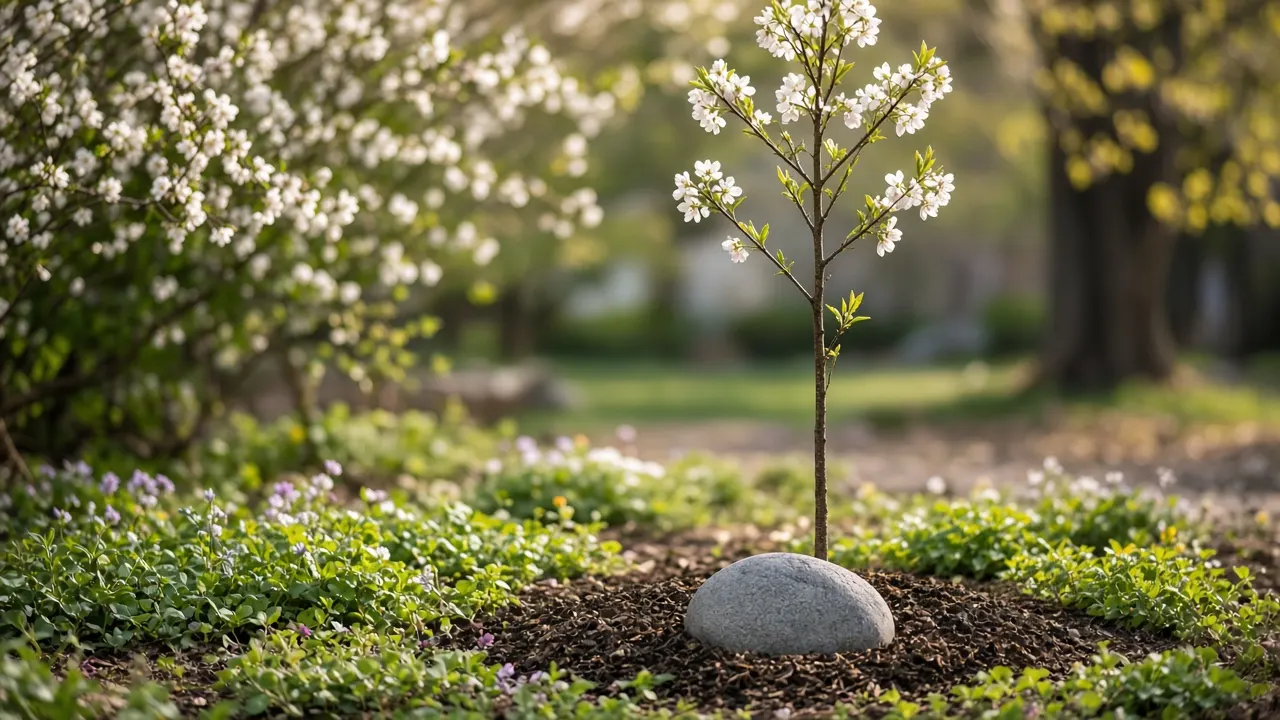
Monterey's climate is kind to a new tree. Summers stay moderate and winter lows are mostly above freezing, so you can plant in most months. The best time is usually autumn or early spring, when soil is moist and roots can grow before any summer dry spell. Avoid planting into waterlogged ground, which can happen around January: wait for a few drier days so the soil crumbles in your hand.
Adding up the cost of a bio urn memorial in Monterey
A living memorial in Monterey has two costs: the cremation and the urn. Biodegradable pet urns are among the cheaper urns you can buy, listed at about $15–$80[6] in one national price guide, and a sapling from a local nursery often costs less than a decorative display urn. If you'd like water cremation, one pet insurer's guide lists aquamation at $80 to $450 depending on size[7]. The table shows published examples.
Prices for Monterey track the wider California market, so use the California price table as your baseline and the services page to see what is included.

Free tool
Memorial budget planner
Add up cremation, urn, keepsakes and a farewell so the total holds no surprises.
Where you can plant or release ashes in California
If you live under a homeowners' association, a co-op board or a tenancy agreement in California, its rules can matter more than any public law. Many restrict new trees, digging near shared pipes or heavy pots on balconies. A quick read of the rules, or one email to the manager, tells you whether a tree, a shrub bed or a container memorial is the right fit.
The official California local government directory lists every county and city office, which is the quickest way to find who to ask in Monterey.
We keep California's burial and scattering rules in one place: the California rules summary. Before a home burial in Monterey, also ask the city whether local ordinances add anything.
Your next steps, whatever your situation
- If the ashes have been on a shelf for years, you can still plant them. Cremated remains don't spoil, so there's no deadline.
- Open the container carefully somewhere sheltered from wind, and check whether the ashes are in a sealed bag inside.
- Weigh or measure what you have, and put the figure into our urn size calculator to find a planting or water urn of the right capacity.
- Decide whether to keep any back. After years at home, some families like to plant most of the ashes and keep a spoonful.
- Pick a date that carries meaning, such as the anniversary or your pet's birthday, and invite anyone who knew them.
- Treat the old urn kindly afterwards. A ceramic or wooden urn often finds a second life holding a houseplant or small mementos.
Living memorials beyond the backyard
Monterey was California's capital under Spain and Mexico, and the town takes pride in preserving its adobes and its Cannery Row history. That sense of permanence often shapes memorials here: an engraved stone, a planted tree or a keepsake meant to be passed down. For households that may move on, a portable piece means the memory travels with you. Old adobe gardens here show how long a well-chosen stone can last.
run the numbers with the free planning tools, there are guides for the big decisions and articles for the details, or see what other families chose in the poll results, Compare every option on our services page. More local pages: San Jose, Sacramento, San Francisco and Los Angeles, the California overview and every city in the United States.

Reader polls
What would you choose?
Vote anonymously and see how other readers answered. The results are live counts from people who visit this site, so they show real opinions, not a scientific sample.
If you rent or might move, how would you handle a memorial planting?
Tap an answer to vote and see how others answered. Anonymous.
Would you consider releasing your pet's ashes in water?
Tap an answer to vote and see how others answered. Anonymous.
If you had to decide today, which aftercare would you choose for your pet?
Tap an answer to vote and see how others answered. Anonymous.

Free tools to help you plan
Memorial budget planner
Add up cremation, urn, keepsakes and a farewell so the total holds no surprises.

Memorial tree finder
Pick a tree for a planting urn that suits your climate, space and pet.

Aftercare options compared
Compare private, communal and water cremation with burial on cost, timing and what comes home.
Questions people ask
Is Monterey big enough to have several pet aftercare providers?
Probably, on the numbers. By our estimate about 10,500 Monterey households keep a dog or cat and around 890 lose one each year, which is enough steady demand to support more than one provider. We derive that from population (about 28,953), household size and national ownership and lifespan figures.
Which nearby towns can I compare with Monterey?
The closest communities we cover are Pacific Grove (about 2 miles), Seaside (about 3 miles) and Carmel-by-the-Sea (about 3 miles). Providers based in those places often serve Monterey too. Ask each one for a written total that includes collection, so the distance is priced in.
Is cremation common in California?
For people, yes: about 70.5%[5] of California deaths end in cremation, according to NFDA 2024 Cremation & Burial Report state projections (via Occasional Sage) (2024). Nobody publishes the same figure for pets, but in our experience pet choices in Monterey follow the human pattern closely, so cremation is the default most families here start from.
Will I have to travel to San Jose to arrange things?
Not usually. Providers based in San Jose (roughly 51 miles from Monterey) collect from here as a matter of routine, and the paperwork is done by email or phone. If you want to be present for a witnessed cremation, that is when the drive matters.
Is it safe to plant a fruit tree with my pet's ashes?
Cremated remains are mostly bone minerals, and once they're thoroughly blended into plenty of compost and garden soil, many gardeners grow fruit trees over them. The high pH and salt are the real concern for the tree, so dilute generously and test the pH. If eating fruit from the memorial feels wrong to anyone in your family, choose an ornamental tree instead.
What if the soil in Monterey is already alkaline?
Then ashes push it further, so be generous with compost and composted bark, choose a lime-tolerant tree or shrub, and test the pH before planting. Chalky and limestone soils are common in many regions. Plants that dislike lime, such as azaleas and blueberries, are a poor choice for an ash planting anywhere.


Sources and our estimates
- [1] 53% of US households own a dog, which is about 71 million households. American Pet Products Association (APPA) 2025 State of the Industry, 2025.
- [2] US dogs have an average life expectancy at birth of 12.69 years. Montoya et al. 2023, Frontiers in Veterinary Science - Banfield Pet Hospital life expectancy tables (13.3 million dogs, 2.4 million cats, 2013-2019), 2023.
- [3] 39% of US households own a cat, which is about 53 million households. American Pet Products Association (APPA) 2025 State of the Industry, 2025.
- [4] US cats seen at Banfield hospitals have an average life expectancy at birth of 11.18 years. Montoya et al. 2023, Frontiers in Veterinary Science - Banfield Pet Hospital life expectancy tables (13.3 million dogs, 2.4 million cats, 2013-2019), 2023.
- [5] The NFDA projected California's cremation rate at 70.5% for 2024. NFDA 2024 Cremation & Burial Report state projections (via Occasional Sage), 2024.
- [6] Memorials.com's pet urn cost guide puts biodegradable pet urns at $15–$80. Memorials.com – Pet Urn Cost Guide, 2025.
- [7] Embrace Pet Insurance lists US communal cremation at $30-$200, partitioned at $50-$250, private at $100-$500+ and aquamation at $80-$450. Embrace Pet Insurance - Bury or Cremate Your Dog? Costs, Pros & Cons, 2025.
- [8] About 59 million U.S. pet-owning households may be open to eco-friendly aftercare options. Our estimate: 86.9M pet households x 68% interested in green funeral options. How we calculate.
Ask about aquamation near Monterey
Tell us what you need and where you are. We'll reply by email with clear options and prices so you can decide in your own time.