Tree, garden and water memorials in Lynnwood
By our estimate, around 15,500 households in Lynnwood share their home with a dog or cat, and roughly 1,300 of those pets die each year. More of those families now ask about planting or water memorials. Here's how to do it well.
- When to plant in your season
- How much ash your urn must hold
- Aquamation providers in your area

Lynnwood, Washington
Living memorials in Lynnwood: the local picture
Space is tight in many Lynnwood apartments and condos, so the memorials that suit them are small. Picture a slim urn on a bookshelf, an inked nose or paw impression, a little glass orb, or a charm with a trace of ashes; any of them suits an ordinary living room. If your lease might change, choose something light enough to move without special packing or insurance.
Lynnwood's population is diverse, with families from Korea, Latin America, East Africa and elsewhere, and traditions for remembering an animal vary widely. Some households keep ashes near family photos or a home shrine; others prefer a wearable keepsake. If different relatives want different things, one cremation can be divided into a main urn plus smaller portions, provided you ask before it happens.
In a town the size of Lynnwood, the nearest aquamation provider may be an hour or more away, and pet crematories often serve a wide rural area. That doesn't change what you can do with the ashes. A flame-cremated pet's ashes work just as well in a planting urn or water urn. If a lower-impact goodbye is the main reason you're here, the choice of cremation matters more than the urn, so ask about water cremation before you commit.
Lynnwood's population is around 42,132, the 30th-largest of the 67 Washington communities we cover. Some of the providers who serve Lynnwood are based about 16 miles away in Seattle, the nearest larger centre, so collection times reflect that drive.
Nearby, we also have local pages for Mountlake Terrace (2 miles), Edmonds (3 miles) and Mill Creek (5 miles), which can help if your vet or the provider you prefer is based there.
Our estimate
15,500
Estimated dog- or cat-owning households in Lynnwood
How we calculated this
42,132 ÷ 2.5 = 16,853 households; × 53% (dog) + 39% (cat) = 15,500. A household with several pets counts once.
Our estimate
1,300
dog and cat deaths per year in Lynnwood, our estimate
How we calculated this
15,500 dog/cat-owning homes ÷ average lifespan (dog: 12.69 yrs + cat: 11.18 yrs) ≈ 1,300 a year. Treat it as a minimum.
53%[1]
53% of US households own a dog, which is about 71 million households.
12.69 years[2]
US dogs have an average life expectancy at birth of 12.69 years.
39%[3]
39% of US households own a cat, which is about 53 million households.
11.18 years[4]
US cats seen at Banfield hospitals have an average life expectancy at birth of 11.18 years.
The numbers above come from American Pet Products Association (APPA) 2025 State of the Industry and Montoya et al. 2023, Frontiers in Veterinary Science, if you'd like to read the original sources.

Why cremation culture in Washington shapes your options
About 79.1%[5] of people in Washington are cremated, so ashes are part of everyday life here in a way they aren't everywhere. Many families have already scattered or planted a grandparent's ashes and know how it felt. If you did, you'll recognise much of the process for a pet, with one difference worth knowing: a pet's ashes are a much smaller amount, which makes mixing them safely into soil far easier.
The Washington figure comes from Direct Cremate (citing CANA) (2024). It describes people, not pets, so read it as a sign of local attitudes rather than a pet statistic.
Weather, soil and planting windows in Lynnwood
Mild weather in Lynnwood makes almost any month workable for a planting ceremony or a water release, so choose a date that means something: a birthday, the anniversary of adoption, the first warm weekend of spring. If you're releasing on water, check the forecast for wind; a calm morning lets a water urn float for a moment before it sinks, which is the part many families remember.
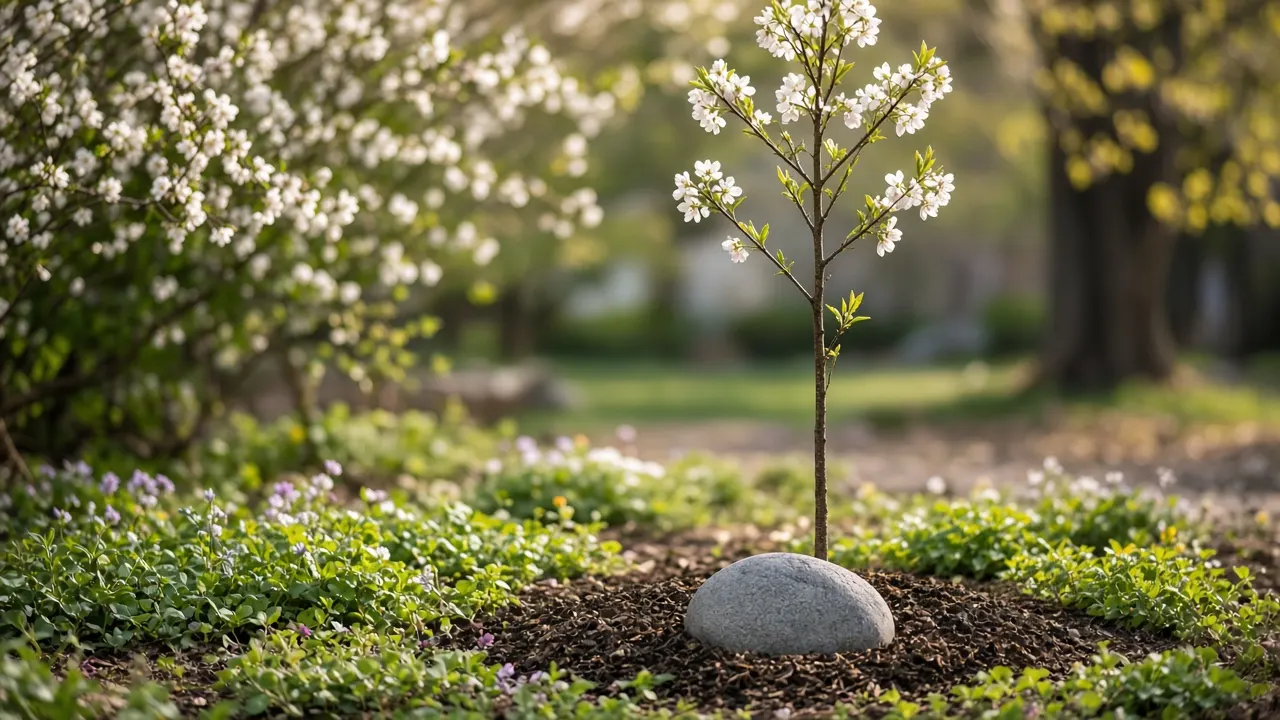
Lynnwood's climate is kind to a new tree. Summers stay moderate and winter lows are mostly above freezing, so you can plant in most months. The best time is usually autumn or early spring, when soil is moist and roots can grow before any summer dry spell. Avoid planting into waterlogged ground, which can happen around November: wait for a few drier days so the soil crumbles in your hand.
Budgeting for a living memorial in Lynnwood
A living memorial in Lynnwood has two costs: the cremation and the urn. Biodegradable pet urns are among the cheaper urns you can buy, listed at about $15–$80[6] in one national price guide, and a sapling from a local nursery often costs less than a decorative display urn. If you'd like water cremation, one pet insurer's guide lists aquamation at $80 to $450 depending on size[7]. The table shows published examples.
Rather than repeat the price table on every city page, we keep one for Washington: Washington costs. What each service includes is on the services page.

Free tool
Memorial budget planner
Add up cremation, urn, keepsakes and a farewell so the total holds no surprises.
Land, water and permission in Washington
What you plant can matter as much as where. Parks and nature reserves in Washington often forbid planting anything at all, and even on private land some trees and shrubs are listed as invasive in parts of the region. A local nursery or native plant society can steer you toward a species that won't spread into wild land.
The official Washington local government directory lists every county and city office, which is the quickest way to find who to ask in Lynnwood.
The Washington page sets out who oversees pet cremation and what the state says about burial and scattering. Lynnwood's own bylaws can sit on top of that, so ask before you dig.
What to do first, and what can wait for the right season
- If the pet belonged to a child, be straightforward about the death and explain cremation simply, pitched at a level they can understand.
- Let them choose the plant, from a short list you've already checked is safe, hardy and not poisonous to any animals at home.
- Use a pot for a small pet such as a hamster, rabbit or guinea pig: there's only a small amount of ash, and a pot keeps the memorial close.
- Give them real jobs on the day: filling the pot, mixing the soil, watering, choosing a painted stone.
- Explain the ashes honestly as part of their pet that's now feeding the plant, and answer questions as they come, even months later.
- Take a photo of the child with the plant on the same day every year; over time you'll have a record of the two of them growing up.
Keeping your pet's memory growing in Lynnwood
Balconies and small patios are the only outdoor space for many households here, and western Washington damp takes a toll. A glazed ceramic planter with a memorial plaque, or a small granite marker in a pot, handles rain and moss better than wood or thin resin. Bring delicate pieces inside during winter storms and wipe them down now and then to keep algae from building up.
browse in-depth guides or recent articles, or compare your instinct with the poll results, try the free planning tools, Our services overview lays out every option side by side. More local pages: Seattle, Vancouver, Kent and Spokane, the Washington overview and every city in the United States.

Reader polls
What would you choose?
Vote anonymously and see how other readers answered. The results are live counts from people who visit this site, so they show real opinions, not a scientific sample.
Would you consider releasing your pet's ashes in water?
Tap an answer to vote and see how others answered. Anonymous.
If you rent or might move, how would you handle a memorial planting?
Tap an answer to vote and see how others answered. Anonymous.
If you had to decide today, which aftercare would you choose for your pet?
Tap an answer to vote and see how others answered. Anonymous.

Free tools to help you plan
Memorial budget planner
Add up cremation, urn, keepsakes and a farewell so the total holds no surprises.

Memorial tree finder
Pick a tree for a planting urn that suits your climate, space and pet.

Aftercare options compared
Compare private, communal and water cremation with burial on cost, timing and what comes home.
Questions people ask
Where are the providers that serve Lynnwood actually based?
Some are local, and some run from Seattle, about 16 miles away. That is normal for a town this size. What matters is the collection time they quote for Lynnwood and whether the drive is priced into the total, so ask both up front.
When is the hardest time of year to arrange a burial in Lynnwood?
There is no frozen-ground season here; average lows stay above freezing all year. The other pressure point is August, when highs around 77°F mean a body needs cooling and collecting quickly.
Which nearby towns can I compare with Lynnwood?
The closest communities we cover are Mountlake Terrace (about 2 miles), Edmonds (about 3 miles) and Mill Creek (about 5 miles). Providers based in those places often serve Lynnwood too. Ask each one for a written total that includes collection, so the distance is priced in.
Is cremation common in Washington?
For people, yes: about 79.1%[5] of Washington deaths end in cremation, according to Direct Cremate (citing CANA) (2024). Nobody publishes the same figure for pets, but in our experience pet choices in Lynnwood follow the human pattern closely, so cremation is the default most families here start from.
I rent in Lynnwood. Can I still have a living memorial?
Yes. Plant in a large container, such as a half-barrel or a big pot with a dwarf tree or flowering shrub, and it moves with you. Use only a small share of the ashes in the pot, well mixed with compost. If you'd like to plant in a rented yard, get the landlord's permission in writing, and remember the tree stays when you leave.
Will the seed in a tree urn grow?
Not always. Seeds from kits can fail to sprout if they weren't stored or chilled correctly, and alkaline soil around them makes it harder. A young tree from a nursery near Lynnwood is far more reliable, and most planting urns work just as well with a sapling in the top chamber.


Sources and our estimates
- [1] 53% of US households own a dog, which is about 71 million households. American Pet Products Association (APPA) 2025 State of the Industry, 2025.
- [2] US dogs have an average life expectancy at birth of 12.69 years. Montoya et al. 2023, Frontiers in Veterinary Science - Banfield Pet Hospital life expectancy tables (13.3 million dogs, 2.4 million cats, 2013-2019), 2023.
- [3] 39% of US households own a cat, which is about 53 million households. American Pet Products Association (APPA) 2025 State of the Industry, 2025.
- [4] US cats seen at Banfield hospitals have an average life expectancy at birth of 11.18 years. Montoya et al. 2023, Frontiers in Veterinary Science - Banfield Pet Hospital life expectancy tables (13.3 million dogs, 2.4 million cats, 2013-2019), 2023.
- [5] Washington had a 79.1% cremation rate in 2024, among the highest in the US. Direct Cremate (citing CANA), 2024.
- [6] Memorials.com's pet urn cost guide puts biodegradable pet urns at $15–$80. Memorials.com – Pet Urn Cost Guide, 2025.
- [7] Embrace Pet Insurance lists US communal cremation at $30-$200, partitioned at $50-$250, private at $100-$500+ and aquamation at $80-$450. Embrace Pet Insurance - Bury or Cremate Your Dog? Costs, Pros & Cons, 2025.
- [8] Each shelter-animal flame cremation emits about 31 kg CO2e on average. Our estimate: 19,000 t CO2e / 607,000 animals. How we calculate.
Ask about aquamation near Lynnwood
Tell us what you need and where you are. We'll reply by email with clear options and prices so you can decide in your own time.