Tree, garden and water memorials in Spokane Valley
About 3,300 dogs and cats are lost in Spokane Valley each year, by our estimate. If you'd like your pet's ashes to grow into a tree or return to the water, this page covers the soil, the season and the cost.
- Options for renters and apartments
- Water release rules in plain words
- No obligation, we reply by email
Spokane Valley, Washington
Living memorials in Spokane Valley: the local picture
Close to eight in ten Washington deaths now end in cremation, so Spokane Valley families are well used to keeping ashes at home or taking them somewhere meaningful. A vessel in walnut, stone or glazed clay suits a family room; other households want a small blown-glass sculpture or a ring with ash sealed inside. Let the look of your home and the way you like to remember guide the choice.
Frigid, snowy winters followed by scorching, bone-dry summers punish anything left outdoors. Granite and bronze endure, while resin and thin concrete quickly fade and split. Local basalt, the dark volcanic rock exposed in cliffs all around the region, makes a fitting natural marker for a garden. Bed it on gravel so snowmelt drains away and frost does not tip it over by spring.
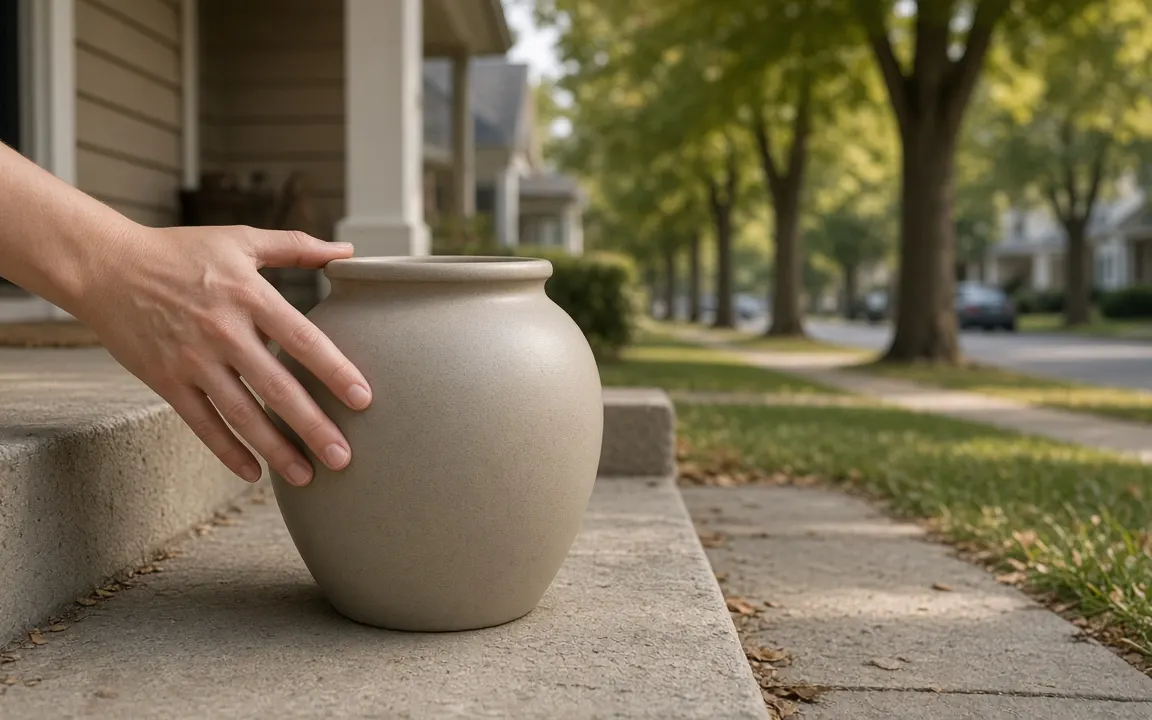
In a city like Spokane Valley, a living memorial is often shared by a whole street's worth of memories: the dog everyone waved to, the cat on the porch. Some people choose a spot in the front yard, where neighbors can see the tree flower each spring. If you do, pick a tidy, compact species and a simple stone or plant marker, and keep the ash mix well away from the vegetable bed and any shared fence lines.
About 108,405 people live in Spokane Valley, which makes it the 8th-largest of the 67 Washington communities we cover. The nearest larger centre is Spokane, about 9 miles (14 km) away, which is where some providers serving Spokane Valley are based.
Our pages for Spokane (9 miles, a larger centre), Post Falls (14 miles) and Coeur d'Alene (21 miles) describe the same choices from those towns' point of view, and the providers overlap, so a quote from one often covers Spokane Valley as well.
Our estimate
40,000
Estimated dog- or cat-owning households in Spokane Valley
How we calculated this
108,405 ÷ 2.5 = 43,362 households; × 53% (dog) + 39% (cat) = 40,000. Multi-pet homes count once.
Our estimate
3,300
Spokane Valley families who lose a dog or cat each year (estimate)
How we calculated this
40,000 dog/cat-owning homes ÷ average lifespan (dog: 12.69 yrs + cat: 11.18 yrs) ≈ 3,300 a year. The real figure is unlikely to be lower.
53%[1]
53% of US households own a dog, which is about 71 million households.
12.69 years[2]
US dogs have an average life expectancy at birth of 12.69 years.
39%[3]
39% of US households own a cat, which is about 53 million households.
11.18 years[4]
US cats seen at Banfield hospitals have an average life expectancy at birth of 11.18 years.
To check the figures yourself, see Montoya et al. 2023, Frontiers in Veterinary Science and American Pet Products Association (APPA) 2025 State of the Industry.
What local attitudes to cremation mean in Washington
About 79.1%[5] of people in Washington are cremated, so ashes are part of everyday life here in a way they aren't everywhere. Many families have already scattered or planted a grandparent's ashes and know how it felt. If you did, you'll recognise much of the process for a pet, with one difference worth knowing: a pet's ashes are a much smaller amount, which makes mixing them safely into soil far easier.
Direct Cremate (citing CANA) (2024) is where the Washington figure comes from. It counts people; we use it because attitudes to cremating a pet in Spokane Valley tend to follow attitudes to cremation generally.
What Spokane Valley's climate means for a living memorial
Cold winters narrow the choice of tree in Spokane Valley, where December lows average about 24°F. Pick species that are fully hardy locally: native trees, or ornamentals a nearby nursery rates for your zone. A tender tree from a warmer region may survive one mild winter and die in the next. Hardy flowering shrubs are a good fallback if you have less space.
Freezing and thawing through January, February, March, November and December can heave a newly planted tree out of the ground in Spokane Valley. If you plant in autumn, mulch well after the first frost to keep the soil temperature steady, and check the base of the tree in spring. A spring planting avoids the problem entirely and gives roots a full growing season before the next winter.
Adding up the cost of a bio urn memorial in Spokane Valley
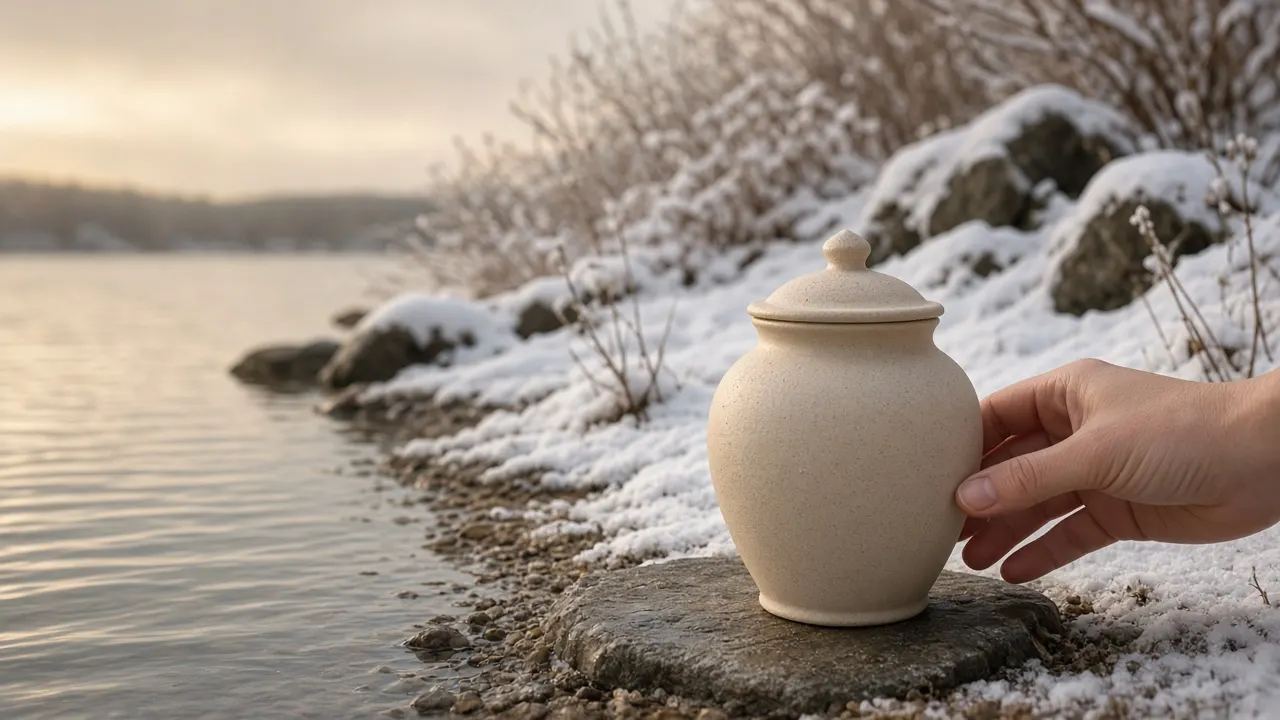
Bio urns vary more in price than you might expect. A national guide puts biodegradable urns at $70–$260[6], depending on material, size and whether a seed or tree system is included. For a lake or sea release, one water urn designed to float briefly and dissolve sells for $149[7]. In Spokane Valley, the tree and the soil amendments are usually the cheapest part of the whole memorial.
For a line-by-line price table, see the Washington overview; for what's included in each option, see our services.

Free tool
Memorial budget planner
Add up cremation, urn, keepsakes and a farewell so the total holds no surprises.
Who to ask before you plant or scatter in Washington
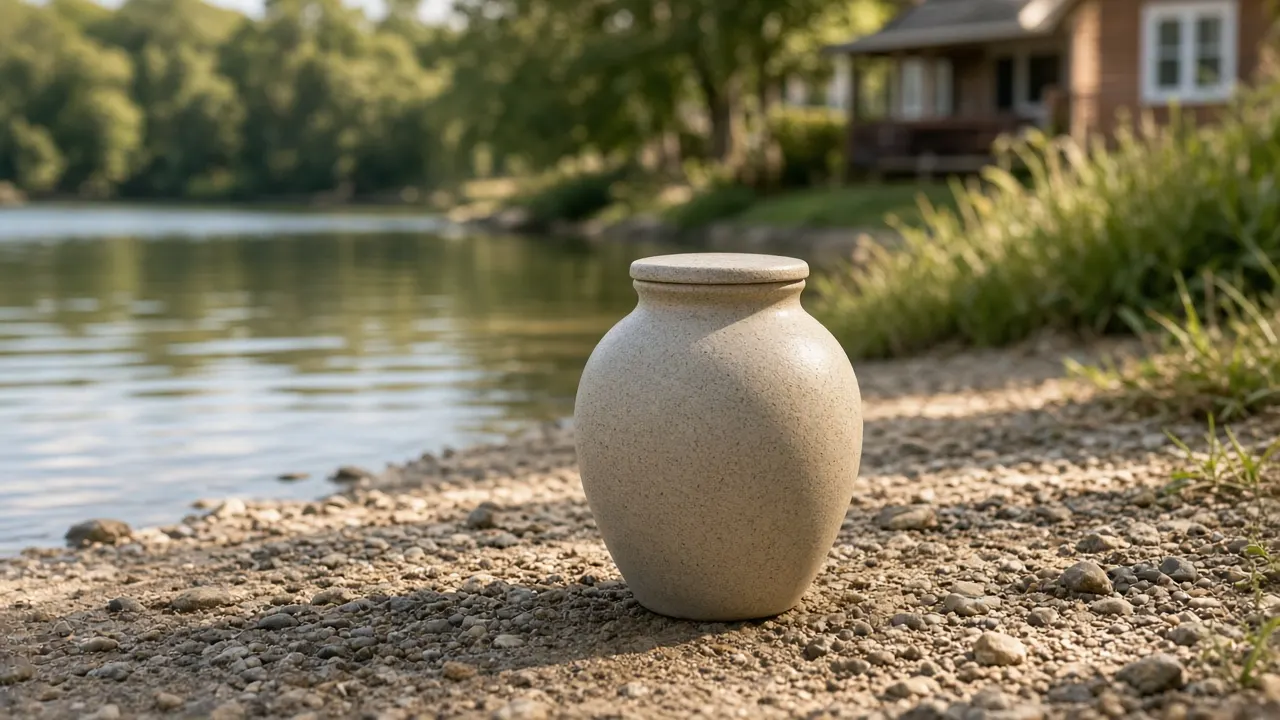
Cremated remains aren't a health hazard in the way a body is, which is why planting ashes in your own garden is rarely restricted. Public places are different. Parks, nature reserves, beaches and waterways in Washington each have a manager with their own policy, and some don't allow scattering or planting at all. A short email before the day saves an awkward conversation.
Washington keeps an official directory of local governments; use it to reach the county or city office that covers Spokane Valley.
The Washington page sets out who oversees pet cremation and what the state says about burial and scattering. Spokane Valley's own bylaws can sit on top of that, so ask before you dig.
Your next steps, whatever your situation
- If your pet dies while you're away from Spokane Valley, ask a local vet near where it happened to arrange individual cremation there. Bringing a body home over a long distance is rarely practical.
- Ask how the ashes can reach you: collected in person, posted by a tracked courier service, or sent to your own vet.
- Flying home with the ashes? Carry them in your hand luggage in a container that can be X-rayed, with the crematory's certificate in the same bag.
- Don't buy the bio urn on the road. Wait until you're home and know the spot, so the urn matches the place.
- Plant somewhere that links both places if the idea appeals: perhaps a species native to the area your pet died in, or one already growing at home, provided it can cope with the climate in Spokane Valley.
- Write down the date and place of your pet's death and the name of the crematory. Memories of those particulars slip away sooner than most people think.
Keeping the memorial alive in Spokane Valley
Plenty of valley families have relatives across the Inland Northwest and up into north Idaho. If several people want a share, mention it to the cremation provider on day one so the remains come back already divided. One household urn plus a few tiny vessels, or a ring or locket for each person, covers most families, with a little set aside for the river or a favorite trailhead.
Compare every option on our services page, or compare your instinct with the poll results, there are guides for the big decisions and articles for the details, the planning tools turn your pet's details into figures. If you live between Spokane Valley and Vancouver, Tacoma, Kent and Seattle, either page applies. Every other community in Washington, and all of the United States, is listed too.

Reader polls
What would you choose?
Vote anonymously and see how other readers answered. The results are live counts from people who visit this site, so they show real opinions, not a scientific sample.
Would you consider releasing your pet's ashes in water?
Tap an answer to vote and see how others answered. Anonymous.
What kind of tree or plant would you choose?
Tap an answer to vote and see how others answered. Anonymous.
If you had to decide today, which aftercare would you choose for your pet?
Tap an answer to vote and see how others answered. Anonymous.

Free tools to help you plan
Memorial budget planner
Add up cremation, urn, keepsakes and a farewell so the total holds no surprises.

Memorial tree finder
Pick a tree for a planting urn that suits your climate, space and pet.

Aftercare options compared
Compare private, communal and water cremation with burial on cost, timing and what comes home.
Questions people ask
Can a provider from a neighbouring town collect from Spokane Valley?
Usually yes. Spokane is about 9 miles away, Post Falls is about 14 miles away and Coeur d'Alene is about 21 miles away, all inside a normal collection radius. Get the mileage written into the quote so there is no surprise on the day.
Is Spokane Valley big enough to have several pet aftercare providers?
Probably, on the numbers. By our estimate about 40,000 Spokane Valley households keep a dog or cat and around 3,300 lose one each year, which is enough steady demand to support more than one provider. We derive that from population (about 108,405), household size and national ownership and lifespan figures.
Is cremation common in Washington?
For people, yes: about 79.1%[5] of Washington deaths end in cremation, according to Direct Cremate (citing CANA) (2024). Nobody publishes the same figure for pets, but in our experience pet choices in Spokane Valley follow the human pattern closely, so cremation is the default most families here start from.
Will I have to travel to Spokane to arrange things?
Not usually. Providers based in Spokane (roughly 9 miles from Spokane Valley) collect from here as a matter of routine, and the paperwork is done by email or phone. If you want to be present for a witnessed cremation, that is when the drive matters.
How much ash will my pet leave, and will it fit a bio urn?
Cremated remains typically weigh about 3-5% of body weight[9], so a cat returns a few ounces and a large dog several pounds. Many planting kits are designed for a set volume, and a big dog's ashes may not all fit. Use our urn size calculator, and plan to mix any extra into the wider planting bed or keep it for a second memorial.
I rent in Spokane Valley. Can I still have a living memorial?
Yes. Plant in a large container, such as a half-barrel or a big pot with a dwarf tree or flowering shrub, and it moves with you. Use only a small share of the ashes in the pot, well mixed with compost. If you'd like to plant in a rented yard, get the landlord's permission in writing, and remember the tree stays when you leave.


Sources and our estimates
- [1] 53% of US households own a dog, which is about 71 million households. American Pet Products Association (APPA) 2025 State of the Industry, 2025.
- [2] US dogs have an average life expectancy at birth of 12.69 years. Montoya et al. 2023, Frontiers in Veterinary Science - Banfield Pet Hospital life expectancy tables (13.3 million dogs, 2.4 million cats, 2013-2019), 2023.
- [3] 39% of US households own a cat, which is about 53 million households. American Pet Products Association (APPA) 2025 State of the Industry, 2025.
- [4] US cats seen at Banfield hospitals have an average life expectancy at birth of 11.18 years. Montoya et al. 2023, Frontiers in Veterinary Science - Banfield Pet Hospital life expectancy tables (13.3 million dogs, 2.4 million cats, 2013-2019), 2023.
- [5] Washington had a 79.1% cremation rate in 2024, among the highest in the US. Direct Cremate (citing CANA), 2024.
- [6] Funeral.com cites U.S. Funerals Online that biodegradable urns typically cost about $70–$260. Funeral.com – How Much Do Cremation Urns Cost in 2025, 2025.
- [7] The Living Urn's Eco Water Urn for water burial costs $149 and holds up to 225 cubic inches; it floats for several minutes before dissolving. The Living Urn – Eco Water Urn, 2026.
- [8] U.S. pet flame cremations emit on the order of 47,000 t CO2e a year. Our estimate: 1.5M pet cremations x 31.3 kg CO2e. How we calculate.
- [9] Embrace notes cremated remains typically weigh about 3-5% of the pet's original body weight. Embrace Pet Insurance - Bury or Cremate Your Dog? Costs, Pros & Cons, 2025.
Get eco memorial ideas by email
Tell us what you need and where you are. We'll reply by email with clear options and prices so you can decide in your own time.